The Best Way to Record Your Grandparents' Stories
The best way to record grandparents' stories is to make the process familiar, gentle, voice-first, and easy to continue.
May 5, 2026 · 3 min read
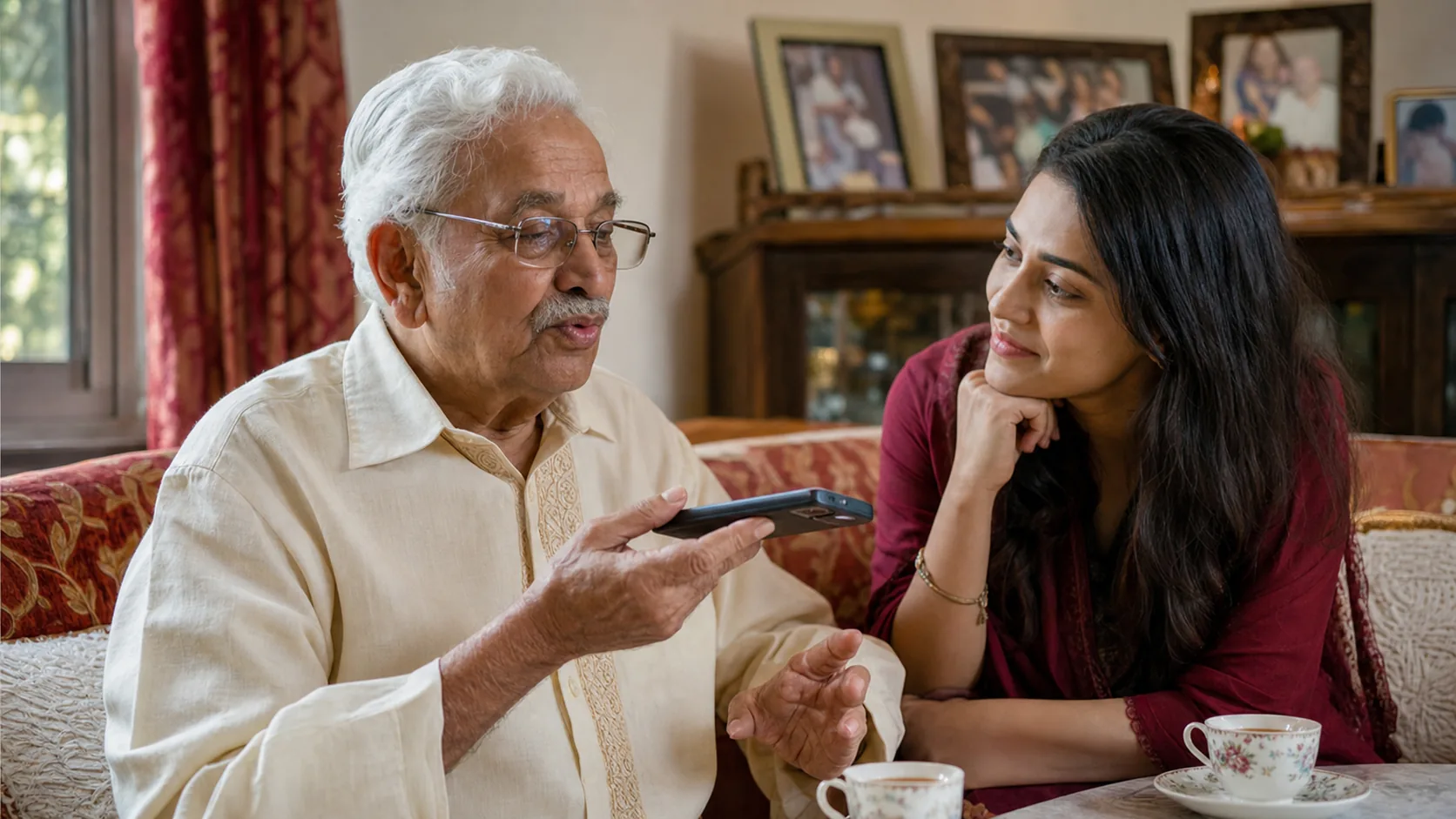
The best way to record your grandparents' stories is not to sit them under bright lights and ask fifty questions at once. Most elders share better memories when the process feels like a normal conversation: a voice note after tea, a phone call in their own language, or one thoughtful prompt each week.
For many South Asian families, this matters because the most important stories were never written down. They live in small moments: how Dada arrived in a new city, what Nani cooked when money was tight, what Dadi remembers about migration, or why one family phrase still makes everyone laugh.
Start with voice, not typing
Typing can make storytelling feel like homework. Voice feels easier. A grandparent can answer in Urdu, Hindi, Punjabi, Arabic, English, or a mixture of languages without worrying about spelling or formatting.
Voice notes also preserve the details that text loses: the pause before a difficult memory, the laugh before a childhood mischief story, the accent, the tenderness, the way a name is pronounced. Those details are part of the inheritance.
Qissa is built around this idea. The process explained on How it Works starts with warm onboarding and recorded phone or Google Meet sessions, so elders do not need a new Qissa app or password.
Ask one question at a time
The fastest way to overwhelm a storyteller is to say, "Tell me everything about your life." A better prompt is specific, warm, and easy to answer.
Try questions like:
- What did your first home look like?
- Who taught you how to cook your favorite dish?
- What was your mother or father known for?
- What did Eid, Diwali, a wedding, or a family gathering feel like when you were young?
- What did you carry with you when you moved cities or countries?
Each answer can stand alone. Later, those answers can be grouped into chapters.
Let the storyteller choose the language
If your grandparent thinks in Urdu, let the story begin in Urdu. If they move between Hindi and English, let them. If Punjabi phrases appear in the middle of a sentence, keep them.
Translation can help younger generations read the story, but the original language carries emotional truth. A phrase like dua, izzat, sabr, or ghar may need more than one English word. A good family archive respects that.
Keep the recording habit small
Do not aim for a three-hour interview. Aim for a sustainable rhythm. One prompt per week is enough. Over a year, that becomes a rich archive without making your grandparent feel pressured.
This is also why voice notes work better than formal interviews for many elders. They can reply when they have energy. They can re-record if they want. They can answer from their own sofa, kitchen, or prayer room.
Turn recordings into something the family can use
Raw recordings are valuable, but they are easy to lose in old phones and message threads. The next step is to organize them, transcribe them, translate them where needed, and connect them to photos.
That is where a finished book helps. On Inside the Book, you can see how Qissa turns guided conversations into professionally written chapters with family photographs. The printed page keeps the story readable; optional private QR links can keep selected approved audio close.
The best way to record your grandparents' stories is the method they will actually use. Keep it gentle, keep it familiar, and start before the stories become harder to ask for.
Read next
Keep building the family archive.
These guides connect the next question, recording habit, or heirloom idea so the archive feels easier to keep building.
May 5, 2026 · 4 min read
Questions to Ask Your Dadi Before Her Stories Fade
Thoughtful questions to ask your dadi so her memories, language, recipes, faith, humor, and family history are not lost.
May 5, 2026 · 3 min read
Storyworth Alternative for South Asian Families
A Storyworth alternative for South Asian families should support voice notes, bilingual stories, WhatsApp, privacy, and printed heirlooms.
May 5, 2026 · 3 min read
How to Turn Voice Notes Into a Family History Book
Voice notes can become a family history book when they are organized, transcribed, translated, edited, and paired with photos.
Preserve the voice too