Storyworth Alternative for South Asian Families
A Storyworth alternative for South Asian families should support voice notes, bilingual stories, WhatsApp, privacy, and printed heirlooms.
May 5, 2026 · 3 min read
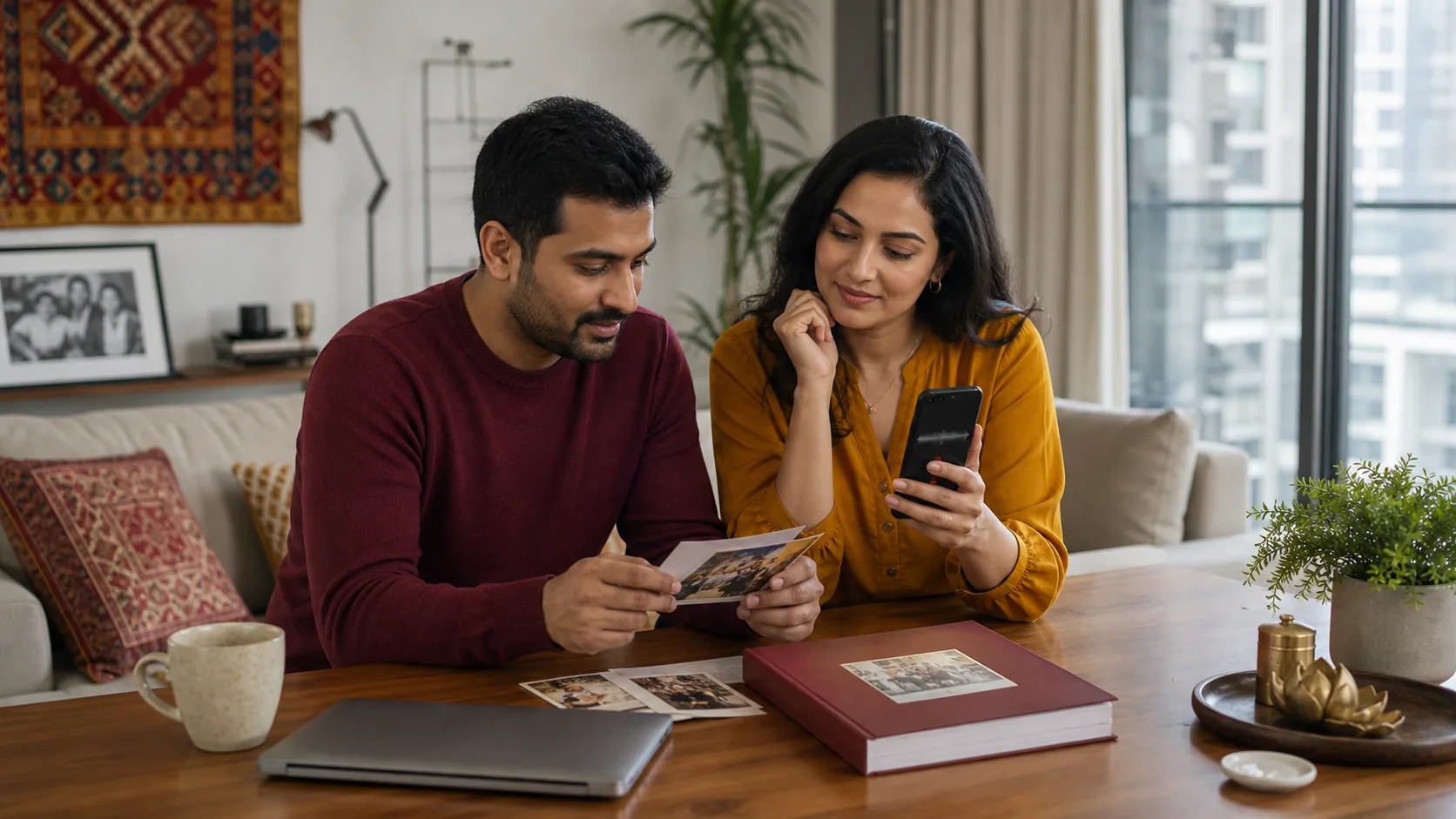
If you are looking for a Storyworth alternative for South Asian families, the real question is not only price or number of prompts. The question is whether the service fits the way your family actually tells stories.
Many South Asian elders do not want another login, another app, or a weekly writing assignment in English. They may tell the best memories by voice note, over a phone call, or in a mix of Urdu, Hindi, Punjabi, Arabic, and English. A good alternative should make that feel natural.
What South Asian families often need
A family story service for South Asian families should handle more than typed answers. It should support:
- voice-first storytelling
- WhatsApp or familiar communication
- bilingual transcription and translation
- right-to-left scripts where needed
- family photos and captions
- privacy and consent for sensitive memories
- a printed book that feels gift-worthy
- original recordings connected to the final story
These details matter because family history is not only information. It is tone, language, emotion, and context.
Why voice notes can work better than email prompts
Email prompts can be useful for storytellers who enjoy writing. But many grandparents speak more freely than they type. A voice note lets them answer from the sofa, pause when they need to, and shift languages without worrying about spelling.
For diaspora families, that can be the difference between a few short written replies and a living archive. A spoken answer about childhood in Lahore, Karachi, Delhi, Dhaka, Nairobi, or Lucknow can carry texture that a typed paragraph may not.
Qissa's process is explained on How it Works. It begins with warm onboarding and offers recorded phone or Google Meet sessions rather than asking the storyteller to write alone.
What to compare before choosing
When comparing any family story service, ask:
- Will my parent or grandparent actually use this every week?
- Can they answer in their preferred language?
- Are voice notes supported?
- Who handles transcription and translation?
- Can family photos be added?
- What happens to original recordings?
- Is there a printed book?
- Are private family materials handled with consent?
The best choice is the one that removes friction for the storyteller.
Where Qissa is different
Qissa is designed for South Asian and diaspora families from the start. A story may be told in English, Urdu, or Sindhi and read by grandchildren in English. The process assumes that speaking may feel easier than writing and that a phrase like beta, dua, or naseeb deserves care rather than a flat translation.
The finished book can include bilingual chapters, family photos, and QR codes that connect a printed page to the original voice recording. You can preview that format on Inside the Book.
A practical way to decide
If your loved one is comfortable writing weekly email answers in English, a writing-first tool may be enough. If they are more comfortable speaking, switching languages, or using WhatsApp, choose a voice-first service.
For families who want a South Asian-aware, bilingual, human-guided path, you can start a Qissa and build the book around the storyteller's voice and pace.
Read next
Keep building the family archive.
These guides connect the next question, recording habit, or heirloom idea so the archive feels easier to keep building.
May 7, 2026 · 9 min read
Family History Book Examples for Modern South Asian Families
See practical family history book examples for South Asian families, from voice-led elder stories to bilingual legacy books and QR audio archives.
May 5, 2026 · 3 min read
The Best Way to Record Your Grandparents' Stories
The best way to record grandparents' stories is to make the process familiar, gentle, voice-first, and easy to continue.
May 5, 2026 · 4 min read
Questions to Ask Your Dadi Before Her Stories Fade
Thoughtful questions to ask your dadi so her memories, language, recipes, faith, humor, and family history are not lost.
Preserve the voice too