What Is a Family Legacy Book?
A family legacy book preserves the stories, voices, photos, language, and memories that make your family feel like itself.
May 5, 2026 · 4 min read
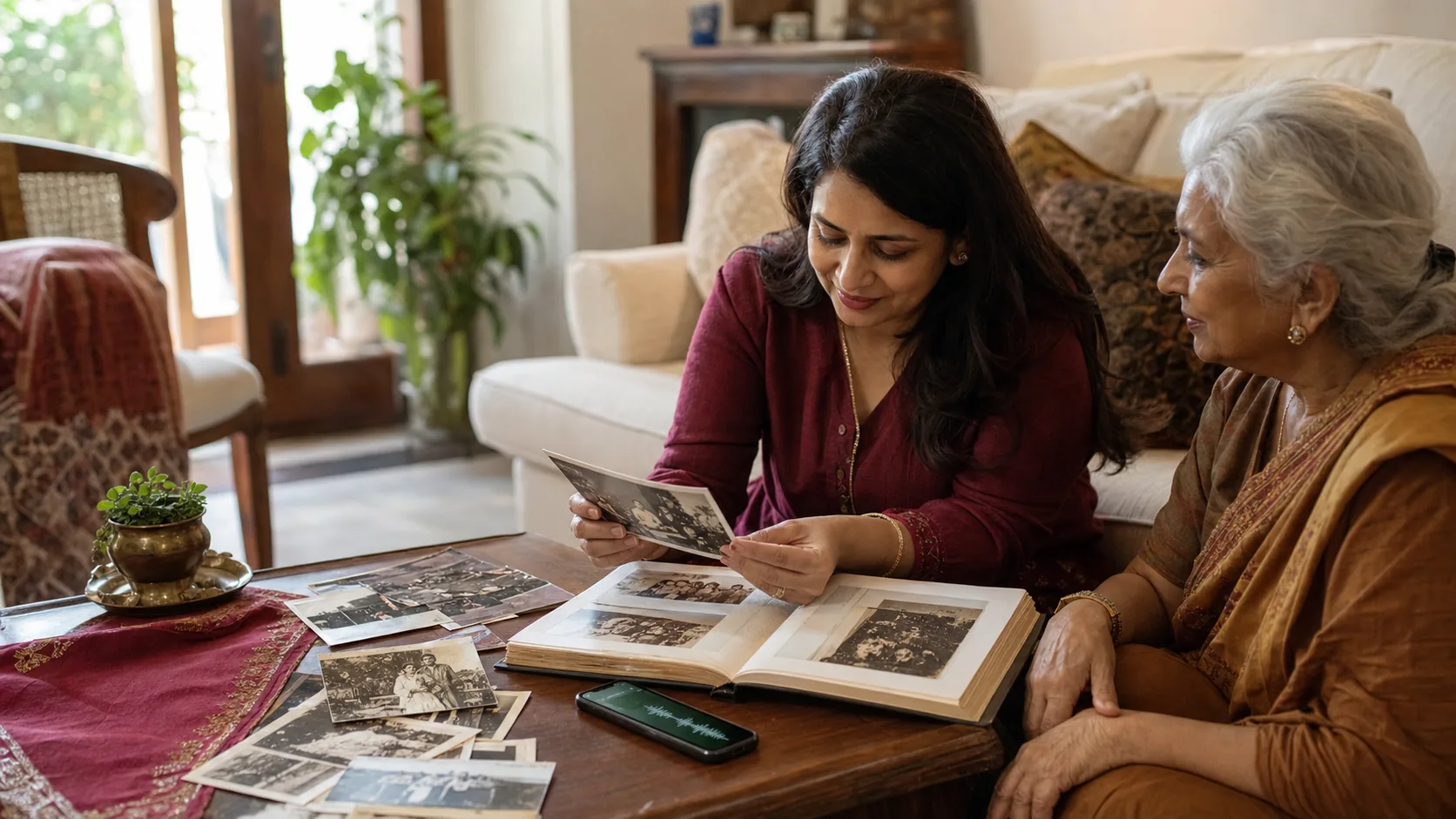
A family legacy book is a finished record of the people, stories, places, rituals, and turning points that shaped a family. It is more personal than a photo album and more guided than a scrapbook. A good family legacy book gathers memories in the storyteller's own words, adds context for younger generations, and turns scattered fragments into something the family can read, hold, and revisit.
For South Asian families, the best legacy books often carry more than dates and names. They hold the way Dadi says beta, the recipe Nani never measured, the migration story that was only told during chai, and the jokes that lose their rhythm when they are translated too quickly. That is why Qissa treats a family legacy book as both a written heirloom and a voice archive.
What belongs inside a family legacy book?
Most families start with photographs, but the story is what gives those photos meaning. A portrait from Lahore, Karachi, Delhi, Dhaka, Nairobi, Dubai, London, Toronto, or Houston becomes more powerful when someone explains who took it, why everyone was dressed up, and what happened after the camera clicked.
A strong family legacy book can include:
- childhood memories and family homes
- migration, Partition, or diaspora stories
- marriage, work, education, and faith memories
- recipes, sayings, songs, and family rituals
- photographs with captions and dates where known
- letters, documents, or old voice notes
- chapter introductions that help grandchildren understand the context
The goal is not to make every memory perfect. The goal is to preserve the voice of the person who lived it.
Why voice matters as much as text
Many families try to create a family history book by asking elders to write long answers. That can work for some people, but it often fails for grandparents who are more comfortable speaking than typing. Voice notes are gentler. They let a storyteller pause, laugh, switch languages, and answer in the rhythm that feels natural.
That is why Qissa starts with a warm onboarding call and guided recorded sessions by phone or Google Meet. You can see the journey in how Qissa works, from the first conversation to the printed book. The result is an English hardcover, or an Urdu/Sindhi edition paired with English; selected approved audio can stay privately connected to the story.
What makes a legacy book different from a photo album?
A photo album shows what happened. A family legacy book explains why it mattered.
A wedding photo can show the clothes, the guests, and the room. The story can explain how the match was arranged, who was nervous, which auntie managed the food, what song was playing, and what advice the couple received. A childhood photo can show a school uniform. The story can explain the sacrifices that made that education possible.
For families spread across countries, this matters even more. A grandchild may not know the neighborhood, the language, or the family politics behind an image. A legacy book gives them the missing bridge.
What should the finished book feel like?
The finished book should feel like something your family would keep on a shelf, open during Eid, bring out when cousins visit, and pass down without needing a login. It should be readable, organized, and beautiful, but it should still sound like your family.
Inside a Qissa book, chapters can include bilingual text, family photographs, captions, and optional private QR links to selected audio approved by the storyteller. Preview the format on Inside the Book.
A simple way to start
Start with one person and one question. Do not begin by asking for an entire life story. Ask one specific memory:
What did your childhood home sound like in the morning?
That answer can become the first page of a family legacy book. Tomorrow, you can ask another. Over time, the fragments become a record your family can hold.
When you are ready to turn those stories into a private archive and printed book, you can start a Qissa for a parent, grandparent, elder, or yourself.
Read next
Keep building the family archive.
These guides connect the next question, recording habit, or heirloom idea so the archive feels easier to keep building.
May 26, 2026 · 10 min read
The Father's Day Gift That Preserves Your Dad's Legacy
This Father's Day, give your abbu more than a tie. Preserve his story in a bilingual legacy book your family will read and treasure for generations to come.
May 16, 2026 · 8 min read
Why Family Stories Matter — The Science Behind Preserving Your Heritage
Research shows that children who know family stories have higher self-esteem and resilience. Here is why preserving your family's stories is one of the most important things you can do.
May 5, 2026 · 3 min read
The Best Way to Record Your Grandparents' Stories
The best way to record grandparents' stories is to make the process familiar, gentle, voice-first, and easy to continue.
Preserve the voice too