
How to Start a Family Storytelling Night
Learn how to start a monthly family storytelling night that preserves your elders' memories, bridges generations, and keeps your heritage alive.
June 14, 2026 · 10 min read
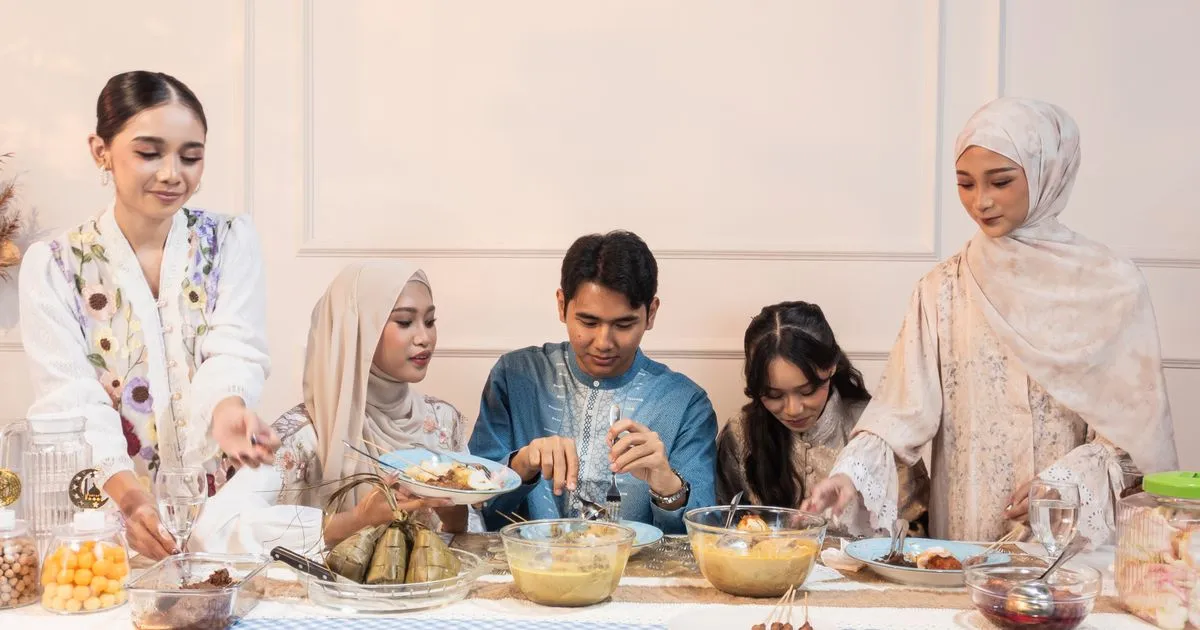
There is a night you remember from childhood. Everyone was there. Ammi was in the kitchen, the sound of a pressure cooker whistle cutting through the conversation. Abbu was telling the same story about the time he missed the train in Lahore, and everyone was laughing even though they had heard it a dozen times. Your Dadi was sitting quietly, smiling, occasionally adding a detail no one else remembered. The television was on but nobody was watching it.
You did not know it then, but that was a storytelling night. It did not have a name. It did not need one. It was just family, gathered in one place, talking about the things that mattered.
Now you are older. You live in a different country from most of your family. Your Dadi is still alive but her memory is not what it was. Your parents are far away, and the stories they used to tell at the dinner table only come out during phone calls that always seem to end too soon. You have thought about recording their stories, writing them down, doing something before it is too late. But the thought of sitting your parents down with a recorder and a list of fifty questions feels too formal, too much like a project instead of a conversation.
What if it did not have to be that way?
Why a Monthly Storytelling Night Works Better Than One-Off Sessions
Most families who try to preserve their stories start with good intentions and end with one recording that sits on a phone, unlabelled and unlistened to. The problem is not laziness. The problem is that a single recording session asks too much of everyone. It demands that your Ammi sit for two hours and pour out her entire life story to a microphone. It assumes your Abbu will suddenly become comfortable talking about feelings he has spent seventy years keeping private. It treats storytelling like a task to complete instead of a habit to build.
A monthly storytelling night works because it removes the pressure. Nobody has to tell their whole life story in one evening. Nobody has to be perfectly articulate or emotionally available. They just have to show up, sit down, and talk for a little while. Over time, the stories accumulate. One month it is a story about a childhood friend. The next month it is the migration story, told slightly differently because someone asked a new question. The month after that it is a recipe, not just the ingredients but the memory of who taught it and why it mattered.
A family storytelling night is not about capturing perfection. It is about creating a space where memories have permission to come out, one at a time, in the voices of the people who lived them.
The research supports this. Studies on intergenerational storytelling show that children who know their family stories have stronger emotional resilience, a clearer sense of identity, and deeper connections to their cultural heritage. But those benefits do not come from a single recording. They come from repetition, from hearing the same stories told in different ways, from knowing the stories are worth telling again.
How to Set Up Your First Family Storytelling Night
You do not need a studio. You do not need a script. You do not need everyone in the same room. You need a date, a question, and a way to record the conversation.
Pick one evening a month. It does not matter which night. What matters is that it is consistent. The first Sunday of every month. The third Saturday. Whenever your family is most likely to be available. If some family members live abroad, pick a time that works across time zones, even if it means someone joins from their kitchen at midnight.
Start with one question. Not ten. Not a list that covers their entire life. One question that opens a door. Something specific and sensory, the kind of question that makes someone pause and think before they answer. Questions like:
- "What did your childhood home smell like?"
- "Who was your best friend when you were my age, and what happened to them?"
- "What is the first meal you remember cooking by yourself?"
- "What did your Ammi always say that you still hear in your head?"
- "What was the hardest year of your life, and what got you through it?"
These are not generic questions. They are invitations. They tell your parent or grandparent that you are not looking for a summary of their life. You are looking for the moments that stayed with them.
Record the conversation. Use your phone. Open the voice memo app before the conversation starts and leave it running on the table. You do not need to announce it every time. After the first few sessions, the recorder becomes part of the furniture. Nobody thinks about it anymore.
Keep it short. Twenty to thirty minutes is enough. A conversation that runs too long becomes an interview. A conversation that stays short becomes something people look forward to next month.
If your family is spread across cities or countries, a video call works just as well. The audio quality from a phone call or a video chat is more than sufficient for a family archive. What matters is that the conversation happens, not that it happens in person. Learn more about how Qissa's voice-to-text process works and how even simple recordings can become a lasting family book.
Prompts That Unlock Stories in South Asian Families
The hardest part of a storytelling night is not the recording. It is the silence that follows the first question. Your Abbu says kya rakhha hai meri kahani mein and waves his hand. Your Dadi smiles politely and says she has already told you everything. Your Ammi deflects by asking if you have eaten.
The right prompt changes everything. A good prompt is specific, sensory, and tied to a memory they have already shared with you. It does not ask them to summarize their life. It asks them to step back into a single moment.
Here are prompts organized by life chapter:
Childhood and Early Life
- "What was the first thing you remember seeing when you woke up in the morning as a child?"
- "Who cooked in your house, and what did the kitchen look like?"
- "What did you wear to school, and what was your school like?"
Family and Relationships
- "How did your parents show love without saying it?"
- "What was the first thing you noticed about Abbu when you met him?"
- "What is a fight you and your sibling had that you still laugh about?"
Migration and Change
- "What did you packed in your suitcase when you left, and what do you wish you had brought?"
- "What was the first food you ate in this country, and where did you find it?"
- "What did you miss most in the first year?"
Wisdom and Reflection
- "What is something you believed when you were young that you no longer believe?"
- "What do you want your grandchildren to know about you that they do not know yet?"
- "If you could go back to one day in your life, which day would it be?"
These prompts work because they are concrete. They do not ask for a life story. They ask for a kitchen, a suitcase, a single day. And in that specificity, the life story emerges.
Making It Work Across Time Zones and Languages
The reality of diaspora families is that everyone is scattered. Your sister is in London. Your cousin is in Dubai. Your parents are in Karachi. Your Khala is in Toronto. A monthly storytelling night does not require everyone to be in the same room. It requires everyone to have access to the conversation.
Record and share. After each storytelling night, upload the recording to a shared folder or send it to the family group chat. Label it clearly: the date, the person who spoke, and the topic. A recording titled "Abbu - Childhood in Lahore - June 2026" is infinitely more useful than "voice_memo_47.m4a."
Let people speak in their language. If your Dadi thinks in Urdu, let her speak in Urdu. If your Abbu is more comfortable in Punjabi, let him use Punjabi. The voice is the point. The emotion is in the language they dream in, not the language they perform for strangers. You can turn voice notes into a family history book later, translating as needed, but the original recording should be exactly as it was spoken.
Invite remote participants. If your cousin in Dubai wants to ask a question, let them send a voice note that you play during the session. If your sister in London wants to join live, set up a video call and prop the phone against a cup of chai. The storytelling night does not have to be elegant. It has to happen.
Record separate sessions if needed. Some elders are more comfortable talking to one person than to a group. If your Ammi opens up more when it is just the two of you, record that conversation separately. A monthly storytelling night does not mean every session has to be a group event. It means the family commits to one storytelling session per month, however that looks.
What to Do With the Stories After Each Night
A recording that sits on your phone is not a legacy. It is a file that will disappear when you upgrade your device. The stories need to go somewhere the family can find them, share them, and build on them.
Organize as you go. After each session, save the recording in a dedicated folder. Write a short summary of what was discussed. Note any names, places, or dates that came up. This takes five minutes and saves hours later.
Build a family archive over time. Twelve months of storytelling nights produces twelve recordings. That is twelve chapters of a family history book, each one in the voice of the person who lived it. Over two or three years, you have enough material for a family legacy book your children and grandchildren will actually want to read.
Share highlights with the family. Send a two-minute clip to the family group chat. Let your children hear their grandfather's voice telling a story they have never heard. Let your cousins hear an aunt describe the village she left forty years ago. The act of sharing creates momentum. When people hear the stories, they want to be part of the next session.
The Stories Are Already There
You do not need to create anything. The stories already exist. They live in your Dadi's memory, in your Abbu's favorite anecdotes, in the phrases your Ammi repeats without thinking. They are there, waiting for someone to ask, waiting for a space to come out, waiting for someone to say: tell me again about the time you crossed the border with nothing but a suitcase and a prayer.
A monthly storytelling night is that space. It is not a project with a deadline. It is a ritual, something your family does because the stories matter, because the people who carry them will not be here forever.
Start with one question. Press record. Let them talk.
Start your Qissa today and give your family's stories the home they deserve.
Read next
Keep building the family archive.
These guides connect the next question, recording habit, or heirloom idea so the archive feels easier to keep building.
May 26, 2026 · 10 min read
The Father's Day Gift That Preserves Your Dad's Legacy
This Father's Day, give your abbu more than a tie. Preserve his story in a bilingual legacy book your family will read and treasure for generations to come.
May 16, 2026 · 10 min read
Meaningful Gifts for South Asian Parents Who Have Everything
Struggling to find meaningful gifts for South Asian parents and grandparents? Discover why preserving their stories is the most emotional and lasting gift you can give.
August 9, 2026 · 10 min read
How to Preserve Your Family's Hajj and Umrah Stories
Your parents' Hajj journey holds stories that deserve to outlive the photographs. Here is how to capture and preserve your family's pilgrimage memories forever.
Preserve the voice too