
Meaningful Gifts for South Asian Parents Who Have Everything
Struggling to find meaningful gifts for South Asian parents and grandparents? Discover why preserving their stories is the most emotional and lasting gift you can give.
May 16, 2026 · 10 min read
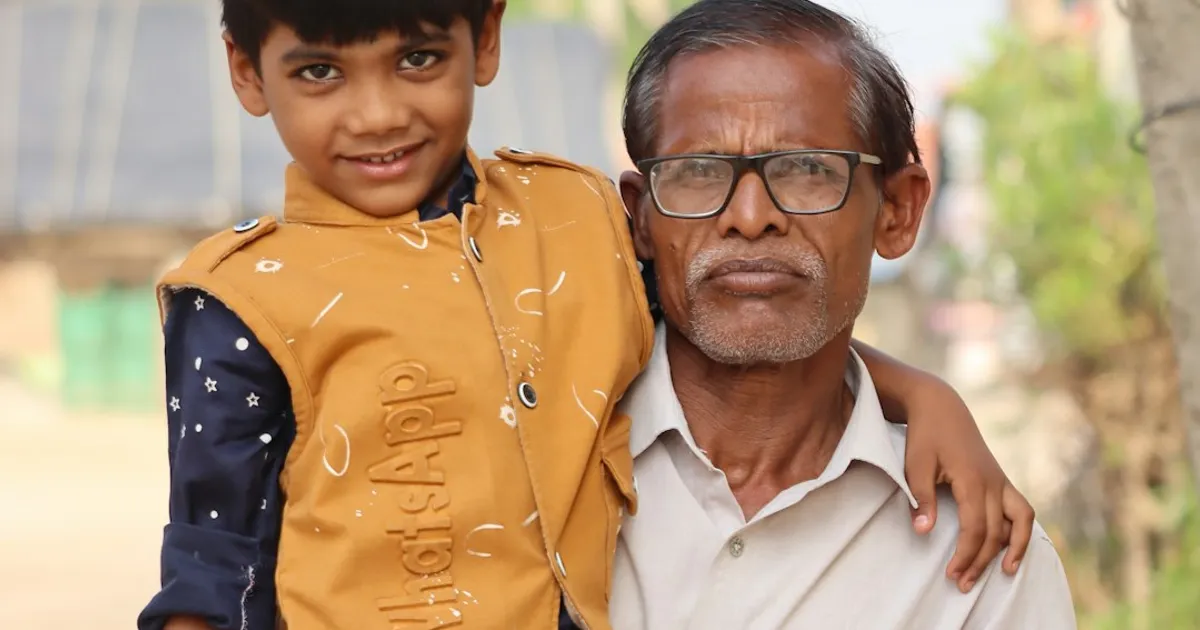
There is a particular kind of guilt that lives in the chest of every diaspora child. It arrives uninvited during Eid, on birthdays, at Diwali, when you are standing in a shop trying to pick something for the parents who raised you, sacrificed for you, and now refuse to want anything.
Bas kya chahiye, humein toh kuch nahi chahiye. We do not need anything.
And yet you know they are lying. Not because they want more things, but because there is something they need that no amount of shopping can solve. They need to be heard. They need their stories to survive. And you need to be the one who makes that happen.
The gift problem for South Asian families
Shopping for South Asian parents and grandparents is uniquely difficult. They grew up in a culture where saving money was a virtue, where new things were acquired only when necessary, where the idea of buying something just because it looked nice felt wasteful. Even after decades in London, Toronto, New York, Dubai, or Sydney, that instinct does not disappear.
You have probably tried the usual options:
- clothes they will wear once and put in the back of the wardrobe
- kitchen gadgets that sit beside five others they already own
- sweets that disappear in a day and leave no trace
- jewellery that gets stored in a drawer and rarely worn
- cash that gets immediately redirected to savings or grandchildren
None of these gifts are bad. But none of them last. None of them say what you actually want to say, which is: your life matters, your stories matter, and I want our family to remember you.
What parents who have everything actually want
The parents and grandparents who insist they do not need anything are not being difficult. They are being honest. They have lived through enough to know that objects do not carry the weight of a life. What they want is simpler and harder at the same time.
They want to know that their children understand what they went through. They want their grandchildren to know where they come from. They want the stories they have been telling for decades to survive in some form that outlasts them.
A Storyworth review published in 2025 noted that the best gifts for parents and grandparents are ones that create lasting family legacies through storytelling and reflection. The same principle applies to South Asian families, but with an important difference: the way stories are told, the languages they are told in, and the channels used to collect them need to match the family's actual habits.
Why a story preservation gift is different
A gift that preserves someone's stories is not like any other present. It does not sit on a shelf. It does not get used and replaced. It becomes the thing the family reaches for during gatherings, the book that gets passed from cousin to cousin, the recording that makes someone cry because they can still hear their grandmother's voice.
For South Asian families specifically, this type of gift solves several problems at once.
It respects the way elders actually communicate
Many South Asian grandparents are more comfortable speaking than writing. They may send voice notes on WhatsApp, tell stories over the phone, or share memories during chai. A gift that asks them to sit at a computer and type weekly answers in English will fail. A gift that lets them speak in Urdu, Hindi, Punjabi, Bengali, Gujarati, or Arabic — in the rhythm and language that feels natural — will succeed.
It bridges the language gap
Grandchildren often speak English more comfortably than their grandparents' language. But translating every story into English strips away the emotional truth of certain words. Dua, sabr, izzat, ghar, beta — these words carry more than their English equivalents can hold. A bilingual approach keeps the original language intact while giving younger readers the context they need.
It creates something physical and lasting
Digital files are fragile. They live in phones that get replaced, accounts that get forgotten, cloud storage that expires. A printed hardcover book that sits on a shelf, that can be opened during Eid or Diwali, that a grandchild can carry to university or to their own home — that is something no digital platform can replicate.
Practical gift ideas that actually preserve stories
If you are looking for a meaningful gift for a parent, grandparent, or elder in your family, here are options that go beyond the usual presents and create something the family will keep.
1. Gift a family story collection
The most direct approach is to give the gift of having their stories collected, edited, and turned into a book. This works especially well when you are the one organizing it. The elder does not need to understand the full process. They just need to answer one question at a time, in their own language, through a channel they already use.
The process explained on How It Works starts with gentle prompts delivered through WhatsApp, email, or guided calls. Over time, those responses become chapters, and those chapters become a bilingual hardcover book. The original voice recordings stay connected to the printed pages through QR codes, so readers can hear the storyteller's actual voice.
This is the gift that parents say they do not need but will cry when they receive.
2. Start with one recorded conversation
If a full book feels like too much to organize right now, start smaller. Record one conversation with a parent or grandparent. Ask one specific question and let them answer without interruption. Save the recording. Label it with the date and the question. That single recording is already more than most families have.
Good starting questions:
- What did your childhood home feel like in the morning?
- Who was the funniest person in your family growing up?
- What is one thing you learned from your parents that you still carry?
- What did you feel on the day you moved to a new city or country?
- What is a memory you hope your grandchildren know?
Each of these questions opens a door. The answer might be three minutes or thirty. Both are valuable.
3. Create a photo-and-story pairing
Many families have albums full of photographs with no context. A meaningful gift is to sit with an elder and go through those photos one by one, recording their explanation for each one. Who is in the picture? Where was it taken? What happened before and after? Why does this photo matter?
The result is not just a labeled album. It is a family archive where every image carries the storyteller's voice and memory. You can see how Qissa pairs photos with stories and voice recordings on Inside the Book.
4. Give the gift of prompts
Some elders need a nudge to start sharing. A set of thoughtful, culturally specific prompts can be a gift in itself. Instead of generic questions like "Tell me about your childhood," use prompts that connect to the specific experiences of South Asian life:
- What did your first Eid or Diwali in a new country feel like?
- What was the hardest thing about leaving the place you grew up?
- Which family recipe do you wish someone would learn properly?
- What did your parents never say directly but always showed?
- What is the story you have told the most, and why does it keep coming back?
These questions work because they are specific enough to answer but open enough to let the storyteller go wherever the memory takes them.
5. Build a family voice archive
Voice notes are the most natural form of storytelling for many South Asian elders. They can record while cooking, after prayer, during a quiet afternoon, or when a memory suddenly returns. The gift here is not the technology. The gift is the system that saves those recordings, organizes them, and turns them into something the family can use.
If you already have voice notes scattered across phones and message threads, read about turning voice notes into a family history book for practical steps.
When to give this gift
There is never a bad time to start preserving a family's stories, but certain moments carry extra urgency.
Birthdays and anniversaries are natural occasions. Instead of another present, give the promise that their story will be told and kept.
Eid, Diwali, and family gatherings bring everyone together. Use the time to record one conversation, collect one set of photos, or start the process with a gentle prompt.
When a parent or grandparent's health changes is the moment that makes the abstract feel concrete. Memory fades. Energy changes. The stories that felt permanent suddenly feel fragile. This is not meant to create panic. It is meant to create action.
When a new generation arrives — a new baby, a new marriage, a new home — is the time when families naturally think about legacy. The question shifts from "What do I give?" to "What do I want them to know?"
What makes this gift emotionally different
A sweater gets worn. A sweet gets eaten. A story gets passed down.
The families who have gone through this process report something consistent: the gift changes how the family sees itself. Cousins who barely speak start sharing recordings. Siblings who argue about logistics start agreeing on what matters. Grandchildren who barely knew their grandparents start asking questions they never thought to ask.
The best gift you can give a family is not something they can hold. It is something they can hear, read, and return to when the person who told the story is no longer in the room.
This is why parents say they do not need anything. They are not thinking about objects. They are thinking about whether their life will be remembered. The answer to that question is the most meaningful gift you can give.
How to start today
You do not need a plan, a budget, or a timeline. You need one conversation.
Pick one person in your family whose stories you want to preserve. Ask one question. Record the answer. Save it. That is the first step. Everything else — the chapters, the book, the archive — grows from that single recording.
If you want a guided process that handles the interviews, professional writing, translation where needed, editing, design, and printing, you can start a Qissa for a parent, grandparent, elder, or yourself. The process begins with warm onboarding and ends with a book your family can hold for generations.
If you have questions about how the process works, what languages are supported, or how long it takes, the FAQ page covers the most common concerns.
The stories are already there. They just need someone to ask.
Read next
Keep building the family archive.
These guides connect the next question, recording habit, or heirloom idea so the archive feels easier to keep building.
August 9, 2026 · 10 min read
How to Preserve Your Family's Hajj and Umrah Stories
Your parents' Hajj journey holds stories that deserve to outlive the photographs. Here is how to capture and preserve your family's pilgrimage memories forever.
June 14, 2026 · 10 min read
How to Start a Family Storytelling Night
Learn how to start a monthly family storytelling night that preserves your elders' memories, bridges generations, and keeps your heritage alive.
May 26, 2026 · 10 min read
The Father's Day Gift That Preserves Your Dad's Legacy
This Father's Day, give your abbu more than a tie. Preserve his story in a bilingual legacy book your family will read and treasure for generations to come.
Preserve the voice too