How to Save the Stories Behind Your Family's Heirlooms
Your dadi's gold bangles, your abbu's old watch, the wedding dupatta she never wore again - each one holds a story. Here is how to save them before they fade.
June 6, 2026 · 11 min read
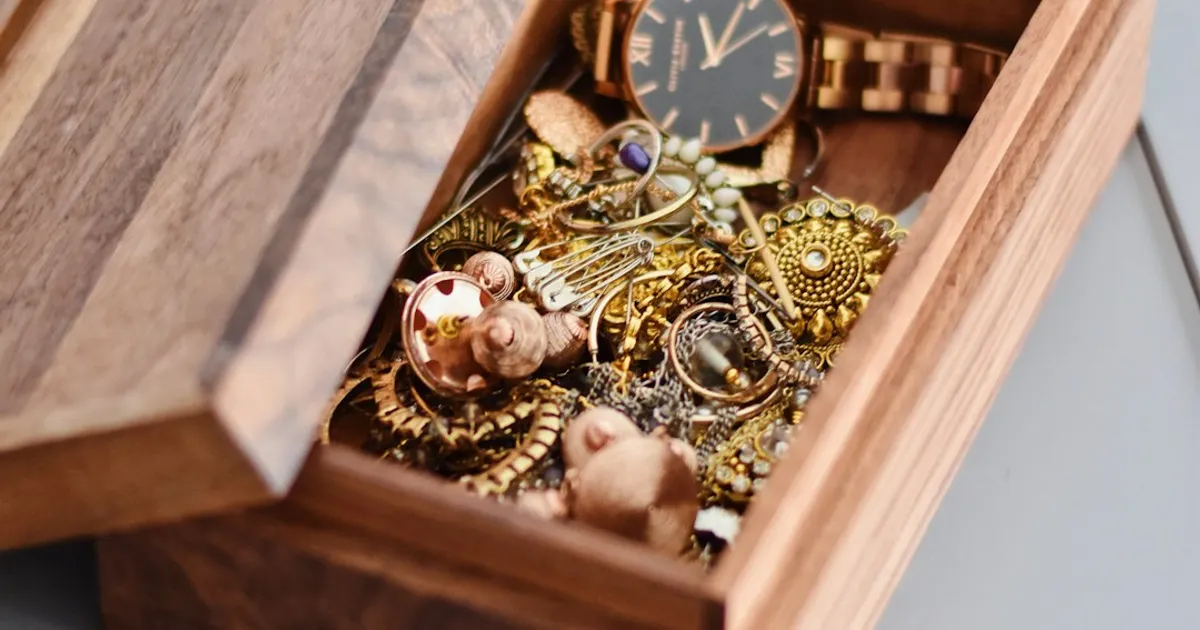
There is a velvet box in your mother's closet. You have seen it since you were a child, but you have never opened it. Inside are gold bangles slightly too small for your wrist, a thin gold chain with a pendant you cannot identify, a pair of earrings missing their pair, and a folded piece of cloth that smells faintly of old perfume. Your mother touches the box when she is tired, when she misses her own mother, when she wants to feel something she cannot name.
You have always meant to ask. But the question never comes out right. Whose were these? Where did they come from? Why do you keep them? What did they mean to the woman who wore them first?
The bangles are not just bangles. The chain is not just a chain. Each object in that box is a sentence in a story your family stopped telling out loud. And unless someone records that story, the sentence ends with the woman who still knows how to read it.
This is the quiet work of preserving family heirlooms. Not the objects. The stories.
Why Heirlooms Without Stories Become Garage Sale Items
It is easy to assume that an heirloom will always be treasured. It will not.
When an elder passes away, the family gathers at the house. Everyone wants a memento. The watch goes to the oldest son. The bangles go to the eldest daughter. The wedding sari goes into a trunk because no one is sure who should have it. The objects are distributed. Everyone is gentle. Everyone means well.
Five years later, the bangles are in a drawer. The watch is in a closet. The sari is in a suitcase under a bed. Nobody is being unkind. The objects have simply lost the story that gave them weight. They have become, in the language of grief, things. And things, without stories, get donated. Sold at estate sales. Forgotten.
An heirloom is not the object. It is the story attached to the object. Without the story, even a centuries-old piece of jewelry is just metal in a box.
This is why the work of preserving family heirloom stories is not sentimental. It is structural. It is the difference between a great-granddaughter wearing your dadi's bangles at her own wedding and those same bangles sitting in a thrift store bin in Mississauga, Karachi, or London, tagged at $4.99, with no one left who knows whose hand they once circled.
The South Asian Heirlooms That Carry the Most Stories
Every family has objects that hold more than their material value. In South Asian homes, certain heirlooms tend to carry the heaviest stories. If you want to begin, start with one of these.
The wedding jewelry. The set your nani wore. The tikka she adjusted a hundred times before walking into the mehndi. The gold churiyan given to her by her mother-in-law on the morning of her wedding. Wedding jewelry in our culture is rarely just ornament. It is currency, blessing, identity, and inheritance all at once. It almost always comes with a story. The story is almost always worth recording.
The dupatta or shawl. The one your dadi carried to every family wedding for forty years. The one she draped over her head at the dargah. The one your abbu used to wrap around his shoulders on cold winter mornings. A dupatta is light, fragile, and easy to underestimate. It is also one of the most emotionally loaded objects a family can keep.
The watch or fountain pen. A man's watch in South Asian families is rarely just a watch. It is the first salary purchase. The wedding gift. The thing he wore when he signed the family business papers, the immigration forms, the first cheque he ever sent home. A fountain pen tells the same story. So does an old pair of glasses, a wallet, a briefcase, or a misbaha.
The trunk, the box, the almirah. The wooden chest in the corner of the bedroom. The steel almirah in the drawing room that locks with a small key no one can find. The cardboard box of papers your mother refuses to throw out. These are heirlooms too, often the most important ones, because they contain the other heirlooms.
The handwritten letter or note. A note in your grandfather's handwriting. A letter your dadi wrote to her brother before Partition and never sent. A page torn from a Quran or a Gutka with a date in the margin. Paper is fragile. The handwriting is unique. The stories written on these pages cannot be reconstructed from memory once the writer is gone.
The piece of land or the key that goes with it. A plot in the village. A house your family had to leave. A key to a door that no longer exists. These are the most abstract heirlooms and the hardest to pass down, because the land and the door are gone. The story is all that remains.
Choose one object from this list. Choose whichever one your family has, whichever one your gut tightens around. That is the one to start with.
The 6 Questions That Bring an Heirloom to Life
Once you have chosen an object, you do not need to write a long essay or plan a formal interview. You need six questions. Ask them in whatever order the conversation takes you. Do not start with the biggest one. Start with the smallest.
- What is this object, and what was it used for? Start with the practical. What is it? What did it hold, hold up, write, carry, weigh, or measure? A surprising amount of family memory lives in the function of the object, not its appearance.
- Who owned it before you, and how did they get it? This is where the chain begins. Was it bought? Given? Inherited? Made by a relative? Sent from a village? Brought back from a journey? The path the object took to reach your hand is usually the start of the story.
- What do you remember most about the person who used it? Not the facts. The sensory details. The way she held the dupatta. The sound the bangles made when she walked across a room. The way the watch looked on his wrist. These are the things a photograph will never show and a written biography will never capture.
- Was there a specific moment attached to this object? A wedding, a birth, a death, a journey, a sale, a sacrifice. Most South Asian heirlooms have a defining moment. Some are joyful. Some are heavy. Both kinds are worth recording.
- What changed because of this object? Did it allow someone to leave home? Did it fund an education? Did it save a life? Did it represent a promise? Heirlooms are rarely passive. Most of them moved the family in some direction, and that movement is part of the story.
- What do you want the next generation to understand about it? This question matters more than the others. It tells you what the storyteller believes is at stake. It tells you what should be passed down alongside the object, and what should be protected.
These six questions, asked gently, can turn a piece of jewelry into a chapter. They can turn a quiet afternoon into the only recording your grandchildren will ever need to understand who their great-grandmother was.
How to Record the Story Behind an Object
You do not need a studio. You do not need a microphone. You do not need anyone's permission beyond the storyteller's.
The simplest method is the one most elders will actually use. Sit with the object in your hand, or place it between you. Open a voice note app on your phone. Start with a quiet bismillah, a salaam, or simply "I want to ask you about this." Then ask the first question. Let them answer in whatever language feels natural. Do not interrupt. Do not correct. Do not summarise. Let the pauses stay.
A recording of fifteen to thirty minutes around a single object is more valuable than a three-hour formal interview about an entire life. The object focuses memory. The object gives the storyteller somewhere to begin. The object makes the conversation finite, which is what most elders need in order to start at all.
If you can only record one thing, do not record a birthday greeting or a list of facts. Record an elder holding a single object and explaining what it meant to them. That recording will outlast every photograph in the family album.
After you record, do three things.
Transcribe the recording in the language it was spoken. Even a rough transcription is enough. Future readers need to be able to search the story, find the moment, and follow it.
Pair the recording with a photograph of the object. One clear photo, taken in good light, with the object on a plain background, is enough. If there are inscriptions, maker's marks, or repairs, photograph those close-up too.
Add a short written description. Two or three sentences. What it is. Who it belonged to. Roughly when. Where it came from. This is the metadata that makes the story findable in twenty years.
For families who want to take this further, Qissa makes it easier to gather object stories in warm recorded phone or Google Meet sessions. A Story Guide listens at the storyteller's pace and works with a professional writer to turn those memories into a finished book. The process is gentle because it has to be.
Building an Heirloom Archive That Lasts
The end goal is not a folder of voice notes on your phone. The end goal is something the next generation can actually hold, read, and return to.
A small archive of three to five heirlooms, with one good photograph, one clear voice recording, and a short written description for each, is more useful to your great-grandchildren than a hundred scattered files on five different cloud services. Discipline matters more than scale.
If you want to make it permanent, print it. A printed page lasts longer than a hard drive. A printed page can sit in a drawer, in a trunk, in the box with the bangles themselves. A printed page survives power cuts, deleted accounts, and forgotten passwords.
This is one reason Qissa places the photographs and written story together in a hardcover. With the storyteller's approval, selected audio can be privately QR-linked beside the relevant memory. The object sits next to it, or inside it, or in the place it has always lived. Three formats, one story. You can see what the final book looks like.
You do not have to use any service to do this well. A simple folder with photos, transcriptions, and short notes is enough. The important part is that the work is done at all, and that the work is done now, while the people who know the stories are still here to tell them.
The Object You Have Been Avoiding
Every family has the heirloom no one talks about. The one in the box no one opens. The one in the trunk no one moves. The one that smells like someone who is no longer alive.
Pick that one.
Ask the question you have been avoiding. Hold the object. Press record. Let the person who still remembers tell the story, in their own words, in their own language, with their own pauses. You do not have to do anything with the recording yet. You just have to make it. The recording is the act of preservation. Everything else is format.
The bangles in your mother's closet are waiting. The watch in your father's drawer is waiting. The dupatta at the bottom of the trunk is waiting. They have been waiting longer than you have been alive.
The next generation will inherit whatever you leave behind. The choice is whether you leave them objects, or whether you leave them stories.
If you are not sure where to start, the Qissa FAQ answers the most common questions families ask before they begin. And when you are ready, starting a Qissa takes only a few minutes. The Story Guide will take it from there at the storyteller's pace.
Read next
Keep building the family archive.
These guides connect the next question, recording habit, or heirloom idea so the archive feels easier to keep building.
June 5, 2026 · 11 min read
How to Build a Family Archive Your Children Will Actually Use
Most family archives sit forgotten in boxes and hard drives. Here is how to build a family archive your children will actually open, read, and treasure for generations.
June 4, 2026 · 11 min read
How to Digitize Old Family Photos Before They Fade
Old family photos from South Asian homes are fading. Learn how to digitize, organize, and preserve them alongside voice stories in a family legacy book.
June 4, 2026 · 10 min read
An Open When Letter Box for the Moments You Cannot Be There
An open when letter box lets you write letters for every emotional moment. Learn how this guided keepsake kit helps you be there even when you cannot be in the room.
Preserve the voice too