
Preserve Your Grandmother's Crafts Before They're Lost
Your grandmother's phulkari, chikankari, and quilting skills live in her hands. Learn how to preserve her traditional crafts before the skills are gone forever.
August 16, 2026 · 10 min read
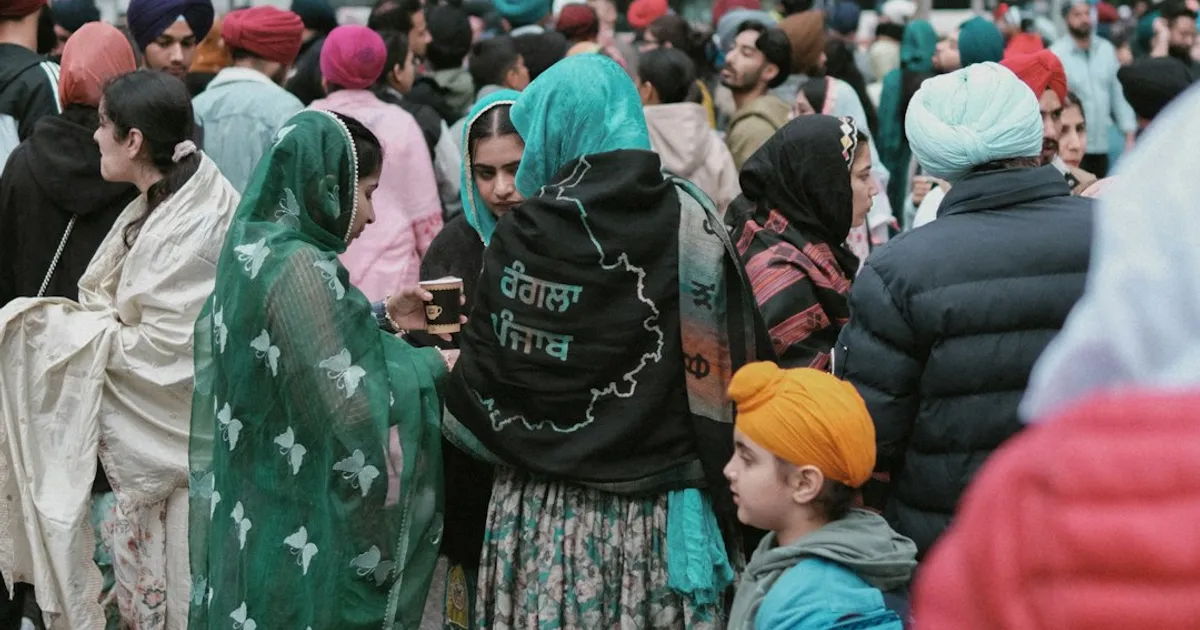
Your grandmother's hands have not stopped moving. In the chair by the window she is doing what she has always done: turning a needle, pulling a thread, making a flower appear on plain cloth. There is no pattern in front of her; there never was. The design lives in her memory, the rhythm in her fingers, the measurement in her eye. When you ask what she is making, she says what she always says: "Yeh haath ka kaam hai. Bas." It is handwork. Just that.
One day, her hands will stop. And when they do, a question no one has asked will surface on its own: who else can do this?
The answer, for most South Asian families, is no one.
This post is about the craft knowledge that lives in your grandmother's fingers and nowhere else. Not recipes, not remedies, not the stories behind the objects she owned, but the skills themselves: the phulkari, the chikankari, the zardozi, the ralli quilts, the kantha, the knitting and tailoring a woman spent fifty years learning and never wrote down. This is how to preserve her crafts before the skills are lost, while her hands can still show you.
Why craft skills disappear without anyone noticing
Families are good at noticing lost things. A photograph fades, a cassette tape decays, a box of letters goes unread, and someone says, we should have saved that. Skills disappear differently. They do not crumble or corrode. They simply stop being practiced, one generation after the other, until the day someone asks who taught you that? and the only honest answer is no one taught me. I watched.
Skills live in the body, not the head
Ask your grandmother to explain phulkari and she will struggle. Ask her to show you, and the stitches arrange themselves perfectly. Traditional embroidery was worked from memory, with the embroiderer counting threads in the base fabric to keep the pattern symmetrical. The knowledge is in the hands, the way a bicycle is in the legs. You have to watch it work.
Machine-made work makes the skill seem unimportant
The strongest force against traditional crafts is not time but convenience. A machine can mimic chikankari in minutes and print a phulkari pattern onto fabric faster than a woman can set up her frame. So the quiet assumption spreads: if the factory can do this, the skill is not needed. What the factory cannot copy is the person and the hundred small decisions that make handwork what it is. Nobody explains that, and the skill keeps shrinking.
The body that carries it is not being replaced
Every craftswoman is a library that never opened. When she dies, the library closes. There is no photocopy, no backup, no archive. This is why preserving family crafts is more urgent than preserving photographs: a photo is a copy of something that already existed, while a skill exists only while a living person is doing it.
A skill is the only family inheritance that vanishes the moment its owner stops moving. Every other heirloom can be saved after the fact. A craft cannot.
The South Asian crafts most at risk in diaspora families
Every family has its own craft. If you are not sure which ones your family practiced, start with the ones practiced by women in the home, because those are the least likely to have been documented anywhere.
Phulkari. The folk embroidery of Punjab, literally flower work. It was not decoration; it was a visual language. Women embroidered phulkaris for weddings, and the pieces carried meaning, blessing, and family status. The folk song about it is a love letter: Ih phulkari meri maan ne kadhi - this phulkari was embroidered by my mother, and I embrace it warmly. A phulkari takes months, and one is probably on your wall right now, with nobody left in the family who can read its stitches.
Chikankari. The fine, white-on-white hand embroidery of Lucknow, with delicate floral and paisley motifs. It peaked under the Mughal court and survived by passing from hand to hand, but fewer diaspora families have a nani who still does it.
Zardozi and aari work. The raised, metallic-thread embroidery used on wedding and festive clothing. Aari is a hooked-needle craft worked on a frame: slow, exacting, and beautiful. The difference between real zardozi and a machine imitation is obvious to anyone who has seen both, and it is disappearing with the people who made the real thing.
Ralli and kantha quilts. Patchwork and running-stitch quilts made from old cloth: the ralli in Sindh and Balochistan, the kantha in Bengal. Made from worn-out garments recycled into warmth, each one carried the memory of the clothes it came from. The geometry is complex and the skill entirely in the body.
Knitting, crochet, and tailoring. The daily crafts: baby cardigans, crocheted doilies on the sideboard, kurtas and shalwar kameez cut and stitched by hand. These are the crafts most likely to exist in your family right now, precisely because they are the most practical, and they are also the most overlooked. Nobody thinks of a knitted blanket as heritage. It is exactly the heritage that is vanishing.
The crafts of the hands that are not textiles. Basket weaving from grass, beadwork, henna, paper flowers. If a woman in your family made something by hand, it counts. The preservation method is the same for all of them.
How to capture a craft while her hands still know it
You cannot record a skill the way you record a story. A voice recorder will capture her words but not her technique. A photograph will capture the finished piece but not the movement. A craft needs your hands, your eyes, and a phone.
Film her hands, not her face
The most valuable footage you will ever take of your grandmother is ten minutes of close-up camera work on her hands while she stitches. Let the needle move in silence. Film the way she threads it, counts threads, knots, and holds the cloth taut. If you only do one thing after reading this, do it this week.
Watch her work before you ask anything
Interviewing a craftswoman like a storyteller does not work. She will say "kuch nahi, bas kar leti hoon" - nothing, I just do it. Ask while her hands are busy, as an aside, and watch as she works. A woman talking with her hands talks more freely than a woman being interviewed.
Record one technique at a time
Do not try to capture a whole craft in one session. Choose a single move: one motif, one stitch, one way of finishing an edge. Ask her to do it slowly, then at her normal speed. Ask her to name it. The names matter: they are how the next generation finds the knowledge later, and they carry meaning that English cannot.
Photograph the details no one photographs
Take photos of the front, yes, but also the back: good hand embroidery is tidy in reverse and shows how the counting worked. Photograph the tools: the needle, the thimble, the frame, the spools of thread. And photograph the half-finished piece, a portrait of a craft in progress, more moving than any finished one.
The questions that unlock a craftswoman's knowledge
When her hands are working, ask these questions. Keep them gentle, and do not ask all of them at once.
- Who taught you, and where did you learn? The answer is almost always a mother, a grandmother, or a circle of women working together. That origin story is the first page of the craft's history.
- What is this stitch called, and what does it mean? Patterns often carry names and meanings, a language of their own.
- What did you make for weddings and special days? In South Asian crafts, weddings were the moment the best work happened: the trousseau, the chope presented to the bride, the odhnis.
- What happened to the pieces you made? Where the work went, who wore it, what it became.
- What would you teach someone, if they asked? This question often surprises elders; it gives them permission to want a student.
- Which piece are you proudest of? The answer usually brings out a story her hands have kept for decades.
Let her answer in Urdu, Punjabi, or whichever language is comfortable. Do not correct her. Do not translate as she speaks. The natural language of the craft does not survive editing.
Pass the skill on to someone, anyone
Documentation preserves the memory of a craft. Transmission keeps the craft itself alive, and it means teaching the skill to another living person.
You do not have to become a master. Learn one small thing: a single stitch or motif. Ask her to teach you, film it as she teaches, and let the footage become a lesson you can return to. The act of asking is itself a gift, because most craftswomen assume no one will ever ask again. In a diaspora home full of school, work, and deadlines, simply being a willing student can revive a skill that was quietly dying.
If a child in the family shows interest, encourage it without turning it into homework. A young girl who watches her great-grandmother embroider and asks to try is the best possible outcome. That is how every one of these skills survived for centuries: one patient hand passing to a more patient hand.
Turning her craft into a lasting family legacy
Once you have the footage, the photos, and the recorded voice, the work needs a home. A folder of videos on your phone is a start, but it sits alone and will not outlast your phone.
Pair the documentation with the stories. Record your grandmother explaining the craft and the life it was part of, and let the moving image of her hands sit beside the sound of her voice. When the craft is written down, keep the technique names in both languages. Chikankari should appear on the page next to its English description, the way any proper glossary treats a gift from Urdu.
This is where a family legacy book earns its place. How Qissa works is built around exactly this pairing: recorded sessions with a warm Story Guide, transcription in the language that was spoken, and a writer who turns the memories into finished prose. The photographs of her hands, her tools, and her half-finished pieces belong in that book beside the words. You can see what the final book looks like, with its photos and story bound together in hardcover. It is the difference between a phone full of files and a thing the next generation can hold.
The craft is in the hands, not the pattern
The phulkari on your wall will outlive the hands that made it. What you can control is whether the knowledge also dies, or whether it becomes part of the family's permanent record: the footage of the needle moving, the voice naming each stitch, the tale of who taught her and where it all began.
She will not volunteer these things. She has never thought of her work as precious, because it was simply what she did, bas. The preservation will have to begin with you. It will be slow and worth it, because a craft is the only inheritance that must be recorded while its owner is still alive.
Start small. Tomorrow, sit beside her with your phone on the armrest. Ask what she is stitching. Let the camera rest on her hands. Those ten minutes are the beginning of saving something no factory will ever replace.
If you would like help turning that recording into a book your children and grandchildren can actually open and read, the Qissa FAQ covers the questions families ask first. And when you are ready, starting a Qissa takes a few minutes. The Story Guide will take it from there.
Read next
Keep building the family archive.
These guides connect the next question, recording habit, or heirloom idea so the archive feels easier to keep building.
August 14, 2026 · 9 min read
Questions to Ask Your Nana or Dada Before Stories Fade
Discover 30 meaningful questions to ask your South Asian grandfather (Nana or Dada) to preserve his boyhood memories, wisdom, and family legacy.
August 9, 2026 · 10 min read
How to Preserve Your Family's Hajj and Umrah Stories
Your parents' Hajj journey holds stories that deserve to outlive the photographs. Here is how to capture and preserve your family's pilgrimage memories forever.
August 7, 2026 · 8 min read
How to Record Your Own Life Story Before It's Too Late
A gentle, practical guide for saving your own voice, your stories, and your life history before the window closes. Start recording your memoir today, even if you are not a writer.
Preserve the voice too