
How to Preserve Your Family's Hajj and Umrah Stories
Your parents' Hajj journey holds stories that deserve to outlive the photographs. Here is how to capture and preserve your family's pilgrimage memories forever.
August 9, 2026 · 10 min read
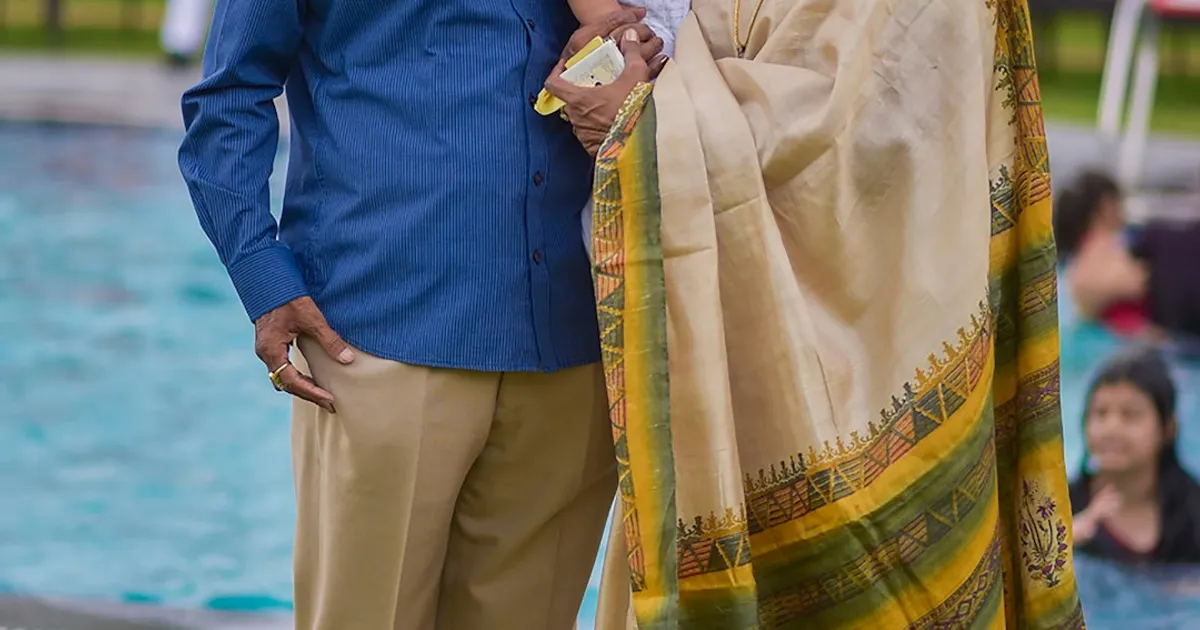
Your dadi still talks about it. The moment she saw the Kaaba for the first time - after decades of making dua for that exact moment - she wept without being able to explain why. Your nana remembers the stranger who gave him water at Mina, how they couldn't speak the same language but understood each other completely. Your father talks about how the Fajr adhan at Masjid al-Haram sounded different from every other adhan he had heard in his life.
These are not travel memories. They are spiritual turning points, wrapped in the most sacred journey a Muslim family can take. And yet, for most South Asian families, the Hajj story lives only in the mind of the person who made the journey - passed down in fragments at dinner tables, triggered by old photos, slowly fading with age.
If your parents or grandparents have performed Hajj or Umrah, their story deserves to be preserved with the same care they gave to performing the journey itself.
Why Hajj and Umrah Stories Are Different From Other Family Memories
Most family stories are about ordinary life made extraordinary with the passage of time. A wedding, a move, a difficult year. But the Hajj story exists in a completely different register.
For the people who make this journey, it is often described as the most meaningful experience of their life. It is the moment they felt closest to Allah, furthest from the noise of everyday existence, most certain of why they are here. It reshapes how they see themselves, how they pray, how they face difficulty.
That weight makes the story worth capturing - not just as a record of where they went, but as a transmission of faith and feeling to the generations who come after.
Your children may never hear the sound of Takbir filling the courtyard at Masjid al-Haram at Fajr. But they can know what it felt like for their grandparent to stand there.
When to Start - and Why Now Is the Right Time
There is a tendency to wait. To think the story will always be there, that there will be a better moment, that your elder would not want to be interviewed about something so personal.
The truth is, the window is narrower than it feels. Memory is not stable - it is most vivid in the years closest to the experience, and most vulnerable to illness, fatigue, and time.
If your parent or grandparent performed Hajj five years ago, their memory of it is already softening at the edges. If they went twenty years ago, entire chapters may already be gone.
The right time is now. Not after Eid. Not when you visit next. Now.
How to Begin the Conversation
The first thing to understand is that you are not conducting an interview. You are opening a door.
Most elders who have performed Hajj love to talk about it - they just need a reason, a prompt, someone who genuinely wants to listen. Start simply.
Start with a photograph. If your family has any photo from the journey - even a blurry one taken outside the Haram or on the plane - use it as a starting point. "Tell me what was happening here." Old photos are extraordinary memory triggers.
Ask about the preparation, not the journey. Questions about packing, the visa process, the feeling in the days before leaving - these are often where the most personal stories live, because they are the moments no one else records.
Ask about the people, not the places. "Who did you travel with?" or "Who did you meet there?" gives your elder a person to anchor the story to, which tends to unlock more detail than asking about rituals and locations.
Let silence do its work. After your elder answers, wait. Do not rush to the next question. The most meaningful details often come in the pause after the first answer.
The Questions Worth Asking
Here are specific questions that tend to surface the most memorable stories from Hajj and Umrah journeys:
Before the Journey
- What made you decide it was time to go?
- How long had you been making dua to make this journey?
- What were you most nervous about?
- What did you pack that you thought was essential - and turned out not to be?
- Who did you say goodbye to, and how did that feel?
During the Journey
- What was your first sight of the Kaaba like? What did you feel?
- Was there a moment that surprised you - something you did not expect?
- Did you meet anyone on the journey who stays in your memory?
- What did you pray for, standing at the Kaaba or in the Rawdah?
- Was there a moment when you cried? What brought that on?
- What was the hardest part of the journey?
- What was the most beautiful?
After Returning
- How did you feel the first time you prayed in your own home after coming back?
- Did anything change in you after Hajj - in how you prayed, how you thought, how you treated people?
- Is there something about the journey you have never been able to fully explain in words?
- What do you want your grandchildren to know about what it meant to you?
Write these down. Or better, record the answers. The voice matters as much as the words.
How to Record the Story
You do not need a professional microphone or a quiet studio. What you need is a phone and a willingness to just start.
Voice notes are the most accessible format. WhatsApp voice messages are particularly natural for many South Asian elders - they are already comfortable sending and receiving them. You can ask a question over WhatsApp and ask them to reply in a voice note, which captures their voice in an informal, unhurried way.
Keep sessions short. Fifteen to thirty minutes is often more productive than an hour-long session. Older adults tire more easily, and shorter sessions mean more focused answers. You can always come back for another session.
Record in their language. If your elder is most comfortable in Urdu, Punjabi, Pashto, or Arabic, let them tell the story in that language. The emotional texture of a story told in one's mother tongue is irreplaceable. You can arrange for translation later - but you cannot go back and capture the feeling if you pushed them to speak in a language that made them feel distant from the memory.
Take photos of objects connected to the journey. The ihram cloth stored in a cupboard, the tasbih brought back from Medina, the zamzam bottle still sitting on a shelf. Photograph these with your phone and record a voice note of your elder explaining what they are. Objects carry stories in a way that words alone cannot.
Turning the Story Into Something That Lasts
Recordings and notes are the raw material. The real preservation happens when you turn them into something that can be held, read, passed on.
A Qissa legacy book does exactly this. Voice recordings - in Urdu, in Punjabi, in any language your elder speaks - are transcribed, translated if needed, edited with care, and woven together with photographs into a printed, hardcover book. It becomes the place where the Hajj story lives permanently: not in a folder on someone's phone, not in a memory that will fade, but in a book that sits on a shelf and gets read across generations.
The format matters more than people expect. A story that exists only as a WhatsApp voice note is easy to lose, easy to forget, impossible to share with a grandchild who is not yet born. A story in a printed book can be read by your great-grandchildren.
When you start a Qissa, you are not just preserving one journey. You are building a document of faith and family that your family will return to long after the people who made that journey are gone.
"The stories from Hajj are not just about what happened there. They are about who your elder became because of it - and that is the part worth passing down."
What Happens When Your Elder Is Reluctant
Some elders feel that their Hajj experience is too personal to put into words, or too sacred to be recorded. This deserves genuine respect.
If your elder is hesitant, do not push. Instead, try a softer approach: "You don't have to say everything. Just tell me one thing - one moment - that you want me to know about."
Often, the invitation to share something small opens into something large. And if they genuinely prefer privacy, honour that. The goal is not documentation for its own sake. The goal is connection - and sometimes the most meaningful connection comes from simply sitting with your elder and listening, without a phone in sight.
You might also share this from a different angle: not "I want to record you" but "I want your grandchildren to know your story." For many elders, the idea of passing something on to grandchildren is a motivation that shifts the conversation entirely.
The Danger of Waiting
There is a specific kind of grief that comes from realizing you never asked.
You are at a janazah, or you are clearing out a house - and you find the old photos from Mecca, the worn tasbih, the piece of paper with a dua written in your grandfather's handwriting - and you realize you never asked him what it was like. You never knew what he felt standing at the Kaaba. You never heard the story of who he travelled with, or what he prayed for, or whether he cried.
That grief has no remedy. There is no way to go back.
The pilgrimage your parents or grandparents made was one of the most significant events of their lives. It shaped who they became. It lives in the way they pray, in the duas they make at Fajr, in the quiet certainty they carry about what matters.
You still have time to ask. You still have time to record. You still have time to turn that story into something that will outlast all of you.
Where to Begin
If you are not sure where to start, here is the simplest possible version: tonight, call your parent or grandparent and ask them one question. "Tell me one thing you remember about your Hajj." Just one question. Record the answer on your phone.
That is enough for today. Tomorrow you can ask another.
When you have a collection of recordings - even just a handful of voice notes - you are ready to explore how Qissa works and turn them into something permanent.
The story exists. It is sitting inside someone you love, waiting to be asked about. The only thing between that story and the silence is you picking up the phone.
---
If you have questions about how to get started capturing family stories - Hajj or otherwise - our FAQ answers the most common ones. And when you are ready to turn voice notes into a printed legacy book, you can see what is inside a Qissa before you begin.
Read next
Keep building the family archive.
These guides connect the next question, recording habit, or heirloom idea so the archive feels easier to keep building.
June 14, 2026 · 10 min read
How to Start a Family Storytelling Night
Learn how to start a monthly family storytelling night that preserves your elders' memories, bridges generations, and keeps your heritage alive.
May 26, 2026 · 10 min read
The Father's Day Gift That Preserves Your Dad's Legacy
This Father's Day, give your abbu more than a tie. Preserve his story in a bilingual legacy book your family will read and treasure for generations to come.
May 16, 2026 · 10 min read
Meaningful Gifts for South Asian Parents Who Have Everything
Struggling to find meaningful gifts for South Asian parents and grandparents? Discover why preserving their stories is the most emotional and lasting gift you can give.
Preserve the voice too