Family History Interview Consent: A Simple Guide
Learn how to ask for family history interview consent, set privacy boundaries, and preserve an elder's story with respect across languages and generations.
September 17, 2026 · 10 min read
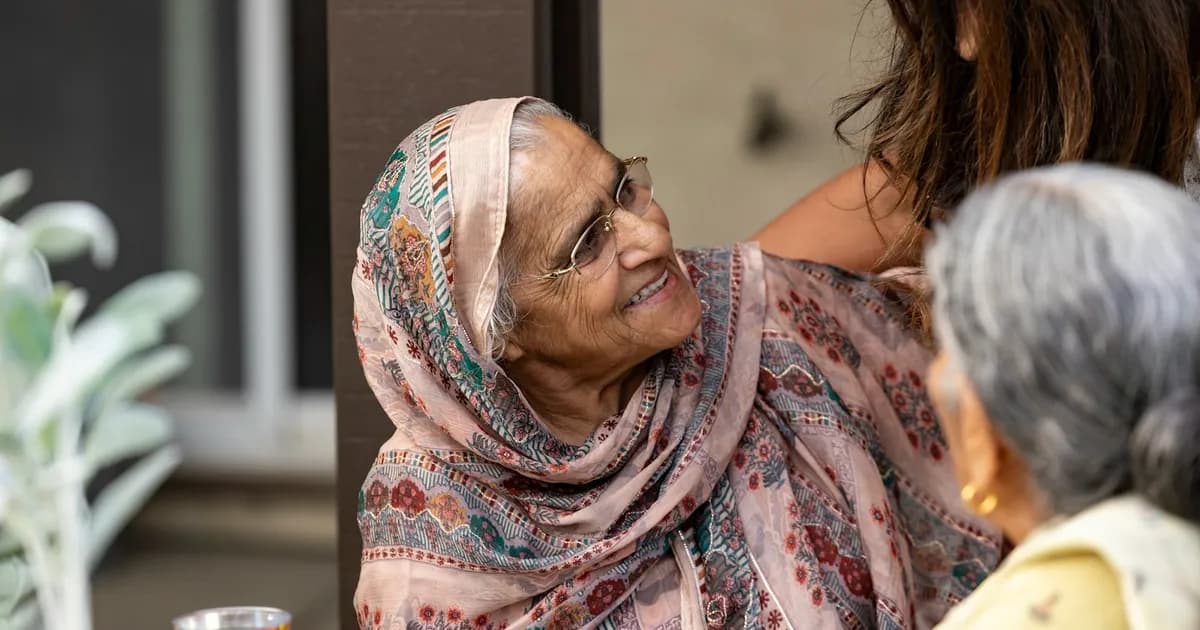
The first question in a family history interview should be a permission question. Before you open the voice recorder or bring out the old photographs, ask whether your relative wants to share their story, what they hope will come from it, and who may hear it. That conversation is family history interview consent. It creates trust before it creates a file.
For a South Asian family, consent may happen over chai, during a drive, or in a WhatsApp call between countries. It may include Urdu, Hindi, Sindhi, Bengali, Punjabi, Gujarati, or another comfortable language. The format can be informal, but the care needs to be precise. Your relative should understand what is being recorded, how it will be kept, and what choices remain theirs.
What family history interview consent actually covers
Consent is more than asking, "Can I record this?" It is an agreement about the story's whole journey. The Oral History Association's best practices recommend explaining its purpose, recording process, review, preservation, access, possible uses, and timeline before recording.
For a private family project, you can cover the same ground in plain language. Ask your storyteller to decide:
- whether the conversation may be recorded in audio or video
- which subjects are welcome and which are off limits
- who may listen to the original recording
- whether a transcript or translation may be made
- whether names, photographs, places, and other identifying details may be used
- whether the story is for the immediate family, future descendants, or public sharing
- when they can review, correct, restrict, or withdraw material
These decisions can be written down, recorded at the beginning of the session, or both. A form can help, especially when several people are involved, but a form alone does not make permission informed. The storyteller should be able to explain the agreement in their own words.
Start with a conversation, not a signature
Many elders become guarded when a phone appears and the word interview sounds formal. Begin with the reason for your interest. You might say, "I keep thinking about the house where you grew up. I would love to hear it in your own words and keep the recording for the family. Would that feel comfortable?"
Give the person time to ask questions. Explain the session length, breaks, and recording device. If the project may become a printed book, family website, or public post, say so now. A private voice note and a public video have different consequences.
Use everyday words for the people involved. Call the person speaking the storyteller, explain that you are the interviewer, and describe a transcript as a written version of the recording. Name any translator, editor, or writer. Do not hide a future use behind a promise to "do something nice" with the audio.
The Oral History Association's guide for participants offers a useful standard: people should know whether they can review the recording, refuse a question, request confidentiality, and understand the agreement. A family conversation deserves that respect.
Set privacy boundaries before the first story
Privacy is easiest to protect when you decide on boundaries before a sensitive detail arrives. Make a short list together. The list can change later.
Agree on topics that are off limits
Some subjects may involve a living relative, marriage, finances, illness, migration status, or violence. Your storyteller may want to discuss a subject privately, remove names, or leave it untouched. Every one of those choices is valid.
Offer a simple pause phrase such as, "That part stays between us." When you hear it, stop the recording or mark the time without asking for an explanation. Never use a dramatic disclosure as proof that the interview was successful.
Consider the privacy of people who are not in the room
Your relative can give permission for their own words. They cannot automatically give permission for another person's medical information, legal problem, photograph, or private letter. If a story identifies someone else, ask whether the detail can be kept, changed, or removed.
Write down decisions while they are fresh. "Keep the story, remove the surname" is more useful than a general promise to be careful.
Choose an access level
An access plan can be as simple as three circles:
- Private: only the storyteller and named family members may hear it.
- Family: relatives may read or listen, with no public posting.
- Public: the agreed extract may appear on a website, social channel, exhibition, or other public platform.
The storyteller can choose different levels for different chapters. A childhood memory may be open while a migration or health story remains private. The South Asian American Digital Archive's oral history resource explains why intended use, risks, withdrawal, and formal agreements belong in the conversation.
A good consent conversation leaves the storyteller with more control over their story than they had before the recorder was switched on.
Make permission specific to the finished work
Recording, editing, translating, printing, and publishing are separate actions. Ask about each one. If the interview will become a family history book, explain how passages, context, and translations will be handled, who sees a draft, and how corrections work.
Use a checklist like this before the first session:
- Purpose: Why are we making this record?
- Materials: Audio, video, photos, transcripts, translations, or notes?
- People: Who will interview, translate, write, edit, design, print, or store it?
- Audience: Who may access the original and finished work?
- Review: When can the storyteller correct names, dates, meanings, or sensitive passages?
- Restrictions: Which sections stay private, and for how long?
- Changes and copy: How can permission change, and how will the storyteller receive their recording, transcript, or book?
This checklist is practical guidance, not a legal release. For commercial publication, licensing, or identifiable information outside the family, get advice for your jurisdiction. Legal terminology varies across countries.
Respect language, hierarchy, and cultural context
An elder may agree politely while unsure, and a younger relative may feel unable to refuse an older sibling. Consent is stronger when refusal is easy and you repeat that the storyteller can stop at any time.
Ask which language feels most comfortable for each topic. Someone may describe childhood in Urdu, explain work in English, and use a Punjabi nickname. Keep meaningful phrasing. If you translate, let the storyteller or a trusted reviewer check names, idioms, jokes, and regional references.
The Oral History Association's social justice guidance recommends discussing language format, translator choices, privacy, access, and rolling consent. Permission can be revisited as the project develops, especially after a storyteller hears a transcript or sees a draft.
Respect is not a costume. You do not need a staged heritage setting, an accent, or impressive dates. Sit where the person is comfortable and let them choose the kitchen, veranda, car, or video call. An ordinary setting often holds the details that make a story recognisable.
Record in a way that leaves room to say no
Good technique supports consent. At the start of each recording, state the date, names or preferred pseudonyms, general location, and session subject. Do not announce a private address. This lead-in makes the file understandable years later.
Agree on a session length, then stay flexible. Twenty or thirty minutes may be enough. A pause, water, or a changed subject is part of the process. Ask open questions and leave silence. You can say, "Would you like to continue, or should we leave it here?"
Keep a session log with the file name, date, language, topics, restrictions, and follow-up promises. Back up the original in more than one secure place. Label it so a future grandchild knows whose voice it contains. Explain any public or AI transcription upload and receive permission first.
Let the storyteller review the result
Review is where the storyteller can catch a wrong name, correct a date, clarify a translation, or keep a sentence private. Send an excerpt or draft in a usable format. If reading is difficult, play it back or ask a trusted person to read it aloud in the preferred language.
Invite specific feedback:
- Is this what you meant?
- Is the spelling of every name right?
- Does the translation sound like you?
- Is any detail too private for this audience?
- Is there a small pleasure or achievement missing from the account?
Record requested changes and confirm when they are complete. If relatives disagree about a memory, preserve the disagreement as context. A recollection and an independently verified date can both be documented as different kinds of evidence.
Store and share according to the agreement
Make the access plan visible to the people who maintain the archive. A folder can contain a short readme with the storyteller's name, languages, dates, permissions, restrictions, and review status. Keep the original audio alongside any edited versions. Store the consent notes with the files they govern.
If the storyteller later narrows permission, honour the new boundary wherever you still control the material. Public copies can be downloaded, quoted, or reshared, so explain that complete removal may be impossible once something is public. This is one reason family projects often begin with a private audience and expand only after review.
For families who want a finished object, Qissa combines a warm Story Guide conversation with professional writing, photographs, review, and a hardcover. You can see how the process works, explore what goes inside a Qissa book, and read the frequently asked questions. The storyteller remains central to language, details, and the final shape. When ready, you can start a Qissa.
Family history interview consent FAQ
Do I need a written consent form for a private family recording?
A written form is useful when a recording will be edited, translated, printed, or widely shared. For a small private project, a clear recorded agreement plus notes may work. Explain purpose, audience, storage, review, and restrictions in an understood language. Seek legal advice for public or commercial use.
Can consent be verbal?
Yes, if it is informed and documented. The OHA recognises that time, language, literacy, and access can make a signature impractical. Record the explanation and agreement before the interview, then note what was decided.
Can someone change their mind?
They can ask to pause, restrict, correct, or withdraw material according to the agreement and project stage. Revisit permission for a new audience, platform, translation, or public use. After public release, full removal may be impossible, so discuss that risk early.
What if an elder refuses to be recorded?
Accept the answer without persuasion. Take notes only if they agree, or simply enjoy the conversation. A story gathered without trust cannot become a family heirloom. Another opportunity may come later, or the memory may remain private.
How do I handle a story that belongs to several people?
Separate the storyteller's account from claims about others. Ask whether names and identifying details can be used. Invite other contributors to permit their words, photographs, or documents. Note whose perspective each passage represents.
Give the story a safe beginning
Family history interview consent is an act of welcome. It tells an elder that their voice has an owner, context, and choices. It gives the family a practical map for caring for the recording after the conversation.
Start with one person and one modest question. Ask about the first room they remember, a long-unmentioned friend, or a decision that changed an ordinary Tuesday. Explain what you hope to make, listen, and let the storyteller set the pace. If the project grows into a translated transcript, shared archive, or Qissa hardcover, let permission grow with it. The best preserved story is one the person who lived it is glad to have given.
Read next
Keep building the family archive.
These guides connect the next question, recording habit, or heirloom idea so the archive feels easier to keep building.
June 25, 2026 · 10 min read
How to Preserve Your Grandparents' Love Story Before It Fades
Your grandparents' love story, how they met and married, is fading. Learn how to preserve their courtship, wedding, and life together before it's lost.
June 13, 2026 · 10 min read
How to Preserve Your Family's Partition Stories
Learn how to gently ask your elders about 1947 Partition memories, preserve their voices, and pass these South Asian family stories to the next generation.
May 5, 2026 · 4 min read
Questions to Ask Your Dadi Before Her Stories Fade
Thoughtful questions to ask your dadi so her memories, language, recipes, faith, humor, and family history are not lost.
Preserve the voice too