How to Preserve Your Grandparents' Love Story Before It Fades
Your grandparents' love story, how they met and married, is fading. Learn how to preserve their courtship, wedding, and life together before it's lost.
June 25, 2026 · 10 min read
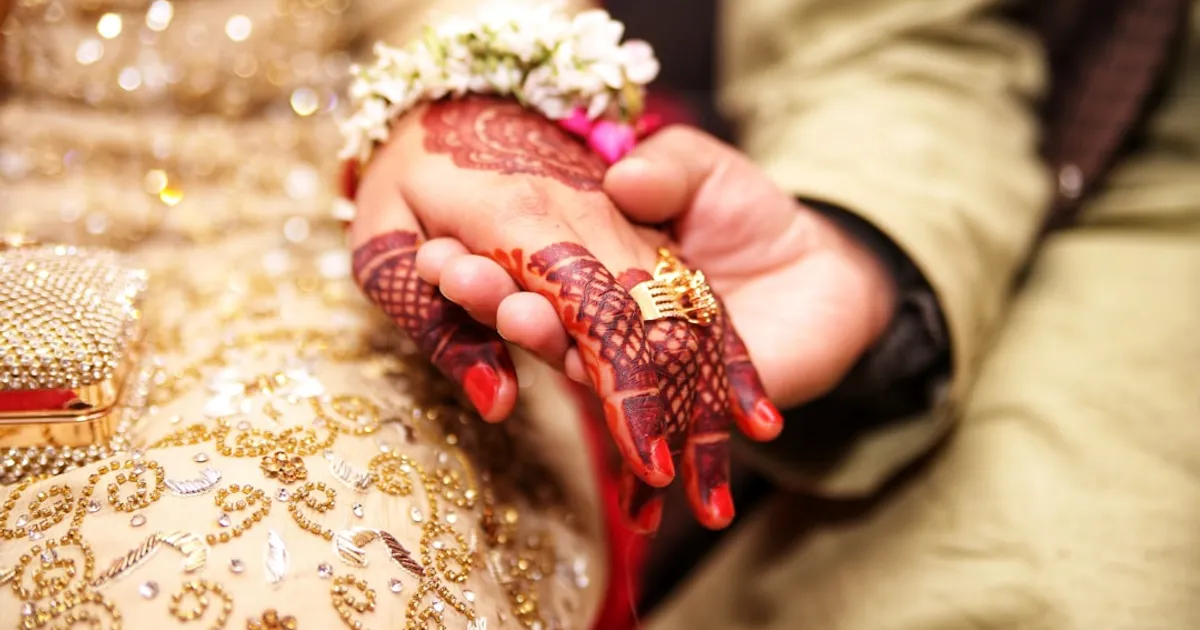
There is a wedding photograph on your grandmother's wall that you have looked at a thousand times without ever really seeing it. The colors have yellowed. The borders have curled. Your dadi looks impossibly young, her dupatta pinned at an angle no one wears anymore, and your dada stands beside her with an expression you have never quite been able to read. Is it pride? Nerves? The careful blank face of a man who was told not to smile too much in front of the camera?
You have always assumed you knew the story behind that photograph. They were married. There was a wedding. What else is there to say?
Plenty. And almost none of it written down.
When you ask, really ask, you discover that the photograph is the last frame of a long story you have never heard. How they met. Who introduced them. Whether she said yes the first time or the third. What her mother said when the proposal arrived. Whether she was nervous, or furious, or already half in love. The wedding itself is the part everyone remembers. Everything before it is the part no one records.
Your grandparents' love story is one of the most fragile things your family owns. And right now, it lives only in the memory of two people who are not going to be here forever to tell it.
Why Your Grandparents' Love Story Is Disappearing
We treat wedding photographs as if they are the complete record. They are not. A photograph captures a single afternoon. The love story is everything that came before that afternoon, and much of what came after.
In South Asian families, the details of how a couple came to be married are some of the first things to vanish. The generation that arranged the marriage passes. The aunties who carried the rishta back and forth pass. The neighbors who remember whether the wedding was held in the courtyard or on the rooftop pass. What remains is the photograph, the marriage, and a sentence or two that gets shorter with every retelling. "They had an arranged marriage. It was a small wedding." That is what most diaspora children can say about how their grandparents became a couple. It is not enough.
The loss is not just factual. It is emotional. When you do not know how your grandparents met, you do not know the shape of the love that made your family. You do not know whether it was slow or sudden, reluctant or certain, arranged on paper and grown in practice, or something that defied everyone and held anyway. These are not trivial details. They are the emotional inheritance of every generation that follows.
A wedding photograph is the last frame of a long story. Everything before it is the part no one records.
The Stories Only They Can Tell
If you sit with your grandparents and ask about their love story, you will usually find that there is far more there than they have ever volunteered. They were not hiding it. No one asked. Here is what to look for.
How they first heard of each other. In arranged marriages, this is its own small drama. Who proposed your dadi's name? Was it a relative, a neighbor, a marriage mediator, an auntie who would not stop talking? Did your great-grandmother see your dada at a wedding and decide then and there? The story of how a name first entered a household is often the real beginning.
The first time they saw each other. Some couples did not see each other until the wedding night. Others met at a family function weeks before. Some exchanged a single glance across a crowded mehndi. In a few families, there is a quiet story of a letter, a message passed through a cousin, a look that was not supposed to happen. Ask. You may be surprised how much they remember about a single moment.
Whether there was courtship. Not every South Asian marriage began with courtship, but more did than the official version admits. A ride past the house. A poem written and never sent. A second meeting arranged under the pretext of something else entirely. These stories are often told with a small, private smile that you will only ever see if you ask.
The wedding itself. Not just the date. The weather. The food. Who cooked. Who danced. Who cried. What she wore, and who helped her into it. How many days it lasted. Who came from the village and slept on the floor because there were not enough beds. The wedding is where the love story becomes a family, and the sensory details are the ones your elders remember longest.
The first years. The love story does not end at the wedding. The first flat they shared. The first meal she cooked that he pretended to enjoy. The first fight and how they made up. The first child. The years that turned a marriage into a partnership. These are love stories too, quieter and longer than the wedding one.
Questions to Ask Before the Story Fades
You do not need a formal interview. You need a handful of questions and the patience to let the answers wander. Ask them in any order, in whatever language your grandparent thinks in.
- How did your families first hear about each other? This opens the door to the rishta story, the matchmaker, the relative who would not rest until the two houses were joined.
- What did you think the first time you saw each other? Not what you felt. What you thought. The honest, unglamorous first impression is usually the most memorable.
- Did anyone object to the match? Objection stories are some of the richest. They reveal what the family valued, what the couple risked, and what love cost them before it was allowed.
- What was the wedding day actually like? Push past "it was nice." Ask about the morning, the clothes, the relatives, the moment they stood beside each other for the first time.
- What do you remember about the first year of marriage? This is where the love story becomes real. The adjustments, the loneliness, the small kindnesses that no one outside the house ever saw.
- What did love mean to you back then, and what does it mean now? This question, asked of elders who have been married for forty or fifty years, often produces the answer your family needs most.
- What do you want us to know about how you and dada loved each other? This is the question for the legacy. Let them answer it however they want, for as long as they want.
How to Record the Story Gently
The mistake most people make is treating this like a documentary. Your grandparents are not subjects. They are people who have waited decades for someone to ask.
Sit with them when nothing else is happening. Not at a birthday, not at Eid, not when the house is full of relatives. A quiet afternoon is worth more than a scheduled interview. Bring the wedding photograph. Hold it between you. Ask one question. Then stop talking.
Let them answer in their own language. If your dadi thinks in Urdu and your dada in Punjabi, let them speak in Urdu and Punjabi. Do not translate as they go. Do not correct a date or a name mid-sentence. The accuracy can be checked later. The voice cannot be recreated later.
Record it. Your phone's voice memo app is enough. A fifteen-minute recording of your grandmother describing the morning of her wedding, the way her mother braided her hair, is worth more than a perfect written summary. The voice carries the laugh, the pause, the catch in the throat when she remembers someone who is no longer alive.
The accuracy can be checked later. The voice cannot be recreated later. Record it now, while the people who lived it can still tell it.
If your grandparents live far away, this is exactly the kind of conversation that Qissa was built for. A warm Story Guide can record phone or Google Meet sessions in English, Urdu, or Sindhi, using one long conversation or several shorter ones. The stories gather at their pace, the way a marriage does.
What You Lose When You Wait Too Long
There is a particular grief that comes from realizing you waited one season too long. The photograph is still on the wall. The wedding outfit is still in the trunk. But the people who could explain them are not here to explain, and the story you assumed would always be available is gone.
This happens more often than families admit. We tell ourselves there is time. There is a wedding coming up, we will ask then. There is Eid, we will ask then. The questions get postponed. The story gets shorter.
And then one day your own child asks you how their dada and dadi met, and you realize you do not know. You have the photograph. You do not have the story. You will never have the story, because the only two people who knew it took it with them when they left.
The cost of waiting is not information. It is a permanent hole in the center of your family's history. The kind that cannot be filled later, no matter how much you wish it could be.
Turning Their Story Into Something That Lasts
A voice note on your phone is a beginning. It is not an ending. Voice notes get lost when phones are replaced. Cloud accounts get forgotten. Files get renamed into strings of numbers that mean nothing to anyone but you.
The love story deserves a form that lasts. A printed page in a book your great-grandchildren can open. The original voice, preserved behind a QR code, so a child born long after they are gone can still hear how they first met. The wedding photograph, placed beside the words that finally explain it.
This is what a family legacy book is for. Not a generic record of dates and names. A real book, with real chapters, holding the love story that made your family possible. Bilingual, so that the version your dadi told in Urdu and the version your children read in English sit side by side, neither one a translation of the other.
You do not need to have all the answers before you start. You need to ask the first question. Starting a Qissa takes a few minutes. The story takes longer. That is the whole point.
If you are not sure how it works, or whether your grandparents will agree to it, the FAQ answers the questions most families ask before they begin. The most common one is simple: will my elders actually do this? The answer, more often than families expect, is yes. They have been waiting for someone to ask.
The Story on the Wall
Go back to that photograph. The one on your grandmother's wall. The one you have seen a thousand times without asking what it cost, what it meant, what it began.
Behind it is a story of how two people met, whether by arrangement or accident, whether with joy or nerves or a quiet certainty that needed no words. Behind it is a wedding morning, and a lifetime of years that turned two strangers into the family that produced you. Behind it is the love that made everything you are.
Right now, that story is still alive. It is sitting in the memory of the two people in the photograph, waiting for someone to care enough to ask.
Ask. Record. Save it. One day the photograph will be the only thing left on the wall. Make sure it is not the only thing left of the story.
Read next
Keep building the family archive.
These guides connect the next question, recording habit, or heirloom idea so the archive feels easier to keep building.
June 13, 2026 · 10 min read
How to Preserve Your Family's Partition Stories
Learn how to gently ask your elders about 1947 Partition memories, preserve their voices, and pass these South Asian family stories to the next generation.
May 5, 2026 · 4 min read
Questions to Ask Your Dadi Before Her Stories Fade
Thoughtful questions to ask your dadi so her memories, language, recipes, faith, humor, and family history are not lost.
September 17, 2026 · 10 min read
Family History Interview Consent: A Simple Guide
Learn how to ask for family history interview consent, set privacy boundaries, and preserve an elder's story with respect across languages and generations.
Preserve the voice too