
How to Create a Family Tree for Your South Asian Family
Learn how to create a family tree for your South Asian family. Capture names, relationships, and stories across generations before the details fade away.
July 6, 2026 · 11 min read
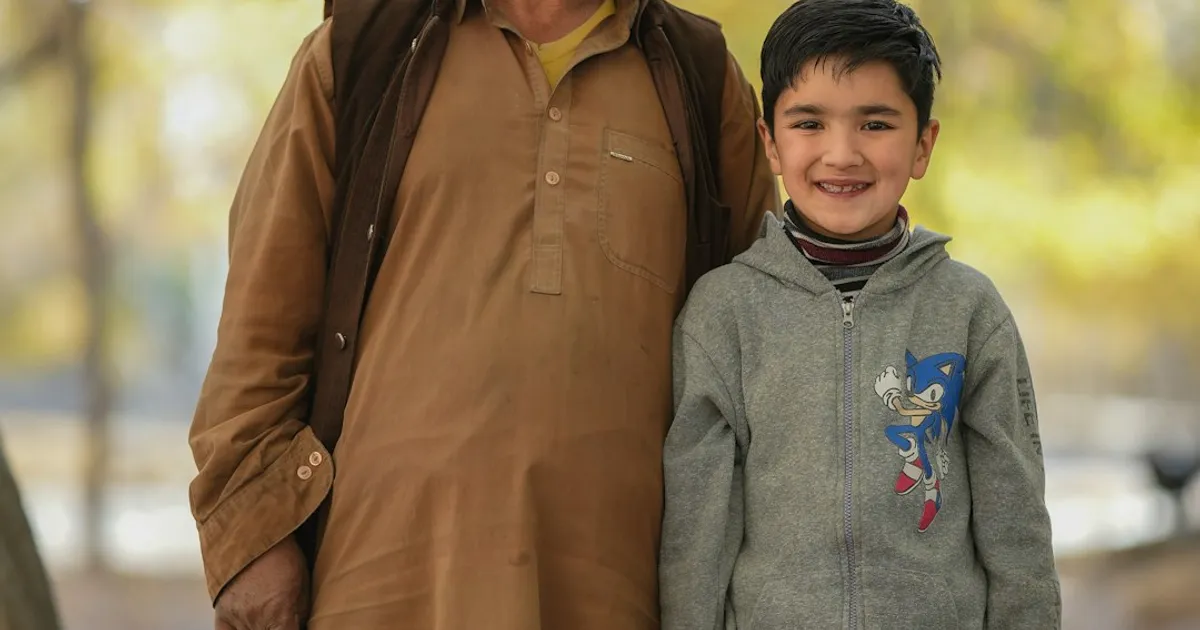
Somewhere in your family, there is a person who knows how everyone is connected. They know that your mother's cousin in Lahore is actually your father's second cousin once removed. They know which branch of the family came from Amritsar before Partition and which one has always been in Gujranwala. They know the names of people who died before you were born, and the villages those people came from, and the reasons the family split into two households that never spoke to each other again.
That person is getting older. And when they are gone, the map of your family goes with them.
A family tree is not just names and lines on a page. For South Asian families, it is the skeleton of everything you come from. The biradari, the village, the migration, the marriages that joined two households into one, the feuds that tore branches apart. Without the tree, the stories you have collected float without context. With it, every story has a place, every person has a name, and every generation can see exactly where they fit.
Why South Asian Family Trees Are Different
If you have ever tried to build a family tree using a Western genealogy tool, you already know the problem. Those tools assume a neat, linear structure. Two parents, their children, their children's children. Clean lines. Simple surnames that pass unchanged from one generation to the next.
South Asian families do not work like that.
The naming conventions alone can derail a standard family tree. In many Pakistani families, a person's "surname" might be their father's first name, their caste identifier, their village name, or a title adopted at some point during migration. Your great-grandfather might appear in one document as Muhammad Khan, in another as M. Khan of Sialkot, and in a third as the son of Chaudhry Rahim Bakhsh. Connecting those dots requires context that no algorithm can provide. Only a person who was there can tell you they are all the same man.
Then there is the structure itself. South Asian families are wide. A single generation might include fifteen or twenty cousins raised in the same compound, all calling the same woman dadi, all considering themselves siblings in every way that matters. The joint family system means that biological lines and emotional lines do not always match. Your father's chacha might have raised him more than his own father did. Your mother might call her cousin's daughter "behen" and mean it completely.
A family tree for a South Asian family needs to hold all of this. Not just the biological connections, but the lived ones. Not just the names, but the relationships as they were actually experienced.
Where to Start: The People Who Remember
Do not begin with a template. Begin with a conversation.
The oldest person in your family who still remembers names, villages, and connections is your starting point. This might be your dadi, your phuphi, your mamu, or a great-aunt you only see at weddings. They carry more genealogical information in their heads than any document you will ever find.
Sit with them. Bring a notebook or your phone. Ask them to start wherever they want. Some people begin with their own parents. Some begin with the village, the ancestral home, the family they remember from childhood. Let them wander. The connections will emerge in the telling.
Here are the questions that unlock the most:
- What was your grandfather's full name, and what did people call him? This separates the official name from the name people actually used, which is often the key to connecting records later.
- Where was the family originally from? Village names, city names, neighborhood names. In South Asian families, geography is identity. "We are from that gali near the mosque in the old city" tells you more than a census record.
- How many siblings did your parents have, and what happened to each of them? This is where the tree starts to branch. Some siblings migrated. Some stayed. Some changed their names. Some had families you have never heard of.
- Who married into the family, and where did they come from? Marriage connections are how South Asian family trees expand. Every rishta brought a new branch, and the story of that rishta often explains why two families are connected at all.
- Is there anyone in the family we have lost touch with? This question surfaces the broken branches, the cousins who moved to Dubai or London or Toronto and slowly stopped calling. Those branches still exist. They just need someone to find them.
Building the Structure
Once you have the first round of names and connections, it is time to put them somewhere visible. You can use paper, a whiteboard, a spreadsheet, or a digital tool. The format matters less than the act of making it visible.
Start with the oldest generation you can confirm. Place them at the top. Work downward, adding children, spouses, and grandchildren as you confirm them. Use whatever naming convention makes sense to your family. If your dadi calls someone "Billo Phuphi" and that is how the entire family knows her, write "Billo Phuphi" on the tree. The legal name can go beside it.
For South Asian families, a few structural choices make the tree more useful:
Include villages and cities. Next to each person, note where they were from and where they ended up. Migration is one of the defining features of South Asian family history, and seeing it on the tree makes the story visible.
Note the biradari or caste if relevant. Many families still identify by biradari, and it can be a crucial clue when trying to trace connections across generations or across borders.
Mark the joint family households. If three brothers lived in one house with their wives and children, note that. It explains why certain cousins grew up as siblings and why certain relationships are closer than the biological lines suggest.
Include the stories. This is where most family trees fail. They capture names and dates but none of the life. Next to each person, write one sentence about them. "Came to Karachi in 1952 with nothing." "Best cook in the family, famous for her biryani." "Never spoke about Partition but cried every time she heard the anthem." These one-line stories are what turn a genealogy chart into a family tree worth keeping.
A family tree without stories is just a list of names. A family tree with stories is a map of who you are.
The Missing Branches
Every South Asian family tree has gaps. People who died young. Children who were given away. Relatives who migrated and disappeared. Women whose names were never recorded outside the household. Branches the family does not talk about because of shame, conflict, or simply the passage of time.
Do not skip the gaps. Mark them. Write "unknown" or "name not remembered" or "moved to UK in the 1970s, lost contact." The gaps themselves are part of the story. They tell your children that the family is not a clean, simple line. It is a living thing with losses and silences and unfinished chapters.
Sometimes, marking a gap is what prompts someone to fill it. Your mamu might see the blank space where his chacha's children should be and finally make the phone call he has been putting off for twenty years. Your phuphi might see her mother listed as "name unknown" and say, quietly, "Her name was Zubeida. We called her Zubu Bua. She died when I was six."
The tree is not finished. It never will be. That is the point.
Making the Tree Accessible to the Next Generation
Here is the hard truth about most family trees: the person who builds them is the only person who ever looks at them. The spreadsheet sits on a laptop. The poster goes in a cupboard. The children glance at it once and forget about it.
If you want your family tree to survive, it needs to be something your children can actually use. That means it needs to be more than names and lines. It needs to be a living document that grows with the family.
A few approaches that work for diaspora families:
Pair each name with a voice. If you have recordings of your elders telling stories about the people on the tree, link them. A QR code next to your great-grandfather's name that plays his daughter describing him as a child is worth more than a paragraph of text. This is the approach behind Qissa's family legacy books, where voice recordings sit alongside printed stories so the next generation can hear the voices of people they never met.
Write bilingual entries. If your children read English but your elders think in Urdu, include both. "Dadi Jan (Paternal Grandmother)" gives context to a child who has only ever known her as Dadi. The bilingual format ensures that no generation is excluded from understanding the tree.
Update it at family gatherings. Eid, weddings, funerals. These are the moments when new branches appear and old branches need updating. Make it a ritual. Bring the tree out. Ask the elders to correct it. Ask the young ones to add their children. The tree grows when the family gathers.
Tell the stories behind the connections. When your child asks "Who is this person?" about a name on the tree, that is your opening. Tell them the story. How that cousin's family moved to Jeddah. Why that aunt and uncle stopped speaking. What your great-grandmother was like before anyone in the family was born. The tree is the skeleton. The stories are the flesh.
Preserving the Tree Before It Is Too Late
The urgency is real. Every year that passes without a family tree is a year of names forgotten, connections lost, and stories that die with the people who held them.
The person in your family who knows how everyone is connected is not going to be here forever. They may be sharp right now. They may remember every name, every village, every rishta. But memory is not permanent. It fades quietly, one detail at a time, until the map is incomplete in ways you cannot fix later.
You do not need to build the entire tree in one sitting. Start with one branch. One conversation. One voice note sent to your phuphi asking her to tell you about her mother's family. The process is designed to be gentle, to work at the pace your family is comfortable with, and to gather stories over weeks and months rather than demanding everything at once.
What matters is that you start. The tree does not need to be perfect. It needs to exist.
From Tree to Legacy
A family tree is the beginning of something larger. Once you can see the connections, you start to see the patterns. The migrations. The marriages. The names that repeat across generations. The stories that echo from one branch to another.
That is when the tree becomes a legacy. Not just a chart of who begat whom, but a living record of how your family moved through the world, how it survived, how it grew, and how it held together across oceans and decades and generations that never met each other.
Your children deserve to see that. Not as a history lesson, but as a mirror. When they look at the tree and see their own name, connected to a village they have never visited, a great-grandmother they never met, a story that began before they were born, they understand something that no amount of telling can convey. They understand that they are part of something that did not start with them and will not end with them.
Start with one conversation. Ask one person to tell you one story about one name on the tree. The rest will follow. And if you have questions about how to begin, the FAQ covers what most families want to know before they take the first step.
The map of your family is still in someone's memory. Go find it before it fades.
Read next
Keep building the family archive.
These guides connect the next question, recording habit, or heirloom idea so the archive feels easier to keep building.
July 3, 2026 · 14 min read
How to Preserve Your Dadi's Home Remedies Before They're Forgotten
Your grandmother's desi totkay exist only in her memory. Learn how to preserve your family's home remedies before that knowledge disappears with the generation that carries it.
June 5, 2026 · 11 min read
How to Build a Family Archive Your Children Will Actually Use
Most family archives sit forgotten in boxes and hard drives. Here is how to build a family archive your children will actually open, read, and treasure for generations.
May 27, 2026 · 8 min read
Preserve Your Family's Eid Traditions Before They Fade
Eid traditions shape South Asian diaspora childhoods. Preserve them in a family legacy book before the stories, recipes, and rituals fade across generations.
Preserve the voice too