
How to Preserve Your Dadi's Home Remedies Before They're Forgotten
Your grandmother's desi totkay exist only in her memory. Learn how to preserve your family's home remedies before that knowledge disappears with the generation that carries it.
July 3, 2026 · 14 min read
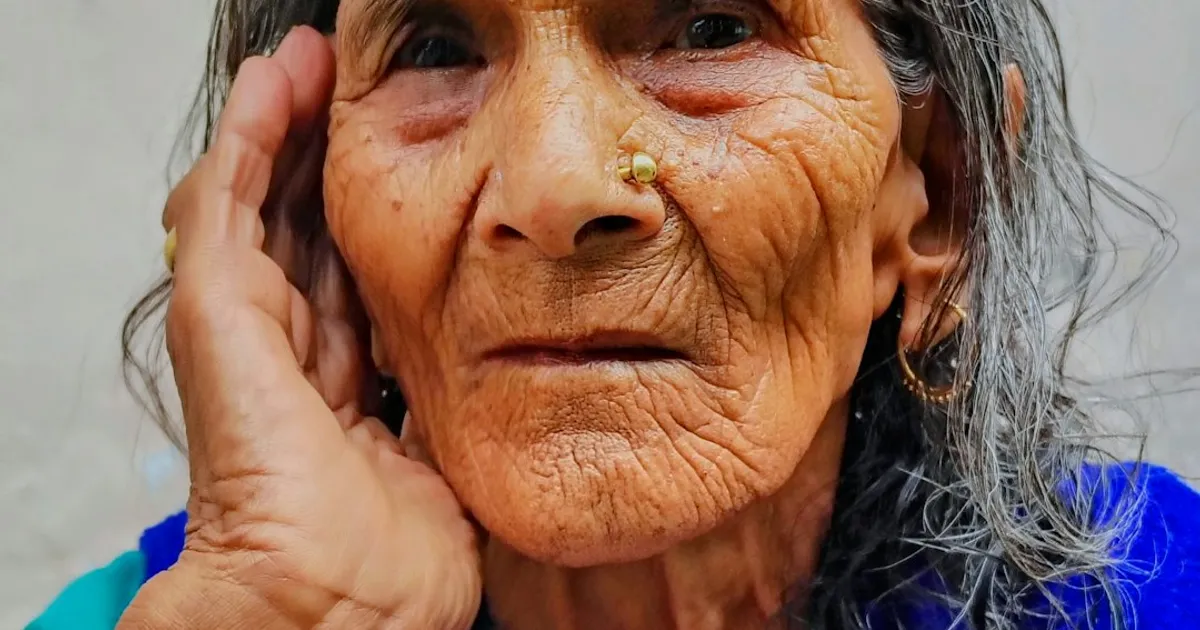
There is a remedy in your grandmother's kitchen that has no name, no written recipe, and no measurement anyone can replicate. Maybe it is the haldi doodh she makes when someone has a cough. The ajwain water she insists on after a heavy meal. The neem paste she applies without explanation when a child comes home with a rash. The particular way she folds tulsi leaves into chai during monsoon season because yeh mausam mein zaroori hai.
She has never written any of it down. She learned it from her mother, who learned it from hers, and the chain stretches back through generations of women who measured with their hands and diagnosed with their eyes. When your grandmother is gone, that chain breaks. Not gradually. Completely.
Most families discover this loss only when someone gets sick and reaches for a remedy that no one else knows how to make. The ingredients are familiar. The proportions are not. The technique, the timing, the small details that made it work, those lived entirely in one person's hands, and now they are gone.
This post is about how to stop that from happening. Not by turning your dadi into a pharmacist, but by capturing her remedies in a way that respects how she actually knows them: through instinct, repetition, and decades of quiet expertise that never needed a label.
Why desi totkay are harder to preserve than they seem
If you have ever asked a South Asian elder to explain a home remedy, you know the conversation. Thoda sa haldi, thoda sa doodh, aur haan, woh wala masala bhi daal dena. A little turmeric, a little milk, and yes, add that spice too.
This is not vagueness. It is the reality of how traditional healing knowledge operates in South Asian families. The remedies are not formulas. They are instincts built over forty or fifty years of watching, doing, adjusting, and remembering what worked. Capturing them requires more than asking for a list of ingredients.
What makes family home remedies especially vulnerable
They are never written down. Most desi totkay exist only in practice. The person who knows them has never felt the need to record them because they have always been there, like breathing. The knowledge is so embedded in daily life that writing it down feels unnecessary until the person who carries it is no longer around.
They rely on sensory cues that do not translate. Jab tak rang golden na ho jaye. Until the color turns golden. Jab tak khushboo na aaye. Until the fragrance comes through. These cues require someone who has seen the right color, smelled the right fragrance, felt the right texture. A written instruction cannot carry that sensory memory.
They change with the person, the season, and the situation. The remedy for a winter cold is not the same as the remedy for a summer cold. The version for a child uses less of everything. The version for an elder is stronger. A single totka may have six variations, and only one person knows when to use each one.
They are tied to specific ingredients and tools. The haldi from a particular brand. The mortar and pestle that has been used for years. The specific type of honey that works better. These details matter to the person making the remedy, and they are almost never mentioned because they seem obvious.
They carry cultural context that disappears in translation. A totka is not just a remedy. It is the dua your grandmother recites while making it. The way she blows on the spoon before giving it to you. The insistence that you drink it while it is still warm because thanda ho gaya toh asar nahi hoga. These rituals are part of the remedy's identity, and they vanish when someone tries to reduce it to a list of ingredients.
The knowledge that lives in small gestures
When people think about preserving family heritage, they usually think about big stories: migration, marriage, career struggles, Partition. Those stories matter deeply. But there is another layer of family knowledge that is equally important and far more fragile.
It lives in the small, daily acts of care.
The way your mother knows exactly how much salt to add to a lemon water remedy for dehydration. The particular sequence your father follows when making adrak chai for a sore throat, crushing the ginger just so, adding the tea leaves at exactly the right moment. The remedy your grandmother swears by for joint pain that involves mustard oil, a specific massage technique, and a wrapping method she learned from her own nani.
These are not just health tips. They are a family's medical library, built over generations of observation, trial, and quiet expertise. They encode knowledge about bodies, seasons, ingredients, and care in forms that are easy to practice and impossible to replace.
A family's home remedies are the shortest distance between a grandmother's lifetime of experience and a grandchild's first cold far from home. They compress decades of healing knowledge into a single cup of warm milk.
How to capture your family's remedies while they are still being made
The mistake most people make is waiting for the right moment to start. They imagine sitting down with a notebook and asking their elder to list all the remedies they know. This rarely works. Most people do not think of their totkay as a collection. They think of them as just the way they take care of people.
There is a better approach.
Step 1: Start paying attention to what is already happening
You do not need to create a new situation to collect family remedies. You need to notice what is already taking place.
The next time someone in the family gets sick, watch what your grandmother or mother does. What ingredients do they reach for? What order do they use them in? What do they say while making the remedy? What instructions do they give about how to take it? Write these down. Not all at once. Just the ones you notice.
Keep a note on your phone. Every time you see a remedy being prepared, add it. Include the situation that triggered it, the ingredients used, the technique followed, and any instructions given.
Step 2: Ask about the origin of specific remedies
Once you have collected a few remedies, you can start asking gentle questions about them. Not "tell me all your totkay." Something more specific:
- "You always give haldi doodh for a cough. Did your mother teach you that, or did you learn it yourself?"
- "Where did you learn the remedy for stomach pain? Was it from your nani?"
- "Is there a totka your mother used that you do not make anymore?"
- "What is a remedy that people from your village used that nobody here knows about?"
These questions work because they are anchored to something the elder already does. They do not require the person to perform or produce. They just ask for the story behind knowledge that is already part of their daily life.
Step 3: Record the voice explaining the remedy
A written record of a family remedy is useful. A recording of the person actually explaining it is invaluable.
The tone matters. The way they switch between languages when describing an ingredient matters. The emphasis they place on certain steps, the warnings about what not to do, the small details they mention almost as afterthoughts, these are the elements that make a remedy feel like the original, not a recipe copied from a website.
Qissa's approach works especially well for this kind of material because it starts with voice. During a recorded phone or Google Meet session, a Story Guide can ask an elder to describe a remedy, when the family used it, and who taught it to them. Those memories can become a carefully written family chapter. See How It Works.
Step 4: Capture the context, not just the ingredients
A remedy without its context is like a medicine without a prescription. It exists but you do not know when or how to use it safely.
When you record a family remedy, also capture:
- When it is used - what symptoms or situations trigger this remedy
- Who it is for - is it for children, adults, elders, or everyone
- What not to do - the warnings and cautions that come with it
- How it was learned - who taught it, and whether it has changed over time
- The ritual around it - the prayers, the blowing on the spoon, the insistence on warmth, the specific way it is served
This context is what turns a list of ingredients into a living family document that someone can actually use.
Step 5: Preserve the original language alongside English
Many South Asian home remedies lose their precision when translated entirely into English. Words like joshanda, kushta, arq, sharbat, jauhar carry specific meanings that go beyond their dictionary definitions. The name of a remedy in Urdu or Hindi often tells you what it does, how it is made, and who it is for, all in one or two words.
A bilingual format keeps the remedy in its original form and adds enough English context for younger readers to follow along. This is not about choosing between accuracy and accessibility. It is about giving both generations a way to connect with the same knowledge.
A Qissa book can use English, or Urdu/Sindhi paired with English, so a remedy reads naturally for someone who grew up with these words and still makes sense for someone learning them. Preview the format on Inside the Book.
A practical framework for building your family remedy archive
You do not need to capture every remedy at once. Start with the ones that feel most urgent: the remedies that only one person knows, the ones that appear every winter or every monsoon, the ones that nobody has ever written down.
The seven-remedy starter set
Pick seven remedies to begin with. For each one, collect:
- The remedy name - what the family calls it, in the original language
- The ingredient list - approximate measurements are fine. Note where the maker uses feel instead of precision.
- The technique notes - what to look for at each stage, what mistakes to avoid, what tells you it is ready
- The use case - when is this remedy used, for whom, and under what conditions
- The origin story - who taught this remedy, where it came from, how it changed over time
- The warnings - what not to do, what to avoid combining it with, when to see a doctor instead
- A voice recording - even two minutes of the person explaining one step in their own words is worth more than a fully written remedy without any voice
Organize by ailment, then by storyteller
Most remedy collections organize by ingredient: turmeric remedies, ginger remedies, honey remedies. For a family archive, organizing first by what the remedy treats, then by who makes it, is more useful. It mirrors how families actually reach for remedies: someone has a cough, what do we do?
A section called "For Colds and Coughs: Dadi's Remedies" or "For Stomach Pain: Ammi's Totkay" carries more practical value than "Turmeric-Based Remedies." It tells the reader exactly when to turn to that page.
Include the stories, not just the instructions
The most powerful entries in a family remedy archive are not just the ingredients and steps. They are the stories of when those remedies were used.
The time your grandmother made a particular kadha during a winter when half the family was sick. The remedy your mother sent with you to university in a small jar, insisting you take it the moment you felt unwell. The totka that your great-grandmother used that nobody in the family makes anymore because the main ingredient is hard to find in this country.
These stories give the remedies their emotional weight. They show the reader not just what the family used, but why it mattered enough to remember.
Common challenges and how to handle them
"I do not measure anything, I just know"
This is the most common response, and it is actually useful information. Document it exactly as stated. Write: No measurements. Maker adds by feel. Look for [specific visual or sensory cue]. Then record the maker describing what that cue looks, smells, or feels like.
"My mother never told me, she just did it"
Then you are in the same position as most South Asian families. Start observing now. Even if the original maker is no longer available, the people who received the remedies carry impressions. Ask them what they remember about the taste, the texture, the occasions. Those memories can guide a recreation that gets close enough to feel authentic.
"These are just simple things, not real medicine"
Simple things are exactly the knowledge that matters most. The complex remedies you can find in Ayurvedic textbooks. The specific way your family used simple ingredients, that is what no book can give you.
A grandmother's particular way of making adrak ki chai for a sore throat carries more family history than any published collection of herbal remedies. It is her technique, her timing, her care, distilled into one cup.
"I live too far away to watch her make it"
Distance is not a barrier when phone and video calls exist. An elder can talk through a remedy as naturally as if you were standing beside them in the kitchen. A Qissa Story Guide can record that conversation, ask what measurements cannot capture, and work with a professional writer to turn it into a lasting chapter. You can start a Qissa with one meaningful memory.
Turning family remedies into a lasting document
A collection of preserved home remedies becomes something more than a health reference when it is presented as a family document. This is where the format matters.
A printed book that pairs each remedy with the storyteller's voice, the context in which it was used, and the story behind it is not a remedy book in the clinical sense. It is a family archive that happens to include healing knowledge. The difference is important. People read remedy books for information. They return to family remedy archives for the connection to someone who cared enough to make them well.
If you want to preserve your family's remedies alongside their stories, photographs, and selected approved audio in a format designed for South Asian families, you can start a Qissa. The process begins with one remedy and one conversation. The result is a hardcover book your family will reach for long after the remedies themselves have been learned by heart.
If you have questions about how the collection process works, what languages are supported, or how voice recordings are integrated into the final book, the FAQ page covers the most common concerns.
Start with one remedy this week
You do not need a plan, a timeline, or a medical degree. You need one cough, one kitchen, and one conversation.
The next time someone in the family gets sick, watch what your grandmother or mother reaches for. Write it down. Ask where they learned it. Record them explaining one step. Save the recording. Label it with the date and the remedy name.
That single remedy, captured with its story and its maker's voice, is already more than most families have. The rest of the archive grows from there, one totka at a time, one kitchen at a time, one voice at a time.
The remedies are already being made. They just need someone to ask how.
Read next
Keep building the family archive.
These guides connect the next question, recording habit, or heirloom idea so the archive feels easier to keep building.
June 5, 2026 · 11 min read
How to Build a Family Archive Your Children Will Actually Use
Most family archives sit forgotten in boxes and hard drives. Here is how to build a family archive your children will actually open, read, and treasure for generations.
May 27, 2026 · 8 min read
Preserve Your Family's Eid Traditions Before They Fade
Eid traditions shape South Asian diaspora childhoods. Preserve them in a family legacy book before the stories, recipes, and rituals fade across generations.
September 8, 2026 · 10 min read
How to Preserve Old Family Newspaper Clippings
Learn how to preserve old family newspaper clippings, scan them safely, capture the stories behind them, and build a lasting archive your family can revisit.
Preserve the voice too