Preserve Your Family's Eid Traditions Before They Fade
Eid traditions shape South Asian diaspora childhoods. Preserve them in a family legacy book before the stories, recipes, and rituals fade across generations.
May 27, 2026 · 8 min read
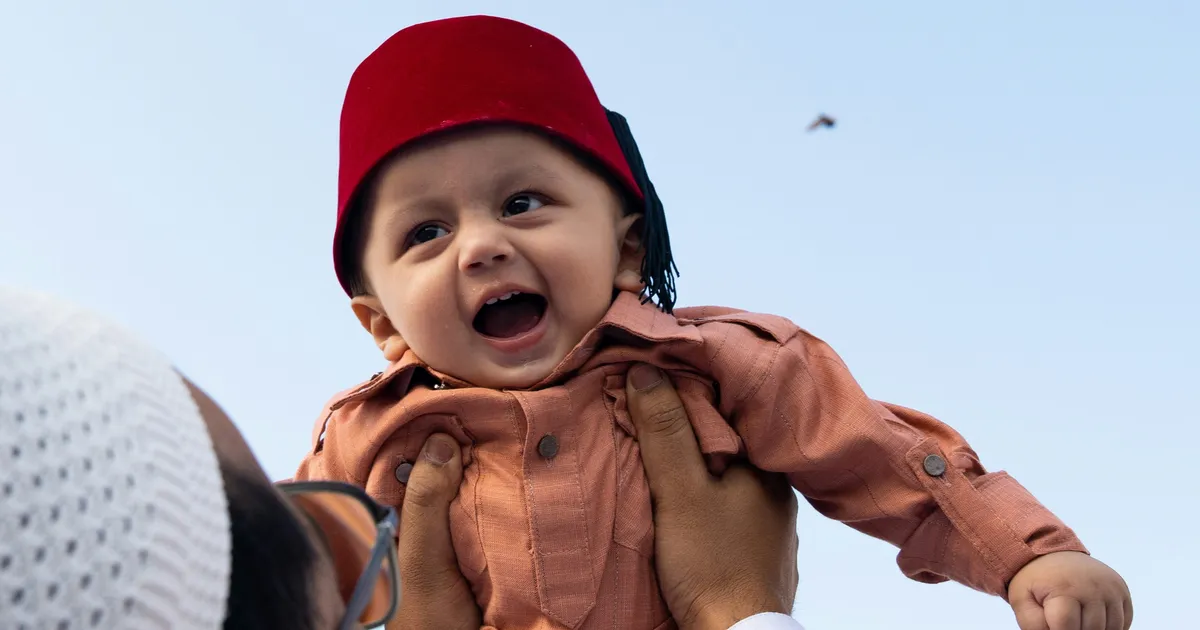
There is a memory you carry from every Eid of your childhood. The night before — when someone in the house spotted the Eid ka chand and the news spread like a warm current through every room. The smell of sheer khurma simmering before sunrise. The new clothes laid out on a chair, still crisp with tags. The takbirs echoing from the mosque as your father hurried you out the door. The way your mother's face softened when she handed you Eidi folded in a clean handkerchief.
If you grew up in a South Asian Muslim household, you know these details by heart. But if you are now raising children in the diaspora — in London, Toronto, New York, or Sydney — you have likely noticed that some of these details are already slipping. Your children know it is Eid, but do they know the feeling of it? The particular way your grandmother made the biryani only on the tenth of Dhul Hijjah? The dua your father whispered after the prayer that nobody in the family has heard in years?
Eid traditions are among the most fragile threads in a diaspora family's memory. They sit at the intersection of faith, culture, food, and language — and every generation that passes loses a few more stitches. But you can preserve them before they unravel entirely.
Why Eid Traditions Fade in the Diaspora
The first generation to leave South Asia carried Eid in their bones. They knew the rhythms instinctively — how many days before Eid the house should be cleaned, which neighbour would bring the biryani first, what time the Eid namaz would be in the local mosque. They did not need to write any of it down because the community around them reinforced it every year.
The second generation — you — learned Eid mostly by watching. You absorbed the rituals through participation, not instruction. You may know how to make your mother's korma by taste, but not by recipe. You may remember the exact feeling of the Eid prayer as a child, but struggle to describe it to your own children in words that carry the same weight.
The third generation faces something harder. They grow up in a world where Eid is a school day, where classmates do not share the holiday, where the only Muslims they see are on a screen. The traditions that were effortless for your grandparents now require deliberate effort, explanation, and translation.
The stories that feel ordinary to your parents — the year the goat escaped before Qurbani, the time Dadi accidentally wore two different shoes to Eid prayer — may become priceless to your children. But only if someone writes them down.
This is not about preserving Eid perfectly. It is about preserving it at all — before the details that make your family's Eid distinct are replaced by a generic version that looks like everyone else's.
What Makes South Asian Eid Traditions Unique
Every Muslim family celebrates Eid, but South Asian families have a texture all their own. The flavours are specific. The rituals carry regional accents. The language of Eid — the mix of Urdu, Punjabi, Hindi, Gujarati, or Sindhi that fills a house during the three days — cannot be separated from the celebration itself.
| Tradition | What It Carries | |-----------|-----------------| | Eid ka chand spotting | Anticipation, family phone trees, the joy of confirmation | | Sheer khurma breakfast | A recipe specific to your region, your mother's hand, your memory | | New shalwar kameez or sari | The ritual of dressing, the pride of looking your best | | Eidi (money from elders) | The feeling of being seen, loved, and provided for | | Qurbani meat distribution | Charity, community, the taste of a specific dish made only on Eid al-Adha | | Visiting elders' graves | Remembering those who came before, connecting the living and the departed |
These are not just activities. They are vessels carrying your family's values, your mother tongue, and your sense of belonging. And they are among the hardest things to pass down without intention.
The Language Problem
Your grandparents performed Eid entirely in Urdu or their native tongue. The khutba at the mosque, the Eid Mubarak greetings, the prayers, even the casual comments about the food — all in a language your children may only half-understand.
When you translate Eid into English for the next generation, you do more than change words. The Eid Mubarak that your grandmother said with a particular warmth in her voice becomes a functional greeting. The Dua your father recited becomes a translated approximation. The joke your uncle told every year loses its rhythm when it is not in Punjabi.
A family legacy book solves this by capturing the original language alongside the translation. Your children can read the Eid prayer in both English and Urdu. They can hear a recording of your mother saying Eid Mubarak in the exact tone she always used. The language of your family's Eid is not replaced — it is preserved.
How to Capture Your Family's Eid Traditions
You do not need to capture everything at once. Start with what is most alive and work backward.
Record the Recipe That Only One Person Knows
Every South Asian family has an Eid dish that nobody makes quite like Ammi or Nani. If you are preparing for Eid al-Adha, call your mother while she cooks. Ask her to describe each step out loud. Record the call. She may Resist — kya rakhha hai is mein — but the recording will be worth more than you can imagine in five years.
Our guided process at Qissa is built for this. A Story Guide records the conversation, asks about the context that made the dish taste like home, and collaborates with a professional writer and translator where needed to place it in the book.
Interview Your Elders About a Specific Eid
Do not ask for a general summary. Ask about one specific Eid. The one when the power went out. The one when the entire extended family came from Karachi. The year your father bought you your first kurta. The Eid after your grandmother passed away.
Specific memories contain the details that make your family's story real. The general memories sound like every other family's.
Here are prompts that work:
- "What do you remember about Eid as a child?"
- "How did you celebrate Eid in your village or city?"
- "What did your mother cook for Eid that no one has made since?"
- "Who gave you Eidi, and what did you buy?"
- "What was the funniest thing that happened on an Eid morning?"
- "What did you miss most about childhood Eid when you moved abroad?"
Capture the Smells, Sounds, and Feelings
Eid is sensory. The smell of ghee hitting a hot pan at dawn. The sound of takbir from a loudspeaker. The feeling of starched fabric against your skin. The taste of the first spoonful of sheer khurma. These details will not last in memory. If your children do not inherit the sensory memory of Eid, they inherit only half the tradition.
Write down the sensory details while your elders still remember them. Record a takbir at your local mosque. Take a photo of the breakfast table before anyone sits down. These fragments, collected in a family legacy book, become anchors for the next generation.
The Gift of Preserved Eid for Your Elders
Here is something most diaspora children do not realise: your parents and grandparents want to be remembered. They may not say it. They may deflect with aray, yeh toh kuch nahi hai. But when you ask them to record their Eid memories, you are giving them something they did not have the words to ask for.
The day you hand your mother a book that contains her mother's Eid recipe, her father's voice reading the Eid prayer, and a photograph of the house where she grew up — that day will matter more to her than any Eidi you ever gave her.
For your children, the book becomes the bridge. They may never taste your Dadi's biryani from her hands, but they will read her description of it, hear her voice explaining how she knew the meat was tender, and understand that their Muslim identity is not new — it is inherited from people who loved them before they were born.
Start Before This Eid Passes
Eid al-Adha is approaching. You have a narrow window to sit with your elders, ask them about a specific Eid memory, and capture it. Do not wait for the "perfect" moment. Perfect moments do not exist in diaspora families. What exists is the Eid morning phone call, the video call while the biryani is cooking, the WhatsApp voice note your father sends at midnight after the Eid prayer.
Starting a Qissa means you do not need to be a writer, editor, or historian. A warm Story Guide and professional writer handle the listening, manuscript, translation where needed, design, proofing, and hardcover production.
This year, give your family something that outlasts the Eidi. Preserve what makes your Eid feel like yours. Before the details fade into a story that nobody remembers well enough to tell.
Begin your family's Eid legacy book today — while the takbirs are still fresh, the recipes still warm, and the voices still strong enough to carry the story.
Read next
Keep building the family archive.
These guides connect the next question, recording habit, or heirloom idea so the archive feels easier to keep building.
September 8, 2026 · 10 min read
How to Preserve Old Family Newspaper Clippings
Learn how to preserve old family newspaper clippings, scan them safely, capture the stories behind them, and build a lasting archive your family can revisit.
July 22, 2026 · 10 min read
How to Make a Family Time Capsule That Lasts
Learn how to make a family time capsule with voice notes, bilingual letters, photos, and traditions your children can open and understand years from now.
July 6, 2026 · 11 min read
How to Create a Family Tree for Your South Asian Family
Learn how to create a family tree for your South Asian family. Capture names, relationships, and stories across generations before the details fade away.
Preserve the voice too