
How to Digitize Old Cassette Tapes Before the Voices Fade
Digitize old cassette tapes of your family's voices before they fade - from Pakistani tape letters to wedding songs. Preserve the audio and the stories.
August 1, 2026 · 12 min read
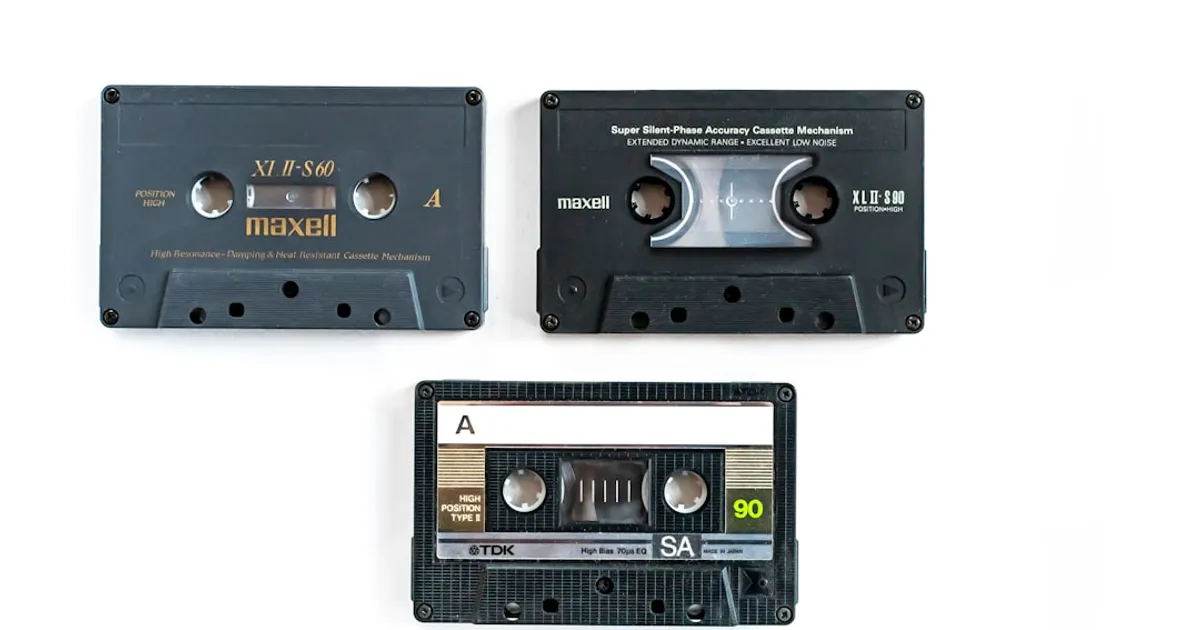
There is a drawer in your mother's house you have been meaning to open for years. Inside it sits a small pile of cassette tapes with handwriting on the labels. "Amma, Dec 1987." "Shaadi, Lahore." "For Hamza, from Abbu." You have carried them across two countries and three apartments without a machine that can play a single one.
You are not alone in this. Between the 1960s and the 1990s, South Asian families recorded messages, stories, songs, and conversations on cassette tape and mailed them across the world. Mothers in Bradford sent tapes to daughters in Karachi. Fathers in Toronto spoke to sons in Gujranwala. These "tape letters" carried weddings, births, deaths, and the everyday texture of lives separated by oceans. And now, the tapes are degrading while the machines to play them vanish.
To digitize old cassette tapes, gather every tape, label them before you touch a machine, get a working player with a headphone or USB output, connect it to a computer with free recording software, capture each side in real time, save an untouched digital master, and clean up the audio only after the original is safe. Then the real work begins: transcribing the stories, translating what needs translating, and turning the voices into something your children can hold.
Key takeaways: Cassette tapes are a ticking clock, not a treasure box. Magnetic tape loses quality every year it sits unused, and working players get harder to find. Digitize the audio first, improve it second, save an untouched master, and transcribe the voices while someone still remembers who was speaking.
In this guide
- Why cassettes are the most underrated family heirloom
- The quiet race against time
- What is actually on those tapes
- How to digitize old cassette tapes in 7 steps
- When to use a professional digitization service
- After digitizing: transcribe, translate, share
- Mistakes that cost families the only copies
- Frequently asked questions
Why cassettes are the most underrated family heirloom
Photographs are easy to value. Letters are easy to admire. A cassette tape is neither. It is a piece of black plastic with two reels of brown magnetic ribbon inside, and most people have no idea what it holds until someone finally plays it.
That day is often overwhelming. Your uncle hears his mother's voice for the first time in twenty years and cannot finish the tape. Your cousin recognizes the exact rhythm of your grandfather's naat recitation and the pause before the hard words. The audio contains something no photograph can: the sound of a person. The laugh. The accent. The little phrase no one else repeats quite the same way.
For the South Asian diaspora, cassettes are also a record of migration itself. When a mother in Punjab sent a tape to a daughter in Birmingham, she was not just sending a message. She was sending proof that home still sounded like home. Many of these recordings were made in languages that were never written down, like Pothwari and Mirpuri, which makes the tapes the only surviving document of a way of speaking. Lose the tape and you lose the language.
The quiet race against time
Magnetic tape does not last forever. Unlike a printed photograph, which can survive decades in a shoebox, a cassette relies on a thin layer of magnetic particles glued to a plastic ribbon. Over time that glue breaks down, and heat and humidity make it worse. Archivists call the result "sticky shed": the coating peels onto the playback heads, and every play makes the next play worse.
A cassette recorded in 1985 has already lived past its prime. Even well-stored tapes begin losing high-frequency detail after twenty to thirty years. The voices get muffled, the music loses its shimmer, and a tape left in a warm cupboard in Lahore, Karachi, Houston, or Bradford may already be degrading faster than you think.
There is a second clock, and it is even more urgent: the machines. Cassette players were built in the millions but never designed to last. Walkmans, dictation recorders, and stereo decks from the 1980s are failing, and affordable working players shrink in supply every year. Every year you wait, the window for a clean transfer gets smaller.
What is actually on those tapes
Before you buy a single cable, find every tape in the house and put them in one place. Ask every relative whether they have any. Tapes are often scattered: one with an aunt in Leicester, one in a suitcase in Islamabad, one in a shoebox under your parents' bed.
As you collect them, write down everything you know before it is gone:
- who recorded the tape and who is likely on it
- when and where it was probably recorded
- what language or languages are spoken
- what the event was, if any (a wedding, a birth, a visit, Eid, a farewell)
- any names, dates, or places written on the label
The most common recordings in South Asian families include tape letters between relatives, naat and qawwali recitations, wedding songs and mehndi-night chatter, birthday greetings, the voice of a relative before they migrated, and rambling conversations never meant for anyone but the people who loved each other. None were made to be archived. That is why they matter.
How to digitize old cassette tapes in 7 steps
The whole process is easier than it sounds, and you can finish your first tape in an evening.
Step 1: Label everything before you play anything
Number each tape using the list above, writing on a sticky note rather than the shell. Rewinding to identify a tape can stress fragile tape, so do not audition by guessing. If a label is unclear, write your best guess with a question mark beside it.
Step 2: Find a working player
A modern USB cassette converter plugs straight into a laptop and is the simplest option for a handful of tapes. For better sound, use a proper stereo cassette deck from an old home system, connected through a USB audio capture device or a 3.5mm audio interface.
Avoid improvising with a worn-out Walkman. Wobbly players run at unsteady speeds, turning a clear voice into something that sounds recorded underwater. One bad pass over a fragile tape can also be the last pass.
Step 3: Set up free recording software
You do not need expensive software. Audacity is free, works on Windows, Mac, and Linux, and is the standard tool for this job. Install it, choose your input device in the settings, and set the project sample rate to 44,100 Hz, which matches cassette quality.
Step 4: Connect, then test the levels
Plug the player into the computer, put the tape in, and play the loudest section you can find. Watch the recording meters in Audacity and keep the peaks below the red zone, lowering the input gain if it clips. A quiet but clean recording is far easier to fix later than a distorted one.
Step 5: Record each side in real time
Cassettes must be digitized in real time. A 60-minute tape takes 60 minutes. Start the tape and hit record in Audacity at the same moment, then let it play through without pausing. When the side ends, stop, flip the tape, and record the second side as a separate file.
Step 6: Save the untouched master immediately
The moment a side is captured, save the raw recording and do not touch it. No noise reduction, no splitting into tracks, no "improvements." That file is your digital master, the closest thing to a time machine your family owns. Copy it somewhere separate before you even think about editing.
Step 7: Clean up only after the master is safe
Once the master is backed up, clean a copy for listening. In Audacity, select a few seconds of background hiss to capture a noise profile, then apply noise reduction to the rest. Boost volume if too quiet, trim long silences, and split long recordings into individual stories. Export listening versions as MP3s, but always keep the master in a lossless format like WAV.
When to use a professional digitization service
Do-it-yourself works beautifully for tapes in good condition. But some tapes deserve a professional, because one mistake can be permanent.
Consider a service if the tape is damaged, sticky, warped, or shedding; if the recording is the only known copy of an important voice or event; if you have a large collection; or if the tape has been played and sounds worse each time. Professionals use equipment built for fragile media and can often recover audio a consumer player would destroy. The cost is small compared with losing a parent's voice forever.
Whichever route you choose, the same rule applies: digitize first, ask questions later. Even a rough, hissy transfer beats a beautiful machine that never existed.
After digitizing: transcribe, translate, share
The most common mistake families make is stopping at the digital files. An MP3 in a folder is still trapped. Nobody searches it, nobody quotes it, and in another generation nobody knows it exists. The recordings only become a true family archive when the voices become readable.
That is where transcription changes everything. A transcript makes an hour of tape searchable. You can find the story about how your parents met, the recipe your dadi described, or the exact words of the dua your grandfather recited, without scrubbing through static. If the tape is in Urdu, Punjabi, Pothwari, Mirpuri, or any mixture, a transcript in the original language keeps the voice true, and a translation beside it opens the story to the English-speaking cousins. Qissa uses the same approach when it turns recorded family conversations into written stories, preserving the original language alongside the translation.
Once you have clean audio, transcripts, and translations, the pieces become shareable. Families who want the voices to outlast the technology often weave them into a keepsake that can sit on a shelf, the way Qissa shapes recordings into a finished family narrative book that pairs printed stories with the real voices behind them.
Share the files generously. Put copies in the family cloud folder, on a hard drive at your parents' house, and on one at yours. Send the audio to the cousins who appear on the tape, while the oldest listeners are still here to say, "That was the year before I left for the UK."
Mistakes that cost families the only copies
Playing fragile tapes before they are ready: If a tape feels sticky or smells odd, do not force it through a cheap player. Professional handling is cheaper than a lost voice.
Skipping the untouched master: Editing before saving the original makes any mistake permanent.
Trusting one machine: New cheap players fail quickly. If a tape matters, assume you get one good pass.
Storing the only copy on one device: Phones break, laptops die, cloud accounts get forgotten. Two copies in two places, minimum.
Forgetting to transcribe: Audio you cannot search is audio you cannot find. Transcribe while the names are still remembered.
Waiting: The best player you will ever own is the one you use this year.
Frequently asked questions
How long does it take to digitize a cassette tape?
Exactly as long as the tape is. A 60-minute cassette takes about an hour of recording per side, in real time, plus setup and cleanup. One evening per tape is a realistic plan for a beginner.
Do I need a cassette player to convert tapes?
Yes. You need something to play the tape and a way to get the audio into a computer. A USB cassette converter combines both jobs. With only an old stereo deck, use a USB audio capture device to connect it.
Is it worth digitizing tapes that sound terrible?
Almost always yes. Hiss and muffling can be improved, and professionals can sometimes recover badly degraded recordings. Even a poor recording of a voice that no longer exists is worth more than no recording at all.
What should I do with the tapes after digitizing?
Keep the physical tapes in a cool, dry place as a backup, but treat the digital master as your primary archive. Transcribe the audio, translate what needs translating, and share copies widely. If you want help turning the stories into something permanent, explore Qissa's frequently asked questions for how families handle languages, privacy, and remote recordings.
Give the voices somewhere safe
A cassette tape is the only place some family voices still exist, and it is failing quietly. You do not need to be an archivist to save it. Collect the tapes, find a working player, record each side in real time, save the untouched master, and write down what you heard while it is fresh.
You do not have to do the whole drawer at once. Digitize one tape this weekend, listen to it all the way through, and record yourself noting who is speaking and when it was made. That single evening could be the reason a great-grandchild finally hears the voice of the person whose name they carry.
When the recordings are safe, consider what they can become. The voices that traveled across oceans to keep a family together deserve to travel across time too. If you would like to turn those tapes into a lasting family narrative, start your Qissa. The tapes can wait. The voices cannot.
Read next
Keep building the family archive.
These guides connect the next question, recording habit, or heirloom idea so the archive feels easier to keep building.
July 22, 2026 · 10 min read
How to Make a Family Time Capsule That Lasts
Learn how to make a family time capsule with voice notes, bilingual letters, photos, and traditions your children can open and understand years from now.
July 21, 2026 · 9 min read
Fill a Reasons I Love You Jar With Real Memories
Fill a Reasons I Love You Jar with 50 to 100 personal notes that turn memories, jokes, and everyday kindness into a keepsake they can revisit for years.
July 21, 2026 · 10 min read
How to Preserve Old Family Letters and Their Stories
Learn how to preserve old family letters, digitize fragile pages, translate Urdu handwriting, and turn correspondence into a lasting family legacy today.
Preserve the voice too