How to Preserve Old Family Letters and Their Stories
Learn how to preserve old family letters, digitize fragile pages, translate Urdu handwriting, and turn correspondence into a lasting family legacy today.
July 21, 2026 · 10 min read
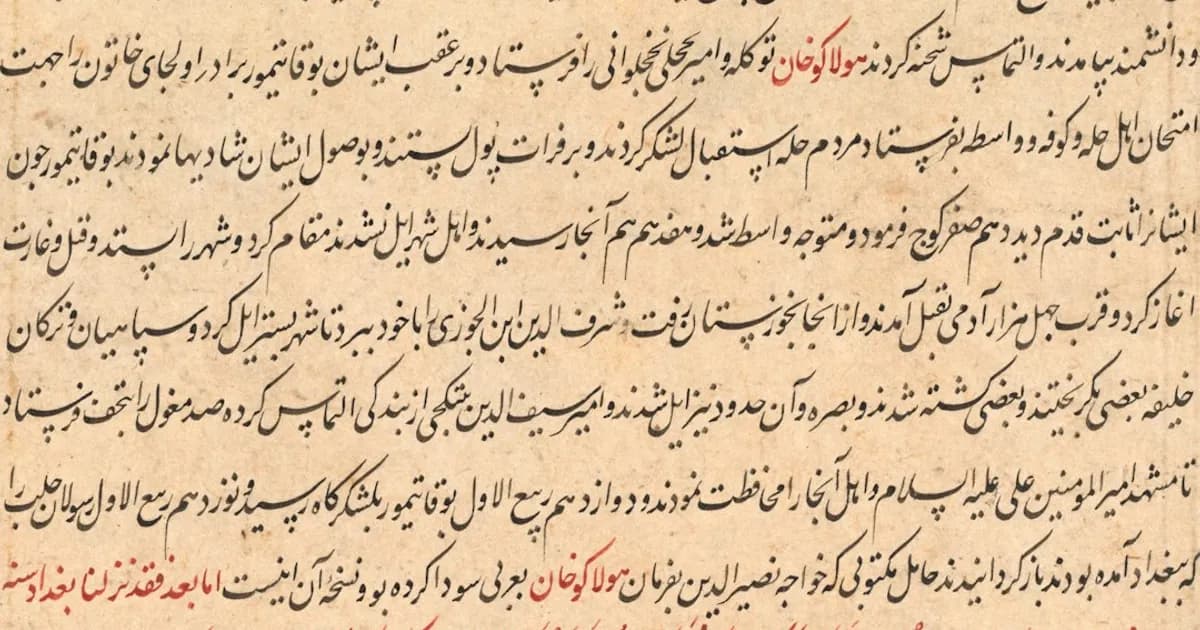
There is a bundle of letters in your parents' cupboard, tied with ribbon or tucked inside an old biscuit tin. The paper has softened at the folds. The envelopes carry addresses from Karachi, Lahore, Delhi, Dhaka, Dubai, or the first flat your family rented in Britain. Some pages are written in English. Others are covered in Urdu, Punjabi, Gujarati, Bengali, Hindi, or Arabic handwriting that fewer people in the family can read each year.
Learning how to preserve old family letters means protecting two things at once: the physical paper and the human story inside it. Start by keeping the original order, handle every page with clean, dry hands, store letters in archival folders away from light and damp, digitize both sides, and ask an elder to explain the people, places, and phrases before that context disappears.
Key takeaways: Preserve the original, make a faithful digital copy, record the letter's context, and keep the source language beside any translation. A scan saves the words. A family conversation saves their meaning.
In this guide
- Why old family letters need more than a scan
- How to preserve old family letters step by step
- How to digitize handwritten letters
- How to preserve Urdu letters and translations
- How to capture the story behind each letter
- Common preservation mistakes
- Frequently asked questions
Why old family letters need more than a scan
An old khat is not only a container for sentences. The envelope may show a vanished street name. A margin note may identify the cousin who carried it across a border. The salutation reveals how people addressed one another, while a change in handwriting can show where someone became tired, hurried, or emotional.
This is why a letter can lose much of its value even when the text survives. If a relative types the words into a document but discards the envelope, no one will see the postmark. If someone translates an Urdu page but keeps no image of the original, the next generation cannot inspect a difficult name or appreciate the writer's hand.
The U.S. National Archives describes prevention as the key to preserving family papers. That principle gives you a simple order of work: stabilize first, digitize second, interpret third, and share last.
How to preserve old family letters step by step
Step 1: Photograph the bundle before moving anything
Place the unopened bundle on a clean, dry table and take a few reference photographs. Capture the ribbon, box, envelope order, and any labels. Families often assume the arrangement is accidental, but a sequence can reveal a courtship, a migration, a long illness, or years of replies between two households.
Create a temporary number for each item in pencil on its archival folder, not on the letter. A simple system such as ALI-FATIMA-1972-001 connects the sender, recipient, year, and sequence without forcing you to understand every page immediately.
Step 2: Handle each page gently
Wash and dry your hands, clear away chai and food, and work on a flat surface. Do not apply lotion or hand sanitizer immediately before handling paper. The Smithsonian National Postal Museum recommends removing damaging fasteners such as paperclips, staples, rubber bands, and sticky notes when they can be removed safely.
Do not force a brittle fold open. If paper resists, stops flexing, smells strongly of mildew, or shows active mold, isolate it from the rest of the collection and consult a paper conservator. A family archive is not the place to test a home repair trick.
Step 3: Keep letters and envelopes together
Remove a letter from its envelope to reduce wear, but store the two as one record. The stamp, postmark, return address, and notes on the envelope may answer questions the page cannot.
Use one acid-free folder for each letter and envelope, or one archival-quality polyester or polypropylene sleeve per document. Place folders upright in a correctly sized acid-free box without packing them so tightly that edges bend.
Step 4: Choose a stable storage place
Avoid attics, basements, garages, exterior walls, and sunny display shelves. Paper lasts longer in a dark interior cupboard where temperature and humidity stay stable. The Smithsonian Institution Archives advises long-term paper storage below 70°F, with relative humidity kept between 35% and 50%.
You do not need to build a museum. You do need to keep the box off the floor, away from pipes, direct sunlight, insects, and the steamy cupboard beside the kitchen.
How to digitize handwritten letters
Digitization creates an access copy so relatives can read a letter without repeatedly touching the original. It does not make the physical page disposable. The National Archives explicitly recommends keeping originals because digital files carry their own risks.
Use this six-part workflow:
- Scan at a useful resolution. Aim for 600 pixels per inch when handwriting is small or ink is faint. Use a flatbed scanner only when the whole sheet fits without crushing it.
- Avoid automatic document feeders. Rollers can jam, tear, or crease weak pages.
- Capture everything. Scan the front and back of every page, plus both sides of the envelope, even when one side appears blank.
- Keep a preservation master. Save an unedited TIFF or highest-quality image as the master, then create smaller JPEG or PDF copies for family sharing.
- Add basic metadata. Record who wrote it, who received it, the date, place, language, and the name of the relative who identified it.
- Back it up. Follow the
3-2-1rule recommended by the National Archives digitization guide: keep 3 copies on 2 kinds of storage, with 1 copy off-site.
A practical filename might be 1972-08-14-fatima-to-ali-page-01-front.tif. Keep names consistent and write a short index in a spreadsheet. The goal is to make the archive understandable to a cousin who opens it 20 years from now.
How to preserve Urdu letters and translations
Urdu handwriting adds a special challenge. Nastaliq flows diagonally, letters change shape in relation to one another, and family shorthand may confuse even a fluent reader. Place names and nicknames are especially easy to mistranscribe. Automatic text recognition can help with clear printed material, but it should not be treated as the authority for an elder's handwritten page.
Preserve each Urdu letter in four connected layers:
- Original scan: an untouched image of the page.
- Urdu transcription: the words typed in Urdu script exactly as written.
- Roman Urdu transliteration: a reading aid for relatives who understand the language but cannot read the script.
- English translation: a natural translation with notes for words that carry cultural meaning.
Do not flatten every phrase into English. A closing such as duaon mein yaad rakhna carries affection, faith, and a familiar family rhythm. Translate it, but keep the original phrase beside it. Mark uncertain readings with brackets and ask two relatives independently when a name or location matters.
If the writer is still alive, invite them to read the letter aloud. Their voice can clarify pronunciation, emotion, and references that a translator would never know. Qissa's story-gathering process is designed around this kind of spoken context, including the languages families actually use.
How to capture the story behind each letter
The most important information may not appear on the page. Sit with the oldest relative who recognizes the names and ask one letter at a time:
- Who wrote this, and what was your relationship then?
- Why were you living apart?
- Was the letter expected, hidden, or carried by someone?
- Which names are formal names, pet names, or family titles?
- What was happening in the family when it arrived?
- Is there a sentence that means more than it appears to mean?
- What happened after the final page?
Record the answers as a voice note with the letter's archive number spoken at the beginning. Ten focused minutes can restore a whole world around a two-page document.
That context can become a chapter rather than a storage project. A finished family book might pair the scanned letter with its translation, a photograph of the writer, a short family recollection, and a QR-linked recording. You can see how images, bilingual text, and voice sit together inside a Qissa book.
Common preservation mistakes
Good intentions can cause permanent damage. Avoid these shortcuts:
- Do not laminate letters. Heat and adhesive can permanently alter the paper.
- Do not repair tears with household tape. Tape stains, stiffens, and can pull away ink and fibers.
- Do not frame the original in direct light. Display a high-quality copy and keep the original protected.
- Do not discard envelopes or blank-looking backs. They may contain postal evidence, impressions, or later notes.
- Do not keep the only scan on one phone. A lost device should not erase the family archive.
- Do not publish private letters by default. Ask living writers and recipients before sharing intimate correspondence widely.
- Do not preserve only the translation. The original language, handwriting, and uncertainty are part of the record.
For practical questions about privacy, languages, recordings, and the finished book, Qissa's frequently asked questions explain how the process works.
Frequently asked questions
Should old letters stay inside their envelopes?
Remove letters from envelopes to prevent repeated friction and folding, but keep each letter and envelope together in the same labeled archival folder. Never discard the envelope. Its postmark, address, stamp, and handwritten notes may supply dates, locations, and relationships that do not appear in the letter itself.
What is the best way to scan fragile letters?
Use a flatbed scanner when the entire sheet fits comfortably, or photograph the page from directly above with even light. Never use an automatic feeder for brittle paper. Capture both sides at 600 pixels per inch, keep an unedited master file, and make smaller copies for everyday viewing.
Can old Urdu handwriting be translated automatically?
Software may produce a rough starting point, but old handwritten Nastaliq, regional vocabulary, nicknames, and faded ink require a fluent human reviewer. Keep the original scan, Urdu transcription, Roman Urdu, and English translation together so future relatives can correct uncertain readings without losing the source.
What should I do if a letter has mold or water damage?
Separate it from healthy papers, avoid brushing or cleaning it indoors, and do not add heat or chemicals. Photograph its condition without unnecessary handling, then contact a qualified paper conservator. Active mold can affect health and spread through a collection, so damaged letters need specialist advice.
Preserve the paper, then preserve the relationship
Knowing how to preserve old family letters is not only an archival skill. It is a way of returning names to strangers, voices to handwriting, and meaning to sentences that crossed cities and borders before reaching your hands.
Begin with one letter this week. Photograph it, give it a number, make a careful scan, and ask the person who remembers: Yeh khat kis ka hai? Whose letter is this?
If you want those pages, translations, photographs, and recorded memories shaped into something the whole family can hold, start your Qissa before the person who knows the answers is no longer there to ask.
Read next
Keep building the family archive.
These guides connect the next question, recording habit, or heirloom idea so the archive feels easier to keep building.
June 4, 2026 · 11 min read
How to Digitize Old Family Photos Before They Fade
Old family photos from South Asian homes are fading. Learn how to digitize, organize, and preserve them alongside voice stories in a family legacy book.
July 21, 2026 · 9 min read
Fill a Reasons I Love You Jar With Real Memories
Fill a Reasons I Love You Jar with 50 to 100 personal notes that turn memories, jokes, and everyday kindness into a keepsake they can revisit for years.
July 17, 2026 · 10 min read
How to Preserve Family Wedding Stories Before They Fade
The stories behind your family's weddings are fading with the elders who lived them. Learn how to preserve South Asian shaadi memories before they disappear.
Preserve the voice too