
How to Preserve Family Stories When You Live Thousands of Miles Away
Practical ways to preserve family stories long distance. Learn how diaspora families can capture grandparents' memories across countries and time zones.
July 10, 2026 · 10 min read
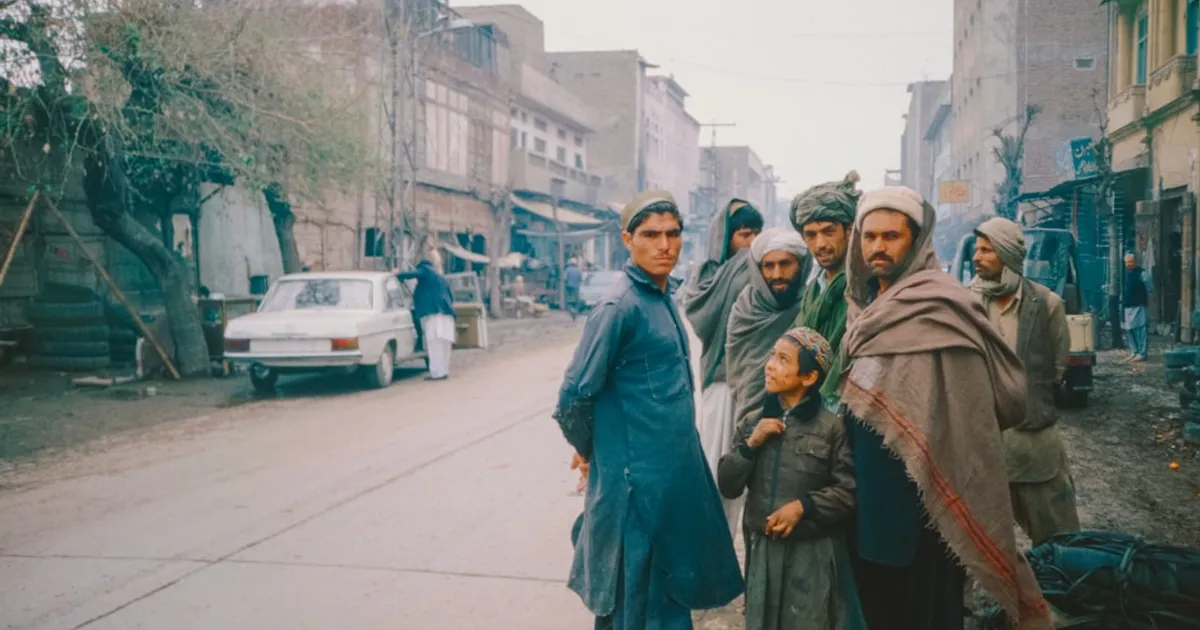
You moved abroad for work, for study, for a life your parents wanted for you but could not build for themselves. Now you live nine time zones away from the people who hold your family's oldest memories. You call when you can. You visit once a year if the flights align. And somewhere between the WhatsApp good mornings and the rushed Eid video calls, you realize you are losing the stories.
Not all at once. Slowly. The way a photograph fades when it sits too long in sunlight.
Your Dadi mentioned something last month about her first home in Lahore, but the call dropped before she could finish. Your father started telling you about the night your grandfather died, then changed the subject because "it is not important." Your mother hums a lullaby she learned from her mother, and you do not know the words.
Distance does not just separate families. It erodes the quiet, unrecorded knowledge that lives inside your elders. But it does not have to.
Why long distance makes family storytelling harder
When you live near your family, stories surface naturally. They come out over chai, during Friday dinners, on long car rides to a cousin's wedding. You hear the same anecdote twelve times and think you will always remember it.
Living far away removes those casual moments. Phone calls become structured events. Visits become packed with obligations. The in-between conversations, the ones where real memories slip out, disappear.
There is also a psychological shift. When you are far away, elders often protect you from difficult stories. They shorten the hard parts. They say "sab theek hai" and move on. The stories that need the most preserving are the ones most likely to be withheld out of love.
And then there is the simplest problem: time. Every month that passes is a month where a memory softens, a detail blurs, a name is forgotten. Distance multiplies that loss because you have fewer chances to ask.
Start with the tools your family already uses
You do not need your grandparents to download a new app. You do not need them to create accounts, remember passwords, or learn a new interface. The best long distance family storytelling happens through tools that already feel familiar.
WhatsApp voice notes are one of the most powerful preservation tools available to diaspora families. Your parents already use them. Your grandparents probably already use them. A voice note takes thirty seconds to send, costs nothing, and captures tone, accent, laughter, and hesitation in a way that text never will.
Email works for family members who prefer to write. A short email prompt once a week ("What did Ammi cook on special occasions?") can produce pages of memory over a few months.
Video calls work well for deeper conversations, but they require more energy. Save them for stories that need facial expressions, gestures, and the kind of warmth that only a screen can carry across an ocean.
The process on How it Works is designed around this exact idea: meet your family where they already are, using the platforms they already trust.
Send one prompt per week, not fifty questions at once
The biggest mistake people make when they decide to "preserve family stories" is overwhelming the storyteller. You send a list of thirty questions. Your mother looks at it and thinks she will do it later. Later never comes.
A better approach is gentle and consistent. Send one question each week. Make it specific. Make it warm.
Here are prompts that work well across distance:
- What is the earliest meal you remember eating?
- Who was the funniest person in your family growing up?
- What did your wedding day actually feel like?
- What song or nasheed did your mother sing?
- What was the hardest year of your life, and how did you get through it?
- What did your first job pay, and what did you buy with it?
- What is a smell that takes you back to childhood?
Each question should take two to five minutes to answer. Over six months, you will have collected twenty-six stories. Over a year, fifty-two. That is a book.
Use voice notes as your primary format
Text loses too much. When your father types a memory, you get the facts but not the feeling. When he speaks it, you get the pause before a difficult word, the laugh before a mischievous memory, the way he pronounces his mother's name.
Voice notes also remove the friction of writing. Many South Asian elders think in Urdu, Punjabi, Sindhi, or Pashto but feel awkward writing in those languages. A voice note lets them speak naturally, mixing languages, using the words that feel right.
Ask your family member to send a voice note in reply to your weekly prompt. Do not correct them. Do not ask them to re-record. The imperfections are part of the record.
Save every voice note in a dedicated folder. Back them up to a cloud drive. Label them with the date and the storyteller's name. These small habits prevent the most common tragedy in family preservation: losing recordings to a phone upgrade or a deleted message thread.
Bridge the language gap without erasing it
One of the hardest parts of long distance family storytelling is the language gap. Your grandmother speaks Urdu. Your children understand English. The story needs to travel between them without losing what made it real.
Translation helps, but it should not replace the original. A phrase like ghar ki izzat or apno ka saath carries cultural weight that no single English word can hold. Keep the original. Add the translation beside it.
This is especially important for diaspora children who are learning their heritage language. Seeing the original Urdu or Hindi alongside the English translation reinforces vocabulary while delivering the story. It turns a family memory into a language lesson without making it feel like one.
The finished book format on Inside the Book shows how bilingual layout works in practice: original voice linked through QR codes, translated text on the page, and photos woven through the chapters.
Make storytelling a ritual, not a project
Projects have deadlines. Rituals have rhythm. The families who preserve the most stories are the ones who make storytelling part of their regular contact, not a one-time event.
Some approaches that work for long distance families:
- Sunday voice note: Every Sunday evening, send one prompt. Your family member replies when they have time. By Monday, you have a new story.
- Monthly video call with a theme: Once a month, schedule a video call around a specific topic. "This month, tell me about your school days." The theme gives the conversation direction without making it feel like an interview.
- Holiday storytelling: Attach stories to holidays. Every Eid, ask one elder to share a memory from their childhood Eid. Every Diwali, ask about a family tradition that has changed. Over years, you build a layered archive.
- Birthday recordings: On each family member's birthday, ask them one question about their life at that age. "Ammi, what were you doing when you turned thirty?" The answers accumulate into something remarkable.
The key is consistency over intensity. A small, regular habit will always outperform a weekend marathon.
Capture the stories around the stories
When your mother tells you about her childhood kitchen, she might also mention the neighbor who always dropped by for tea, the radio that played in the background, the smell of tadka at six in the morning. Those surrounding details are just as valuable as the main story.
Ask follow-up questions that pull out the texture:
- What did that room look like?
- Who else was usually there?
- What time of year was it?
- How did it make you feel then, and how does it feel to remember it now?
These details are what make a family story feel alive to someone who was not there. They are also the details that disappear first when a story is retold without the original teller present.
Turn your recordings into something your whole family can hold
Voice notes in a WhatsApp thread are precious but fragile. They live on one phone. They get buried under newer messages. They are invisible to the cousins, children, and grandchildren who would treasure them.
The next step is to gather those recordings, transcribe them, translate where needed, and organize them into a format that the whole family can access. A printed book does something a digital file cannot: it sits on a shelf. It gets picked up. It gets passed around at a family gathering. It becomes a physical anchor for memory.
You can see how this process works on How it Works. Voice notes become chapters. Photos become context. QR codes link back to the original recordings so the voice is never lost, even when the words are translated.
If you are ready to start, starting a Qissa takes just a few minutes. You do not need recordings ready. A Story Guide will arrange the conversations and help the storyteller open each memory at their pace.
What if your family member is not comfortable with technology?
This is one of the most common concerns, and it is completely valid. Many elders in South Asian families are not comfortable with smartphones, cloud storage, or digital recording.
The answer is simpler than you might think: you do not need them to be.
Your family member only needs to do one thing: reply to a message. If they can send a WhatsApp voice note to ask what you had for dinner, they can send a WhatsApp voice note to answer a story prompt. The technology is invisible to them. The prompt feels like a normal message from their child or grandchild.
For elders who do not use WhatsApp at all, a regular phone call works. You call, ask your question, and record the call on your end (with their permission). Some of the most powerful family stories have been captured this way, through a simple phone conversation that happened to be preserved.
If you have specific concerns about your family's situation, the FAQ page addresses common questions about language, technology, and family members who are hesitant to participate.
The cost of waiting is higher than the cost of starting
Every diaspora family faces the same quiet calculation. You know your elders are aging. You know the stories are not written down. You know you should do something about it. But life abroad is busy, and the urgency never quite becomes urgent enough.
Then one day, a phone call comes that changes everything. And the stories you meant to collect become stories you can never collect.
This is not meant to frighten you. It is meant to gently remind you that the best time to preserve family stories long distance is now, while the voices are still warm and the memories are still reachable.
You do not need a perfect system. You do not need to fly home for a week-long recording session. You need one question, sent today, to the person who holds a piece of your family's history.
Start with one prompt. Save the reply. Send another next week.
Your family's story is waiting on the other side of a voice note.
Read next
Keep building the family archive.
These guides connect the next question, recording habit, or heirloom idea so the archive feels easier to keep building.
May 30, 2026 · 9 min read
Your Family's Smallest Stories Hold the Biggest Legacy
Wedding albums capture milestones, but your family's real legacy lives in everyday moments. Here is why the small stories matter most and how to save them.
August 20, 2026 · 10 min read
How to Preserve Family Stories on Your Visit Home
Your annual trip home is the best window to record your elders' stories in person. Here is how to preserve family stories during your visit to Pakistan.
July 6, 2026 · 11 min read
How to Create a Family Tree for Your South Asian Family
Learn how to create a family tree for your South Asian family. Capture names, relationships, and stories across generations before the details fade away.
Preserve the voice too