
Questions to Ask Your Nani Before Her Stories Fade
Discover 30 heartfelt questions to ask your Nani to preserve her childhood memories, maternal wisdom, recipes, and the timeless magic of Nani ka ghar.
September 3, 2026 · 10 min read
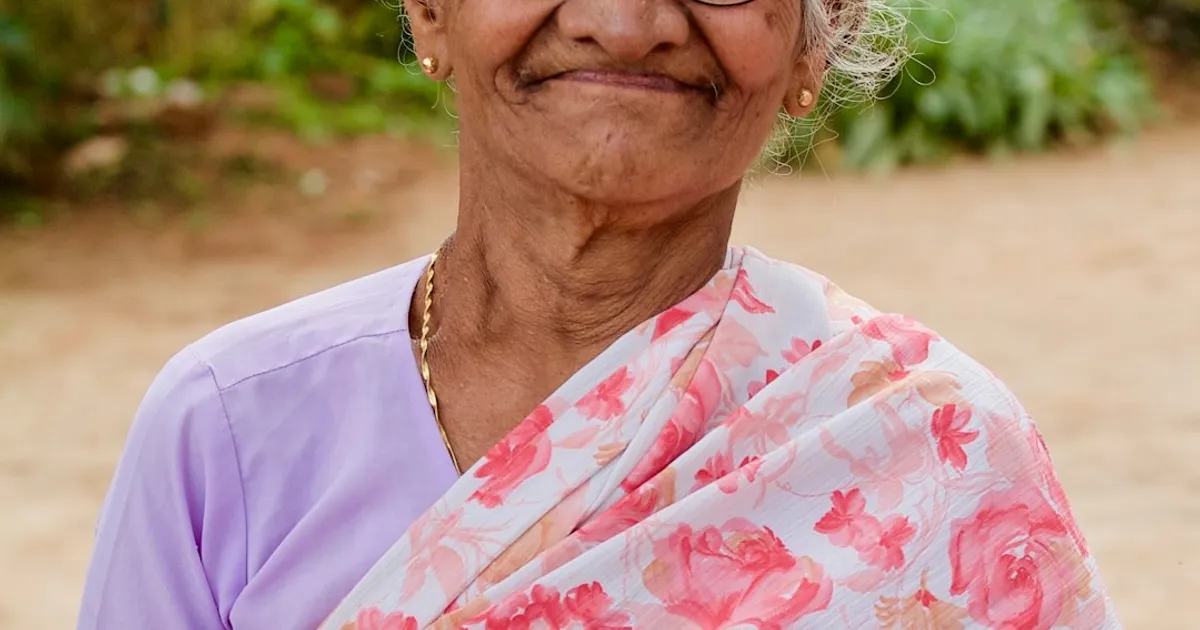
In almost every South Asian family, there is a sanctuary remembered simply as Nani ka ghar. It is the home where parental rules softened, summer afternoons smelled of cardamom, and bedtime stories stretched late into the night beneath ceiling fans. To many of us, our Nani (maternal grandmother) was an oasis of comfort. When parents scolded us, she gently stepped in. When we wanted a treat, she rolled out a warm paratha without hesitation.
Yet because we experienced her as an endless source of comfort, it is easy to forget that she lived an entire, complex life before we arrived. Before she was an elder resting against cotton bolsters with her prayer beads, she was a spirited young girl skipping across courtyards in her maika (parental home). She was an anxious bride adjusting to a new household, a young mother holding a sick child through the night, and a woman who carried her family through migration, upheaval, and quiet sacrifice.
If you only know your Nani as a doting grandmother, you only know the final chapter of a remarkable life. Her memories carry the unwritten social history of South Asian womanhood: how families survived displacement, how recipes were passed down by touch rather than measurements, and what your own mother was like as a girl.
Here is why maternal stories matter so deeply, along with 30 thoughtful questions to ask your Nani while her voice is still here to guide you.
Why Maternal Grandmother Stories Disappear First
In traditional family genealogies, records tilt toward paternal lineage. Surnames, deeds, and family trees usually follow the grandfather. The maternal line, by contrast, relies almost entirely on oral memory. When a daughter marries and leaves her childhood home, much of her personal history survives only in what she tells her children.
Your Nani holds the living archive of that maternal lineage. She remembers women whose names appear on no official documents: great-aunts who were gifted healers, and grandmothers who steered households through lean years.
Without asking our grandmothers, that entire lineage of female wisdom disappears in a single generation. In addition, talking to your Nani opens a rare window into your own mother. You get to meet your mother not as an authority figure, but as a playful little girl who had scraped knees, secret fears, and dreams of her own.
"A grandmother does not simply pass down recipes. She preserves the emotional blueprint of the women who came before you."
1. Childhood, Girlhood, and Life in Her Maika
Before marriage redefined her life, your Nani had a girlhood filled with neighborhood games, school friendships, and private dreams. Asking about her parental home allows her to revisit the girl she once was.
- What did your childhood home look like? Who lived under that roof, and where was your favorite corner for quiet time?
- What sounds and smells woke you up in the morning? Was it fresh spices ground on a stone sil-batta, the call to prayer, or vendors selling fruit in the street?
- What games did you play with your friends? Did you play gudde-gudiya ki shaadi (doll weddings), kho-kho, pithoo, or carrom during hot afternoons?
- Who was your favorite person in your childhood home? Was there an aunt, sister, or grandparent who made you feel particularly understood?
- What was your favorite subject in school? If your schooling was cut short, what were you most curious about as a young girl?
- What were your dreams for yourself before marriage? What did you imagine your adult life would look like when you were fifteen?
These questions give your Nani space to reminisce without pressure. You will often see her smile as childhood nicknames and forgotten street corners come rushing back.
2. Marriage, Leaving Home, and the New Sasural
In South Asia, marriage was a major relocation, requiring an elder woman to leave her maika and adjust to the customs of her sasural (in-laws house). Documenting this transition honors her resilience.
- How was your marriage arranged? Did you see a photograph first, or what was the first thing you heard about Nana?
- What do you remember most clearly about your wedding day? What was the color of your dress, and what went through your mind during the ruksati (farewell)?
- What was it like to adjust to your new in-laws house? What was the hardest household custom to learn, and who was kindest to you during those early months?
- How did you and Nana build your bond in the beginning? In a busy home with little privacy, how did the two of you find time for a quiet conversation?
- What was the first dish you cooked for your new family? Were you nervous, and how did your mother-in-law react when she tasted it?
- What is something about marriage that nobody prepared you for? What advice would you give to a young couple stepping into marriage today?
Hearing these answers helps younger relatives understand that domestic harmony was built through patience and compromise over decades.
3. What Your Mother Was Like as a Little Girl
One of the greatest joys of interviewing your Nani is discovering the childhood of your own mother. It bridges three generations instantly, bringing laughter and tenderness into the room.
- What do you remember about the day my mother was born? What season was it, and who was the first person to hold her?
- What kind of child was my mother? Was she quiet, stubborn, mischievous, or studious, and what did she do when upset?
- What was a childhood habit of my mother that tested your patience? Did she refuse certain foods, hide books under her pillow, or tease her siblings?
- How was your approach to motherhood different from your own mother? What was one rule you relaxed, and what was one value you insisted on keeping?
- What did my mother dream of becoming when she was growing up? What were her talents, and what made her laugh until she cried?
- When my mother got married, what was the hardest part of letting her go? What did you whisper to her before she left your home?
These stories soften family relationships. Seeing your mother through your grandmother's eyes reveals the invisible threads of love and worry that shaped your family across generations.
4. Kitchen Traditions, Heirlooms, and Unwritten Secrets
For South Asian grandmothers, love is expressed through physical care: a hot plate of food, a jar of mango pickle cured on the balcony, or a quilt stitched across winter evenings. Preserving these arts keeps her presence close.
- Who taught you how to cook your signature dishes? Which recipe came directly from your mother, and what is the one secret touch that cannot be skipped?
- *Is there a traditional home remedy (totka) you have always trusted?* What did your family brew for fevers, coughs, or stomach pain?
- Which piece of jewelry or clothing in your wardrobe carries the deepest memory? Who gave it to you, and what should future generations remember about it?
- *What lullabies (loris), folk songs, or poetry did you sing to your children?* Would you recite or sing a few lines so we have your voice on record?
- How did your family celebrate big occasions like Eid or weddings? What special treats were prepared on the dastarkhwan, and what did the house look like?
- *What sayings, blessings (duas), or idioms do you find yourself repeating?* What do those words mean to you, and who first spoke them to you?
Documenting these culinary traditions preserves recipes that no commercial cookbook can replicate, because they carry the distinct touch of her hands and heart.
5. Hardship, Migration, and Enduring Wisdom
Grandmothers often shield grandchildren from past grief. Yet when approached with respect and gentle patience, their reflections on survival become our deepest source of strength.
- Did your family experience Partition, migration, or starting over in a new city? What do you remember about the journey, and what did you have to leave behind?
- What was the most difficult season of your life, and what carried you through it? Was it your spiritual faith, your children, or quiet determination?
- What is something you had to give up or sacrifice along the way? Do you ever look back and wonder what life might have looked like under different circumstances?
- What was the happiest decade of your life, and what made it so joyful? Who was gathered around you during those years, and what did an ordinary day feel like?
- What changes in the modern world surprise or delight you most? What do you admire about how young women live today, and what do you miss from your youth?
- When you close your eyes and pray for your grandchildren, what do you ask for most? What lasting blessing do you hope stays with us throughout our lives?
These deeper questions remind us that our grandmothers navigated immense upheaval so that their descendants could enjoy stability today.
How to Ask These Questions Without Overwhelming Her
To keep these conversations comforting and unhurried:
- Focus on two or three questions per visit: Treat each conversation as a casual chat over afternoon chai rather than an interview.
- Start with physical keepsakes: Look through an album of faded photographs or ask about an embroidered shawl. Tangible objects spark vivid memories.
- Encourage her mother tongue: Even if you speak English together, invite her to answer in Urdu, Punjabi, Hindi, Bengali, or Gujarati. Emotional truth lives in the mother tongue.
- Record voice memos simply: A smartphone voice recorder on the tea table works wonderfully. Ask for permission first so she feels respected.
- Welcome quiet pauses: If she pauses or looks out the window, do not rush to speak. Let the moment breathe naturally.
If your grandmother lives across time zones, sending brief voice prompts over WhatsApp makes this process simple. You can see how the story-gathering process works to learn how audio messages turn into a lasting family record.
Turning Spoken Memories Into a Keepsake Book
Smartphone audio recordings are a great start, but digital files are easily misplaced. A physical book gives those memories an honored place in your home.
When you look inside a Qissa book, you can see how recorded stories, family recipes, and photographs are curated into a hardcover heirloom. Spoken words in heritage languages can be preserved alongside English translations, ensuring younger relatives can connect with their grandmother's wisdom.
Explore our frequently asked questions for practical advice on translations and organizing chapters.
Begin With One Memory Tonight
We often assume there will always be another holiday or phone call to ask our elders about their lives. But memory shifts, energy fades, and our time together is finite.
Next time you visit your Nani, bring her a cup of tea. Sit beside her, open your phone recorder, and ask one simple question: "Nani, tell me about the house where you grew up."
Watch her face soften as decades fall away. When you are ready to turn those precious conversations, voice notes, and family photos into an enduring legacy that honors her life, start a Qissa today. Her voice is the foundation of your family, and her story deserves to live on.
Read next
Keep building the family archive.
These guides connect the next question, recording habit, or heirloom idea so the archive feels easier to keep building.
September 1, 2026 · 10 min read
How to Preserve Family Poems and Ghazals
Learn how to preserve family poems, ghazals, riddles, and spoken verses in their original language and voice, with context future generations can understand.
August 31, 2026 · 10 min read
How to Make a Family Memory Map of Your Roots
Learn how to make a family memory map with elder voice notes, meaningful places, photos, and bilingual stories your children can revisit for years to come.
August 27, 2026 · 9 min read
How to Preserve Your Family's Old Superstitions and Beliefs
Preserve the stories behind your South Asian family's old superstitions, from the evil eye to lucky charms, before they fade with the elders who hold them.
Preserve the voice too