
South Asian Naming Traditions: Stories in Your Family Name
South Asian names carry generations of history. Discover the naming traditions that shaped your family and how to preserve the stories behind them before they fade.
June 22, 2026 · 10 min read
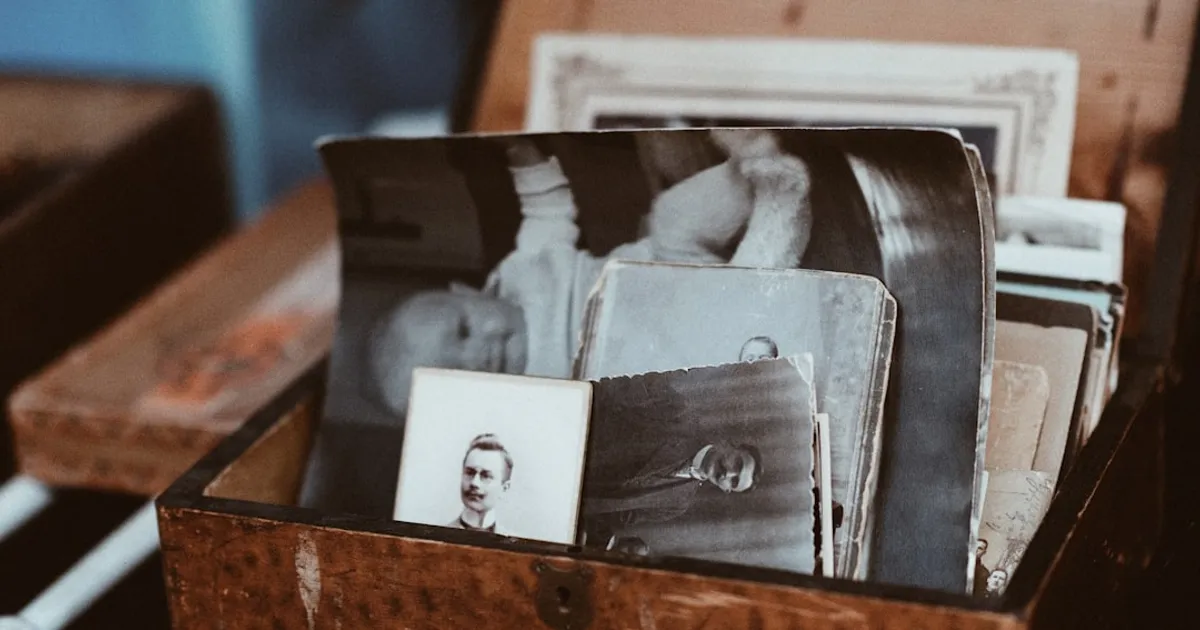
When you write your full name, what story does it tell?
Most diaspora South Asians can recite their name without hesitation. But ask them what it means, where the surname comes from, or why their grandparents chose that particular middle name, and the answer often dissolves into a shrug. We carry our names through life as if they are just labels. But in South Asian culture, a name is never just a label. It is a map of ancestry, a marker of village origin, a capsule of caste and community, and in many cases, the only remaining thread to a homeland your family left generations ago.
The naming traditions of South Asia are among the most intricate in the world. A single name can reveal your grandfather's profession, the town your ancestors farmed, the deity your family worshipped, and the language your grandmother spoke. Yet as families migrate and generations pass, the stories behind those names fade faster than the names themselves.
Why South Asian Names Carry So Much Weight
Across the subcontinent, names have never been casual choices. They are shaped by astrology, lineage, religion, geography, and language in ways that Western naming conventions rarely touch.
In Hindu traditions, a child's name is often chosen based on their janma nakshatra (birth star), determined by the exact time and place of birth. The priest consults the horoscope, identifies the auspicious syllable, and the family names the child accordingly. A Bengali child born under the Mrigashira nakshatra may receive a name beginning with "Ve" or "Vo." A Gujarati child under Ashlesha might start with "Dee." The name is not just what the parents liked. It is what the stars demanded.
In Muslim South Asian families, names carry the weight of faith. Children are named after prophets, companions, or attributes of Allah. The aqiqah ceremony on the seventh day after birth includes shaving the baby's head, giving charity in the weight of the hair, and officially naming the child with a prayer. A name like Muhammad, Fatima, or Ayesha connects the child to an unbroken chain of believers stretching back fourteen centuries.
Sikh naming follows its own sacred logic. The child is taken to the gurdwara, the Guru Granth Sahib is opened at random, and the first letter of the hukamnama on that page becomes the first letter of the child's name. Every Sikh name carries the suffix Singh (lion) for boys and Kaur (princess) for girls, regardless of family background. It was Guru Gobind Singh's radical act of equality in 1699 - a declaration that in the Khalsa, there would be no caste, no clan, no hierarchy. Just lions and princesses, equal before God.
A single name can reveal your grandfather's profession, the town your ancestors farmed, the deity your family worshipped, and the language your grandmother spoke.
Surnames as Birth Certificates of Ancestry
If given names are poetry, surnames are history. South Asian surnames are among the most descriptive in the world. They tell you what your ancestors did, where they lived, and who they worshipped.
Patel, one of the most common Gujarati surnames, simply means "village headman." Your Patel ancestor was probably the person who collected taxes and settled disputes in his village. Deshmukh, in Maharashtra, means "head of the district." Desai means "lord of the land." Choudhury means "holder of four" - a reference to four villages under one leader. These are not names. They are job titles from centuries ago that became identities.
Other surnames map geography with startling precision. A Punjabi with the surname Sandhu knows their ancestors came from the Sandhu clan of the Punjab region. A Sindhi with the surname Memon traces their roots to the Memon trading communities of Kutch and Kathiawar. A Tamilian with the surname Pillai can trace their lineage to specific districts of Tamil Nadu. The surname is a GPS coordinate for your family's origin.
Then there are the subtle markers that only insiders recognize. The difference between a Bengali Mukherjee and a Banerjee is not just spelling. It tells you which village in Bengal their Brahmin ancestors administered a thousand years ago. The prefix "Mou" in Mukherjee references the village of Moulakshi. "Ban" in Banerjee points to the village of Bandoghat. Every time a Bengali writes their surname, they are unconsciously naming the land their forebears walked.
How Migration Erased the Stories
The great tragedy of diaspora naming is how much context gets lost in transit.
When a Punjabi family migrated to London in the 1960s, their surname carried clear meaning in the villages of Jalandhar or Ludhiana. But their British-born grandchildren grew up in Southall or Birmingham, where no one knew that Sandhu was a warrior clan or that Grewal came from a specific region near the Sutlej river. The name became just a name. A string of syllables that separated them from their white classmates but no longer connected them to anything specific.
The second wave of migration - from East Africa, from Fiji, from the Caribbean - layered additional complexity on top. A Gujarati family that moved from India to Uganda in the 1890s, then to Leicester in the 1970s after Idi Amin's expulsion, carries a name that has survived three migrations and three cultural adaptations. By the time the third generation arrives, the original meaning of the surname is a footnote that nobody remembers to pass down.
Many families also anglicized their names to survive. Singh became "Sing" on British school registers. Mukherjee was shortened to "Mukherj." Long compound names were split or dropped entirely. These changes were not malicious. They were acts of practical assimilation. But each alteration chipped away at the story hidden inside the name.
The Fragile Thread of the Middle Name
Among South Asian naming traditions, middle names are perhaps the least understood and most vulnerable to loss.
In many North Indian families, the middle name is the father's first name. Rahul Sharma's father is named Ramesh, so Rahul becomes "Rahul Ramesh Sharma" on formal documents. This patronymic tradition means that every generation carries the previous generation's identity forward. Losing the middle name - or dropping it for convenience - severs the thread.
In South India, the naming system is even more layered. A Tamilian might use their father's name as an initial: "K. S. R. Kumar" where K stands for the village name, S for the father's name, R for the grandfather's name, and Kumar is the given name. What looks like a jumble of consonants to an outsider is actually a four-generation family tree compressed into three letters.
In Malayali matrilineal traditions (particularly among Nair communities), children traditionally carried the mother's family name and the ancestral home name (tharavad). A Malayali name like "Kuruppatha Veetil Keshav Aravind Pillai" is a legal document in itself. It tells you the ancestral home, the maternal uncle's name, the given name, and the caste name. Every element carries weight.
The difference between a Bengali Mukherjee and a Banerjee tells you which village their ancestors administered a thousand years ago.
How to Uncover the Stories in Your Family Name
The good news is that it is not too late to recover these stories. Even if your grandparents never explained the origin of your surname, the clues are still there. You just need to know what to ask.
Start with your oldest living relative. Sit with them over chai and ask specific questions. Not "where does our name come from?" but "what was the full name of your father, and his father, and his father before him?" The deeper you go, the more patterns emerge. Did men in the family share a common first name element? Did women's names follow a pattern across generations? Did a particular letter appear consistently in names? These patterns are not coincidences. They are naming traditions at work.
Ask about the village. Your surname likely connects to a specific geographic origin. Ask your elders to describe the ancestral village - not just its name but its character. Was it near a river? What crops grew there? Which temple or mosque did the family attend? These details help locate the cultural context of your name.
Ask about nicknames. South Asian families are rich with ghar ka naam (home names) that never appear on official documents. A grandmother called "Munni" at home but "Nusrat" on her passport has a double identity. These home names often carry more emotional history than formal names. They are the names your family called each other when no one else was listening.
Record every answer. Use your phone's voice memo app. Ask your elder to spell the names in their native script if they can. A name written in Urdu or Gurmukhi or Tamil carries pronunciation and meaning that Romanization flattens.
What You Lose When You Lose the Meaning
There is a quiet grief in meeting diaspora children who do not know what their own names mean. It is not their fault. The knowledge was never transferred. But the loss is real.
When you do not know that your surname means "village headman," you lose the image of your ancestor sitting under a banyan tree settling disputes. When you do not know that your grandmother's name was chosen because her birth star required it, you lose the memory of the priest consulting ancient charts by lamplight. When you do not know that your middle name is your grandfather's name, you lose the connection to the man who crossed the border in 1947 with nothing but the clothes on his back.
These are not trivial losses. They are cracks in the foundation of identity. For diaspora children trying to understand where they belong, the meaning of their own name is the most accessible door to their heritage.
Preserving Naming Stories for the Next Generation
The most practical way to preserve your family's naming traditions is to write them down in a form that future generations can actually access. Not a random note in a drawer. A deliberate record that sits alongside family photographs, recipes, and migration stories.
When you create a family legacy book with Qissa, the names and their meanings become permanent chapters. The full names, the home nicknames, the explanations of why each child was named what they were named, and the stories of the people they were named after. Your grandchildren and great-grandchildren will open that book and know exactly why their family carries the name it does.
Start a conversation with your elders this week. Ask them about every name in the family. Write down what they remember. You might discover that your surname holds a story you have never heard.
Start preserving your family's naming stories today. One voice note, one question, one name at a time.
The Names We Carry Forward
Every time you say your full name, you are speaking a history that stretches back generations. Your surname is a village in Punjab or Gujarat or Tamil Nadu. Your given name is a prayer or a blessing or an astrological calculation. Your middle name is an ancestor who lived and loved and struggled before you existed.
The South Asian naming tradition is one of the most layered and meaningful in the world. Do not let it flatten into a string of syllables on a passport. Ask the questions. Record the answers. Pass them forward.
The names we carry are not just ours. They belong to everyone who carried them before us, and everyone who will carry them after.
Read next
Keep building the family archive.
These guides connect the next question, recording habit, or heirloom idea so the archive feels easier to keep building.
May 16, 2026 · 8 min read
Why Family Stories Matter — The Science Behind Preserving Your Heritage
Research shows that children who know family stories have higher self-esteem and resilience. Here is why preserving your family's stories is one of the most important things you can do.
August 7, 2026 · 8 min read
How to Record Your Own Life Story Before It's Too Late
A gentle, practical guide for saving your own voice, your stories, and your life history before the window closes. Start recording your memoir today, even if you are not a writer.
June 19, 2026 · 10 min read
How to Write a Legacy Letter Your Family Will Treasure
A legacy letter captures your values, love, and life lessons for future generations. Learn how to write one your South Asian family will keep forever.
Preserve the voice too