How to Preserve Your Family's Wisdom Before the Sayings Disappear
Every South Asian family has phrases that only one person still says. Learn how to capture your elders' proverbs, blessings, and wisdom before those words are gone forever.
May 17, 2026 · 13 min read
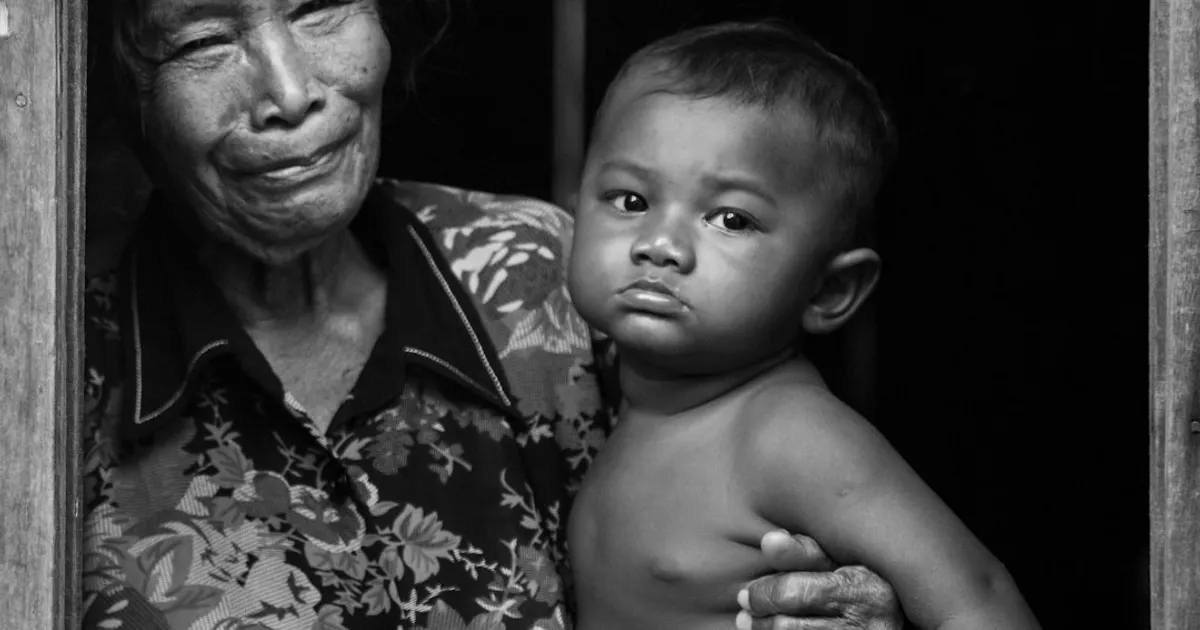
There is a phrase your grandmother says that no one else in the family uses anymore. Maybe it is a warning she gives when you leave the house. A blessing she murmurs before you eat. A proverb she repeats when someone makes the same mistake for the third time. A single sentence in Urdu, Hindi, Punjabi, or Arabic that carries more meaning than any translation could hold.
When she is gone, that phrase does not just become less common. It disappears entirely.
Most families realize this only after the person who carried those words is no longer there. They try to remember exactly how she said it, in what situation, with what tone, and they find that the memory is already fading. The words were never written down. They were never recorded. They lived entirely in one person's mouth, and now they are gone.
This post is about how to stop that from happening. Not by turning your elders into linguists, but by capturing the small pieces of wisdom they carry every day — the proverbs, the blessings, the warnings, the jokes that only make sense in the original language — before those phrases vanish with them.
Why family sayings are more fragile than you think
Family wisdom does not disappear in a dramatic way. It fades quietly, one unused phrase at a time.
The generation that grew up speaking primarily in their heritage language is aging. Their children — the diaspora generation — understand most of it but respond in English. Their grandchildren may recognize a few words but cannot carry a full conversation. The sayings that lived naturally in the grandparents' daily speech become occasional quotes, then distant memories, then nothing at all.
This is not anyone's fault. It is the natural result of migration, assimilation, and the way languages shift across generations. But it means that the specific way your family expressed wisdom — the particular proverbs they favored, the blessings they gave, the phrases they repeated — is at risk of being lost.
What makes South Asian family sayings especially vulnerable
They rely on cultural context that does not translate. A phrase like jo booge wohi kaatoge — what you sow, you will reap — carries a specific weight in a culture where agricultural metaphors are woven into everyday speech. Translating it to "you get what you give" loses the imagery, the rhythm, and the cultural root.
They are spoken, not written. Many South Asian elders have never written down the sayings they use. The knowledge lives in conversation — in the way a mother corrects a child, a grandmother blesses a meal, a grandfather warns about a decision. When those conversations stop, the sayings stop with them.
They are tied to specific people. Certain phrases belong to certain family members. Your Dadi had her favorite saying. Your Nana had his. When those people are gone, no one else naturally picks up those exact phrases. The family's vocabulary of wisdom shrinks.
Younger generations do not always know the full meaning. A grandchild might hear kismat and understand it means "fate," but not grasp the layers of resignation, acceptance, and dark humor that a South Asian elder packs into that single word. Without that context, the word becomes a translation, not a living phrase.
The wisdom that lives in small phrases
When people think about preserving family heritage, they usually think about big stories: migration, marriage, career, hardship. Those stories matter. But there is another layer of family knowledge that is equally important and far more fragile.
It lives in the small things.
The phrase your mother says every time you walk out the door. The proverb your father quotes when someone complains about money. The blessing your grandmother gives before serving food. The warning your grandfather repeats when he sees someone being careless. The joke that only makes sense when told in the original language. The saying that the whole family uses but no one remembers where it came from.
These phrases are not just language. They are the family's operating system. They encode values, warnings, humor, and love in forms that are easy to remember and hard to replace.
A family's sayings are the shortest distance between a grandmother's life experience and a grandchild's future decision. They compress decades of living into a single sentence.
How to capture your family's wisdom while it is still alive
The mistake most people make is waiting for the right moment to start. They imagine sitting down with a notebook and asking their elder to list all the sayings they know. This rarely works. Most people do not think of their own phrases as a collection. They think of them as just the way they talk.
There is a better approach.
Step 1: Start paying attention to what is already being said
You do not need to create a new situation to collect family wisdom. You need to notice what is already happening.
The next time you are on a call with a parent or grandparent, listen for the phrases that appear naturally. The warning they give when you mention a problem. The blessing they offer when you share good news. The proverb they quote when someone does something foolish. Write these down. Not all at once. Just the ones you notice.
Keep a note on your phone. Every time you hear a phrase that feels distinctly like something only this person would say, add it. Include the original language, the situation in which it was said, and what it means to you.
Step 2: Ask about the origin of specific phrases
Once you have collected a few sayings, you can start asking gentle questions about them. Not "tell me all your proverbs." Something more specific:
- "You always say sabr ka phal meetha hota hai. Did your mother say that too?"
- "Where did you learn that phrase about kismat?"
- "Is there a saying your father used that you still remember?"
- "What is a phrase that people from your village used to say?"
These questions work because they are anchored to something the elder already says. They do not require the person to perform or produce. They just ask for context around words that are already part of their vocabulary.
Step 3: Record the voice saying the phrase
A written record of a family saying is useful. A recording of the person actually saying it is invaluable.
The tone matters. The pause before the phrase matters. The way the voice changes when delivering a warning versus a blessing matters. These are the details that make a saying feel like the original, not a quote copied from a book.
Qissa's approach works especially well for this kind of material because it starts with voice. During a recorded phone or Google Meet session, a Story Guide can ask about a favorite saying, where it came from, and when the family uses it. Those conversations become source material for a professionally written family book. See How It Works.
Step 4: Capture the context, not just the words
A saying without its context is like a photograph without a caption. It is beautiful but incomplete.
When you record a family saying, also capture:
- Who said it — which family member, and whether they learned it from someone else
- When it was used — what situations triggered this phrase
- What it meant to them — not just the dictionary definition, but the emotional weight
- How it was delivered — was it a warning, a joke, a blessing, a sigh
- Whether anyone else in the family uses it — or whether it belongs to one person alone
This context is what turns a list of proverbs into a living family document.
Step 5: Preserve the original language alongside English
Many South Asian family sayings lose their power when translated entirely into English. The rhythm, the rhyme, the cultural references — these are embedded in the original language and cannot be fully recreated.
A bilingual format keeps the saying in its original form and adds enough English context for younger readers to understand. This is not about choosing between accuracy and accessibility. It is about giving both generations a way to connect with the same words.
A Qissa book can use English, or Urdu/Sindhi paired with English, so a saying reads naturally for someone who grew up with the phrase and still makes sense for someone learning it. Preview the format on Inside the Book.
A practical framework for building your family wisdom archive
You do not need to capture every saying at once. Start with the ones that feel most urgent — the phrases that only one person still uses, the ones that appear in almost every conversation, the ones that nobody has ever written down.
The ten-saying starter set
Pick ten sayings to begin with. For each one, collect:
- The phrase in its original language — written as accurately as possible
- A rough English translation — not perfect, but enough to convey the meaning
- The person most associated with it — who says it most often or with the most feeling
- The situation where it appears — when does this phrase come up
- The story behind it — where did this person learn it, and why do they keep using it
- A voice recording — even ten seconds of the person saying the phrase in their natural voice
Organize by speaker, not by category
Most proverb collections organize sayings by theme: wisdom about money, warnings about health, blessings for travel. For a family archive, organizing by the person who says each phrase is more useful. It keeps the sayings connected to the storyteller, and it makes the archive feel like a collection of people, not just phrases.
A section called "Dadi's Sayings" or "Abbu's Warnings" carries more emotional weight than "Proverbs About Patience." It tells the reader whose voice these words came from.
Include the moments, not just the phrases
The most powerful entries in a family wisdom archive are not just the sayings themselves. They are the moments when those sayings appeared.
The time your grandmother said a particular blessing before your first day at a new job. The warning your grandfather repeated when you made a mistake he had warned you about. The proverb your mother quoted when something good finally happened after a long struggle.
These moments give the sayings their emotional weight. They show the reader not just what the family said, but when it mattered enough to say it.
Common challenges and how to handle them
"I do not know any proverbs"
Most people who say this use proverbs constantly without realizing it. The phrase allaha ka shukar hai after good news. The warning zyada mat bolo when someone is being careless. The blessing khush raho when someone leaves. These are all family wisdom, even if they do not feel like formal proverbs.
Start by listening. The sayings are already there.
"My elder does not want to be recorded"
Respect that boundary. You can still write down the phrases you hear. You can ask about their origin without recording. You can note the situations in which they appear. A written record is better than no record.
If the elder is comfortable with voice notes on WhatsApp but not with formal recording, use that channel. The goal is to capture the wisdom, not to use a specific technology.
"I do not speak the language well enough to write it down"
Write what you can. Use Roman script if you cannot write in Urdu, Hindi, or Arabic script. Note the pronunciation as you hear it. Even an imperfect record is more useful than no record.
You can always refine the spelling later with help from someone who reads the language. The urgent thing is to capture the phrase before the person who says it is gone.
"These are just everyday phrases, not real wisdom"
Everyday phrases are exactly the wisdom that matters most. The formal proverbs you can find in books. The specific way your family used certain phrases — that is what no book can give you.
A grandmother's particular way of saying beta, dhyan rakhna carries more family history than any published collection of Urdu proverbs. It is her voice, her rhythm, her concern, distilled into three words.
Turning family sayings into a lasting document
A collection of preserved family wisdom becomes something more than a reference list when it is presented as a family document. This is where the format matters.
A printed book that pairs each saying with the storyteller's voice, the context in which it was used, and the story behind it is not a proverb collection in the academic sense. It is a family archive that happens to include language. The difference is important. People read proverb collections for entertainment. They return to family wisdom books for the connection to someone who is no longer in the room.
If you want to preserve your family's sayings alongside their stories, photographs, and selected approved audio in a format designed for South Asian families, you can start a Qissa. The process begins with one conversation and one phrase. The result is a hardcover book your family will reach for long after the sayings themselves have been memorized.
If you have questions about how the collection process works, what languages are supported, or how voice recordings are integrated into the final book, the FAQ page covers the most common concerns.
Start with one phrase this week
You do not need a plan, a timeline, or a linguistics degree. You need one conversation.
The next time you speak with a parent or grandparent, listen for the phrase they use that no one else in the family says. Write it down. Ask where they learned it. Record them saying it if they are comfortable. Save the recording. Label it with the date and the phrase.
That single saying, captured with its story and its speaker's voice, is already more than most families have. The rest of the archive grows from there, one phrase at a time, one conversation at a time, one voice at a time.
The wisdom is already being spoken. It just needs someone to listen.
Read next
Keep building the family archive.
These guides connect the next question, recording habit, or heirloom idea so the archive feels easier to keep building.
June 19, 2026 · 10 min read
How to Write a Legacy Letter Your Family Will Treasure
A legacy letter captures your values, love, and life lessons for future generations. Learn how to write one your South Asian family will keep forever.
June 1, 2026 · 9 min read
The Life Lessons Your South Asian Elders Are Waiting to Share
Your grandparents have a lifetime of wisdom they are waiting to pass on. Learn how to capture their life lessons, values, and guidance for the next generation.
May 16, 2026 · 10 min read
Meaningful Gifts for South Asian Parents Who Have Everything
Struggling to find meaningful gifts for South Asian parents and grandparents? Discover why preserving their stories is the most emotional and lasting gift you can give.
Preserve the voice too