How to Preserve Family Recipes Before They Are Lost Forever
Family recipes disappear when they are never written down. Learn how to preserve your family's recipes with stories, voice recordings, and bilingual context before the cooks are gone.
May 16, 2026 · 10 min read
There is a recipe in every South Asian family that exists only in someone's hands. Not on paper. Not in a phone. Not in any cookbook you can buy. It lives in the way Ammi measures flour without looking, the pinch of salt Abbu adds without thinking, the exact moment Dadi knows the oil is ready because of the sound it makes.
And when that person is gone, the recipe does not just change. It disappears.
Most families discover this too late. They try to recreate a dish from memory and realize that the version they remember is not quite right. The spices are close but not exact. The texture is different. Something is missing, and no one can say what it was.
This post is about how to stop that from happening. Not by turning your grandmother into a food blogger, but by capturing her recipes in a way that respects how she actually cooks — through voice, memory, and the stories that make each dish more than just ingredients.
Why family recipes are harder to preserve than they seem
If you have ever asked a South Asian elder for a recipe, you know the conversation well.
Kitna daalta hoon? Andaza se. How much do I add? By feel.
This is not evasion. It is the reality of how many traditional cooks operate. They do not measure in cups and teaspoons. They measure in thoda sa, zaroorat ke hisaab se, jab tak rang na aa jaye. A little. As needed. Until the color looks right.
For a family trying to preserve these recipes, this creates a specific problem. The recipe is not a list of instructions. It is a set of instincts built over decades. Capturing it requires more than asking for measurements.
What makes South Asian recipes especially vulnerable
They are rarely written down. Many elders have cooked the same dishes for forty or fifty years without ever recording a single ingredient. The knowledge lives entirely in muscle memory.
They use ingredients that do not translate. Tadka, bhuna, qorma, tari — these are techniques and concepts that do not have clean English equivalents. A recipe that says "fry the spices until fragrant" loses something that a cook who knows bhuna understands immediately.
They change with the season, the occasion, and the audience. The biryani made for Eid is not the same biryani made on a Tuesday. The version for guests is richer. The version for a sick child is lighter. A single recipe may have five variations, and only the cook knows when to use each one.
They are tied to specific tools and environments. The tawa that has been used for years. The handi that distributes heat a certain way. The stove that runs hotter on one side. These details matter, and they are almost never included in a written recipe.
The right way to capture a family recipe
The mistake most people make is approaching recipe preservation like a transcription exercise. They sit the cook down with a notebook and ask for exact measurements. This rarely works, and it often frustrates both people.
There is a better approach.
Step 1: Cook alongside them, do not interview them
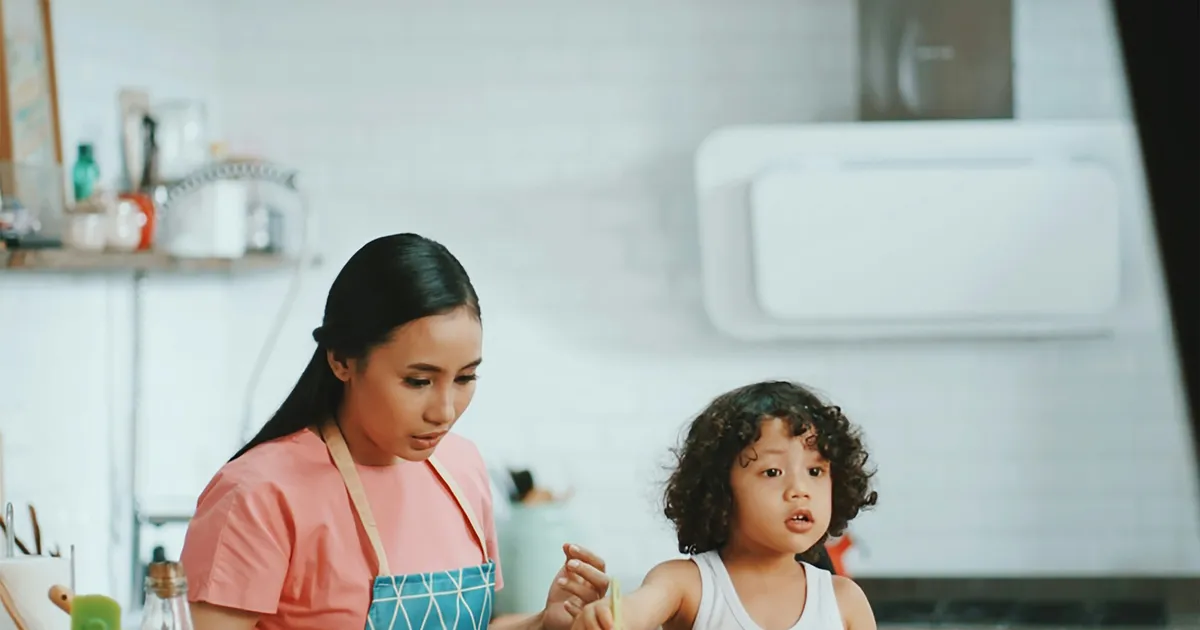
The richest recipe information comes when you are in the kitchen together, not when you are sitting across a table with a list of questions. Ask the cook to make the dish the way they normally would. Stand beside them. Watch. Ask small questions as they go.
Good in-the-moment questions:
- What are you looking for right now? What tells you it is ready?
- Have you always made it this way, or did it change over time?
- Who taught you this version?
- What would you do differently if you had more time?
- Is there a step here that most people get wrong?
These questions work because they are anchored to what is happening in front of you. The cook does not need to reconstruct a memory. They can point, demonstrate, and explain in real time.
Step 2: Record the voice, not just the ingredients
A written recipe gives you the skeleton. The voice gives you everything else.
When your mother explains why the onions need to be cooked until they are golden brown, not dark, dark means bitter, she is giving you information that no ingredient list can carry. The tone, the emphasis, the way she switches between languages when describing a taste — these are the details that make a recipe feel like the original.
Qissa's approach works especially well for recipes because it starts with voice. During a recorded session, a Story Guide can ask the cook what they changed, why they never measure a certain ingredient, and who taught them. Those details become source material for a professionally written family chapter. See How It Works.
Step 3: Capture the stories around the food
A recipe is never just a recipe. It is the Eid morning it was made for. The wedding where it fed two hundred people. The time someone tried to make it and failed spectacularly. The version that was only ever made when a specific relative visited.
These stories are what turn a collection of instructions into a family cookbook that people actually want to read. When a grandchild opens a page and reads that this particular halwa was the one their grandfather always requested on his birthday, the recipe becomes something more than food. It becomes a memory they can recreate.
The recipe is not the dish. The recipe is the person who made it, the occasions it appeared on, and the reason it mattered enough to remember.
Step 4: Preserve the original language alongside English
Many South Asian recipes lose their emotional precision when translated entirely into English. Words like masala, tarka, belan, degchi, chhaunk carry specific meanings that go beyond their dictionary definitions.
A bilingual recipe format keeps the original terms where they matter and adds enough English context for younger readers to follow along. This is not about choosing between accuracy and accessibility. It is about giving both generations a way to meet on the same page.
A Qissa book can use English, or Urdu/Sindhi paired with English, so a recipe reads naturally for someone who grew up with these words and still makes sense for someone learning them. Preview the format on Inside the Book.
A practical framework for building your family recipe archive
You do not need to capture every recipe at once. Start with the ones that feel most urgent — the dishes that only one person knows how to make, the ones that appear at every family gathering, the ones that nobody has ever written down.
The five-recipe starter set
Pick five recipes to begin with. This number is small enough to feel manageable but large enough to establish a pattern. For each recipe, collect:
- The ingredient list — approximate measurements are fine. Note where the cook uses feel instead of precision.
- The technique notes — what to look for at each stage, what mistakes to avoid, what tells you the dish is done.
- The origin story — who taught this recipe, where it came from, how it changed over time.
- The occasion context — when is this dish made, for whom, and why.
- A voice recording — even two minutes of the cook explaining one step in their own words is worth more than a fully written recipe without any voice.
Organize by storyteller, not by dish type
Most cookbooks organize recipes by category: appetizers, mains, desserts. For a family archive, organizing by the person who cooks each dish is more useful. It keeps the recipes connected to the storyteller, and it makes the archive feel like a collection of people, not just food.
A section called "Dadi's Kitchen" or "Ammi's Eid Dishes" carries more emotional weight than "Desserts." It tells the reader whose hands these recipes came from.
Include photographs with context
A photo of the finished dish is useful. A photo of the cook making the dish is better. A photo of the handwritten recipe card, stained and faded, is the best.
If you have old recipe cards, index cards, or notebook pages with handwritten instructions, photograph them exactly as they are. The stains, the corrections, the marginal notes — these are part of the recipe's history. Do not clean them up. Do not retype them into something neater. The mess is the point.
Common challenges and how to handle them
"I do not measure anything, I just know"
This is the most common response, and it is actually useful information. Document it exactly as stated. Write: No measurements. Cook adds by feel. Look for [specific visual or sensory cue]. Then record the cook describing what that cue looks, smells, or sounds like.
"My mother never wrote anything down"
Then you are in the same position as most South Asian families. Start recording now. Even if the original cook is no longer available, the people who ate the food carry impressions. Ask them what they remember about the taste, the texture, the occasions. Those memories can guide a recreation that gets close enough to feel authentic.
"The recipe changes every time"
This is not a problem. It is a feature. Document the variations. Note what causes the cook to change the recipe — the season, the guests, the mood, the ingredients available. A recipe that adapts is a living recipe, and capturing its flexibility is more honest than forcing it into a single fixed version.
"I am not a good cook, I cannot recreate it"
You do not need to be a good cook to preserve a recipe. You need to be a good listener. The goal is to capture the cook's knowledge, not to replicate it perfectly. Even an incomplete record is better than no record at all.
Turning recipes into a family heirloom
A collection of preserved recipes becomes something more than a cooking reference when it is presented as a family document. This is where the format matters.
A printed book that pairs recipes with the storyteller's voice, photographs, and origin stories is not a cookbook in the traditional sense. It is a family archive that happens to include food. The difference is important. People cook from cookbooks. They return to family recipe books for the stories, the memories, and the sense of connection to someone who is no longer in the kitchen.
If you want to preserve your family's recipes alongside their stories, photographs, and selected approved audio in a format designed for South Asian families, you can start a Qissa. The process begins with one recipe and one conversation. The result is a hardcover book your family will reach for long after the recipes themselves have been mastered.
If you have questions about how the collection process works, what languages are supported, or how voice recordings are integrated into the final book, the FAQ page covers the most common concerns.
Start with one recipe this week
You do not need a plan, a timeline, or a professional kitchen. You need one dish and one conversation.
Pick the recipe that feels most at risk of being lost. Ask the person who makes it to cook it while you watch. Record their voice explaining one step. Write down what you can. Save the recording. Label it with the date and the dish name.
That single recipe, captured with its story and its cook's voice, is already more than most families have. The rest of the archive grows from there, one dish at a time, one kitchen at a time, one voice at a time.
The recipes are already being made. They just need someone to ask how.
Read next
Keep building the family archive.
These guides connect the next question, recording habit, or heirloom idea so the archive feels easier to keep building.
May 16, 2026 · 10 min read
Meaningful Gifts for South Asian Parents Who Have Everything
Struggling to find meaningful gifts for South Asian parents and grandparents? Discover why preserving their stories is the most emotional and lasting gift you can give.
May 16, 2026 · 8 min read
Why Family Stories Matter — The Science Behind Preserving Your Heritage
Research shows that children who know family stories have higher self-esteem and resilience. Here is why preserving your family's stories is one of the most important things you can do.
May 7, 2026 · 9 min read
Family History Book Examples for Modern South Asian Families
See practical family history book examples for South Asian families, from voice-led elder stories to bilingual legacy books and QR audio archives.
Preserve the voice too