
How to Preserve Your Family's Ancestral Village Stories
Your family's ancestral village holds stories no one is recording. Learn how to preserve your South Asian elders' gaon memories before they fade forever.
July 16, 2026 · 10 min read
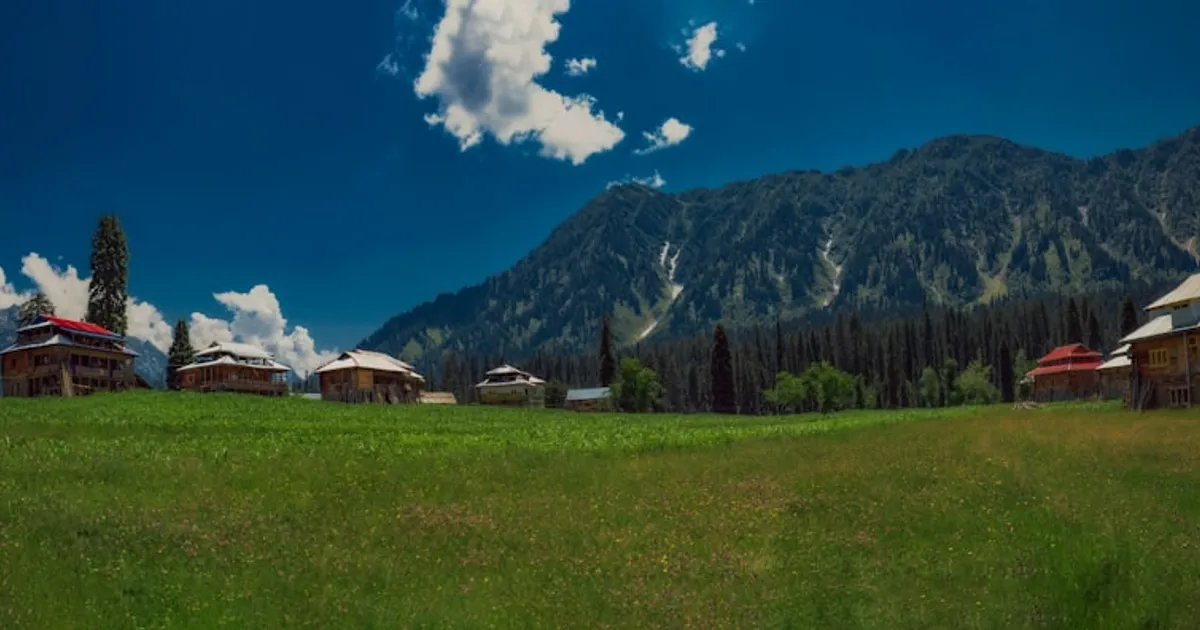
There is a place your family comes from that you have probably never seen. Not the city your parents immigrated from. Not the neighborhood where they went to university. The village. The gaon. The small settlement where your grandmother drew water from a well, where your grandfather walked to a school with no roof, where a family name was first spoken before it traveled across oceans and settled into a passport.
For most South Asian diaspora children, the ancestral village exists as a word. A mention in a phone call. A line on a wedding card. Maybe a single photograph, faded and unnamed, showing people you cannot identify standing in front of a house you have never visited.
The village is where your family's story begins. And the details of life there, the names of neighbors, the shape of the streets, the smell of the season when the wheat came in, are disappearing with the generation that lived them.
Why the ancestral village is the center of your family identity
Cities in South Asia are relatively new stories. Karachi, Lahore, Delhi, and Dhaka exploded in the mid-twentieth century. Your family's deepest roots are rural. Even families that have lived in cities for two generations usually point back to a village when you ask where they are "really" from.
The village holds the architecture of your family's identity. It tells you why your grandmother values hospitality the way she does, because in a village a guest is both a blessing and an obligation. It explains why your father cannot throw away food, because he remembers a season when the rains failed. It explains the specific dialect your mother slips into when she is angry or tender, the one that belongs to a region and not to a city.
When you lose the village stories, you lose the origin code of your family. You keep the traditions but forget why they exist. You keep the recipes but lose the reason your grandmother cooked that dish at that time of year. The village is the "why" behind everything your family still does without knowing why.
What disappears when the village generation is gone
A village is not just geography. It is a web of relationships, routines, and survival strategies that only make sense to the people who lived inside them. When the last person who grew up in your family's village dies, an entire world dies with them.
Here is what gets lost, often within a single generation:
- The names of the families who lived around yours, and the histories between them
- The reasons behind family customs that began as practical village habits
- The locations of homes, wells, mosques, and gurdwaras, and the paths between them
- The harvest cycles and food traditions tied to specific seasons
- The stories of who left, who stayed, who was forced out, and who chose to remain
- The dialect, the jokes, the insults, and the blessings unique to that region
- The memory of what your family owned, grew, built, or lost
None of this is recorded in any official document. A census does not capture why your great-aunt never married. A land record does not explain why your grandfather left the village at sixteen. These details live only in the memories of people who are aging faster than you are recording them.
A village is not a place on a map to the person who grew up there. It is a collection of faces, sounds, and smells that no longer exist anywhere except inside them.
Questions to ask your elders about the gaon
The right questions unlock memories that elders do not volunteer, not because they are hiding them, but because they assume no one is interested. Village stories often feel too ordinary to the person who lived them. To you, they are everything.
Ask specific, sensory questions. Avoid broad prompts like "tell me about the village." Instead, try:
- What did the village smell like in the morning?
- Where did your family get water, and who went to fetch it?
- What was the first sound you heard when you woke up?
- Who was the oldest person you remember, and what did they look like?
- What did your mother cook during the harvest?
- How did people in the village know someone had died?
- What games did children play before there was electricity?
- Who was the funniest person in the village, and what did they do?
- What was the path from your house to the school?
- What did your family's front door look like, and what was beyond it?
These questions work because they ask for images, not summaries. A summary fades. An image stays.
How to capture village stories when you have never been there
One of the strangest parts of preserving ancestral village stories is that you may be recording a place you have never seen. You are building a map of a village through someone else's memory. This is not a disadvantage. It is an advantage, because your ignorance becomes the curiosity that draws the stories out.
Approach the conversation as if you are learning a new country. Ask for directions inside the village. Ask your elder to walk you through it verbally: "Start at the front door of your house. Tell me what you see as you walk to the market." This technique produces the most detailed memories because it forces the storyteller to move through space in their mind.
Record these conversations by voice. Text cannot capture the pause when your father tries to remember the name of the neighbor's daughter, or the laugh when he recalls a childhood prank. Voice preserves the dialect, the pace, and the emotion. A village story told in Punjabi, Sindhi, or Pashto sounds different than the same story translated into English.
The process on How it Works is built around this kind of memory capture: your elder speaks in the language that feels natural, and the story is preserved in both the original voice and a translated written version.
Keep the place names and the language alive
One of the quietest losses in diaspora families is the loss of place names. The village your family comes from has a name. The region has a name. The nearest market town has a name. The river, the hill, the cluster of trees where the elders sat in the evening, all have names.
Write those names down. Spell them the way your elder pronounces them, even if the spelling is not "correct." Correct spelling belongs to maps. Memory belongs to the people who lived there.
Keep the original words for things that do not translate well. A village in Punjab is not the same as a "village" in English. A gaon, a dehat, a pind, and a gaam each carry regional weight. When your grandmother says watan, she is not saying "homeland." She is saying something closer to "the place where my bones belong."
Preserving the language of the village is preserving the village itself. You can see how bilingual preservation works in practice on Inside the Book, where the original words sit beside the translation so nothing is flattened into English.
Pair stories with photos, maps, and landmarks
A village story becomes more powerful when it has a visual anchor. You may not have many photographs, and that is fine. The photographs you do have are more valuable than you realize.
Gather every image you can find of the village, the family home, and the elders in their youth. Ask your relatives. Old wedding photographs often show the village in the background. School photographs show the children who grew up there together.
If you have no photographs, draw a map. Sit with your elder and ask them to describe the layout of the village while you sketch it. Where was the well? Where was the mosque? Where did the path leave the village? A hand-drawn map made from memory is a family artifact in itself, and it often surfaces stories that would never come up in a straight question.
If the village still exists, use satellite imagery to find it. Search the name on a mapping service and save the image. Even a current satellite view, paired with your elder's description of what the village looked like sixty years ago, tells a story of change that no single photograph could carry.
These visual anchors turn an abstract "village" into a specific, real place. Your children will not remember a word. They will remember a picture of the well their great-grandmother walked to every morning.
Turn village stories into a family legacy book
Scattered voice notes and photographs are a start, but they are fragile. They live on phones that get replaced, in cloud accounts that get forgotten, in WhatsApp threads that get buried under newer messages. The village stories deserve a format that lasts.
A family legacy book gathers the village stories into a single, physical volume that the whole family can hold. Voice recordings are linked through QR codes so the original dialect is never lost. Photographs are placed beside the stories they belong to. The village map becomes a chapter. The place names are preserved in their original form, with translations beside them.
This is what turns a collection of memories into an heirloom. A book on a shelf does not get deleted in a phone upgrade. It gets opened at a wedding. It gets read by a grandchild who never met the village but will always know it existed.
If you are ready to begin, starting a Qissa takes only a few minutes, and a warm Story Guide will help draw out the village stories even if your elder is not sure where to begin.
What if your elder says the village is not worth talking about
This is common. Many South Asian elders left the village because life there was hard. They associate it with poverty, with limitation, with a past they worked hard to escape. When you ask about the gaon, they may say "kya batayen, kuch nahi tha wahan" and change the subject.
Do not push. Do not contradict. Instead, reframe the question around people, not hardship. Ask about a specific person, not the village as a whole. "Who did you love most in the village?" reaches a different place than "What was the village like?"
Hardship stories are also family history. The reason your family left the village is one of the most important stories you can preserve. The hunger, the lack of school, the feud with the neighboring family, the night your grandfather decided to leave. These are not embarrassing details. They are the foundation of everything your family built afterward.
For more guidance on drawing out reluctant storytellers, the FAQ covers common concerns about elders who hesitate to share.
The village is a beginning, not a background
It is easy to treat the ancestral village as a footnote in your family's immigration story. The real story, you might think, begins when your parents arrived in London, or Toronto, or Dubai. The village is just where they came from.
But the village is not the background. It is the first chapter. Every value your family carries, every stubborn habit, every unexplained rule, every phrase in a language you do not fully speak, traces back to a specific place with specific people who lived specific lives.
When you preserve your family's ancestral village stories, you are not nostalgia hunting. You are giving your children the beginning of the story that explains who they are. You are making sure that when the last person who lived in the gaon is gone, the gaon does not go with them.
Start with one question. Send it today. The village is closer than you think, as long as the voice that remembers it is still there to answer.
Read next
Keep building the family archive.
These guides connect the next question, recording habit, or heirloom idea so the archive feels easier to keep building.
July 10, 2026 · 10 min read
How to Preserve Family Stories When You Live Thousands of Miles Away
Practical ways to preserve family stories long distance. Learn how diaspora families can capture grandparents' memories across countries and time zones.
July 6, 2026 · 11 min read
How to Create a Family Tree for Your South Asian Family
Learn how to create a family tree for your South Asian family. Capture names, relationships, and stories across generations before the details fade away.
July 3, 2026 · 14 min read
How to Preserve Your Dadi's Home Remedies Before They're Forgotten
Your grandmother's desi totkay exist only in her memory. Learn how to preserve your family's home remedies before that knowledge disappears with the generation that carries it.
Preserve the voice too