
Preserve Your Family's Childhood Games Before They Fade
Your elders' pitthu, kanchay and gully cricket memories hold precious family history. Learn simple ways to preserve childhood games before they fade forever.
September 10, 2026 · 10 min read
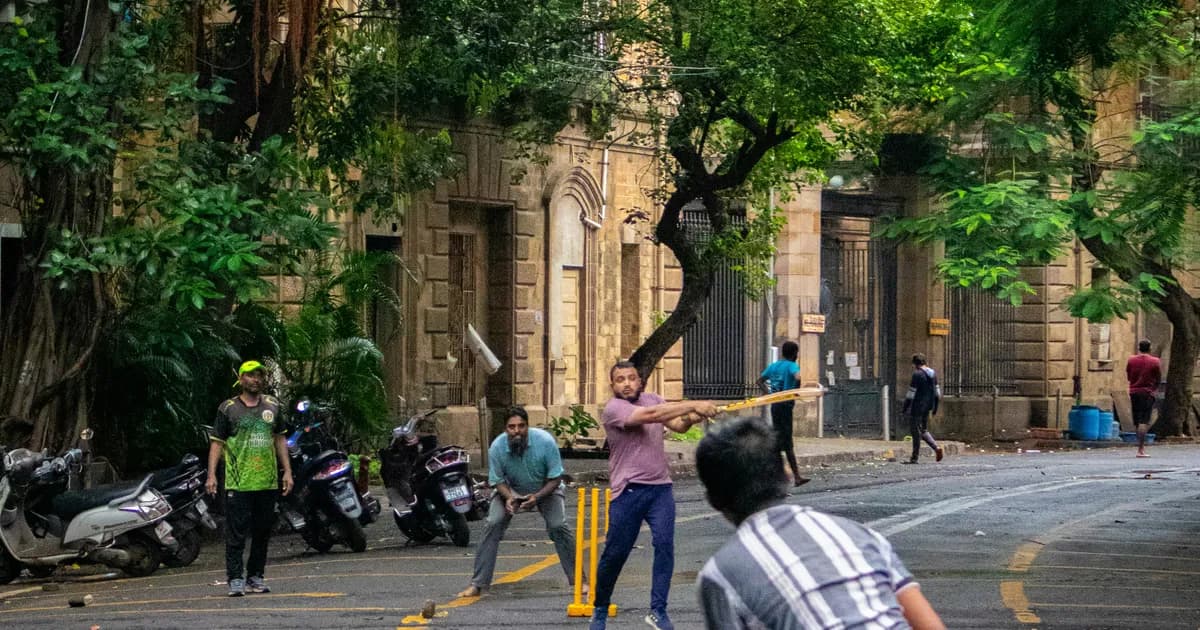
Ask your father about his childhood and he may go quiet for a moment. Then a grin spreads across his face. He remembers the tennis ball that sailed over the neighbour's wall. He remembers the pile of flat stones stacked in the gali. He remembers who always cheated at kanchay and who could spin a lattu longer than anyone else on the street.
These are not small memories. The games your elders played shaped their friendships, their neighbourhoods and their sense of belonging. Yet most families never record them. When that generation passes, the rules, the rivalries and the laughter of those afternoons pass with them.
Learning how to preserve family childhood games is one of the simplest gifts you can give your children. It costs nothing to start, it brings elders alive in a way formal interviews never do, and it keeps a piece of South Asian street culture that screens and scheduled playdates are quietly replacing.
Why childhood games matter more than you think
A game is never only a game. When your mother describes stapu drawn in chalk on a courtyard floor, she is also describing who lived in that house, what the floor was made of, which cousin visited every summer and what the adults shouted when the noise grew too loud. One memory of play opens ten other memories around it.
Childhood psychologists have long noted that play memories stay vivid into old age because they were learned with the body, not only the mind. The crouch before a kho kho chase, the flick of a marble, the sting of a caught ball, these live in muscle memory. That is why an elder who struggles to recall dates or names can suddenly describe a gully cricket match ball by ball from fifty years ago.
For diaspora families, these stories carry extra weight. Your children may grow up with playgrounds, consoles and coaching classes. Their grandparents grew up with a broken bat shared by twelve children and a wicket drawn on a wall with coal. Hearing that contrast teaches children resilience, creativity and gratitude in a way lectures never will.
The sound of a tennis ball on a quiet street at dusk is, for many South Asian fathers, the sound of being young and completely free. That feeling deserves to be written down.
Games also carry language. Words like dhappa, pukham pukai, kokla chapaki, pittu garam and oonch neech belong to a vocabulary your children may never hear elsewhere. When you preserve the game, you preserve the mother tongue that came with it.
The games your elders actually played
Every region has its own names and variations, but most South Asian childhoods from the 1950s to the 1990s circled around the same beloved repertoire. Knowing the landscape helps you ask better questions.
Street and gali games
These were the heartbeat of the mohalla. Pitthu, also called lagori in some regions, needed only seven flat stones and a tennis ball. Gully cricket adapted itself to every space, with rules like one tip one hand and whoever hits the ball over the wall must fetch it.
Chupan chupai turned the whole neighbourhood into a hiding ground. Pakram pakrai and baraf pani, the freeze and unfreeze chase, could keep twenty children running until the maghrib azan called them home.
Marbles, tops and chalk
Kanchay, glass marbles with names like bhanwar and tiger, were serious currency. Gilli danda, played with two sticks, rewarded timing and courage. Lattu, the spinning top wound with string, drew crowds when a skilled boy made it dance on his palm.
Stapu, the hopscotch grid drawn with chalk, belonged mostly to girls but drew everyone in. So did gutte, five small stones tossed and caught in difficult patterns, and skipping games with rhyming songs.
Indoor and monsoon games
When rain flooded the streets or load shedding darkened the house, play moved inside. Carrom boards came out, with striker flicks debated like court cases. Ludo parties turned polite families fiercely competitive. Cards and chess filled long evenings.
Older relatives may also remember kokla chapaki, oonch neech, aankh micholi and chidu. Each came with its own songs and house rules.
If any of these names spark recognition, write them down now. That list is the beginning of your family play archive.
Why these memories disappear so fast
Play memories feel permanent to the person who holds them, but they are among the most fragile family stories for three reasons.
First, elders rarely volunteer them. Ask a grandfather about his life and he will talk about his job, his migration, his wedding. He will not think to mention the kite fights of Basant or the marbles tournament behind the school. Play feels too ordinary to report, so it stays silent unless someone asks directly.
Second, the physical context is vanishing. The gali has been rebuilt. The empty plot is now apartments. Without the place to point to, the memory loses its anchor. A guided conversation about the process helps because it gives elders permission to linger on details that seem unimportant.
Third, children and grandchildren do not know the vocabulary to ask. If you have never heard of pitthu garam, you cannot ask your nani who the champion of her street was. Each generation that grows up without these games loses the words needed to rescue them.
The window is shorter than it looks. The generation that played these games daily is now in their sixties, seventies and eighties. Their knees remember even if their calendars do not. Record now, while they can still show you the stance, sing the rhyme and laugh at the memory.
How to capture childhood game stories step by step
You do not need equipment beyond a phone. You need the right setting, the right prompts and a little patience. Here is a method that works even with shy elders.
Start with objects, not questions
Bring a tennis ball, a set of marbles or a photo of a street like the one they grew up on. Place it in their hands. Ask what this reminds them of. Objects unlock sensory memory faster than abstract questions.
If you live far away, send a photo over WhatsApp first. A picture of stapu lines or a carrom board can start a voice note exchange that becomes the raw material for something lasting. Many families find that WhatsApp voice notes are the easiest way to begin preserving stories because elders can reply in their own time and language.
Record the rules in their words
Every street had its own version. Ask your elder to explain the game as if teaching a child who has never played. How many players. What you needed. How you started. What counted as cheating.
These rule explanations are gold. They reveal fairness, humour and social order. Do not interrupt to correct. Let the version stand as they remember it.
Capture one full match story
After the rules, ask for one specific day. The best match, the worst fight, the funniest moment. Specific stories beat general summaries every time. You want names, what was eaten afterward, who cried, who was banned for a week.
Encourage sounds and gestures. If your father wants to stand up and show the bowling action, let him. Film it if he agrees.
Record the songs and counting rhymes
Many games came with verses. The kokla chapaki song, the skipping rhymes, the counting outs for choosing the denner, ask elders to sing them. Record the audio even if the quality is rough. Note the language and ask for a rough translation while you are together.
Questions that unlock the best game stories
Generic questions get generic answers. These specific prompts work because they target rivalry, place and mischief, the three things every player remembers.
- Who was the best player in your street, and what made them unbeatable
- What did you play with when you had no money for proper equipment
- Where exactly did you play, and what happened if the ball went into a strict neighbour's house
- What were the house rules of your gali that outsiders did not know
- What game caused the biggest fight you remember, and how was it settled
- Which game did the adults join during Eid, weddings or load shedding evenings
- Who taught you your favourite game, an older sibling, a cousin, a neighbour
- What song or chant came with your favourite game, can you sing a little of it
Ask two or three per sitting, not all eight. Let the conversation wander.
If your parent is hesitant to talk, you are not alone. Shyness about the past is common, and there are gentle ways to encourage reluctant storytellers that work especially well when you start with play instead of painful history.
How to save what you collect so it lasts
A phone full of clips is a start, not an archive. Voice notes get deleted and chats bury treasures. Give your game stories a second home.
- Back up audio immediately. Move voice notes to a labelled folder with names like Abbu Pitthu Rules March. Include the date and the speaker's name.
- Transcribe the essentials. A one page summary per game with rules, players and the best anecdote is enough for children to read.
- Photograph the places and objects. The street, the courtyard, the surviving carrom board. Pair each photo with a one line caption in the elder's words.
- Write down the rhymes. Roman Urdu is fine if Urdu script is hard. The point is that someone can read and repeat them in ten years.
Once you have three or four games documented, consider giving them a permanent shape. Families who turn scattered recordings into a printed legacy book find that children actually revisit the stories, because a book on the shelf beats a forgotten chat thread. The games chapter is often the one grandchildren read first.
Turning play memories into a family keepsake
Imagine a page with a hand drawn stapu grid, your mother's counting rhyme in Urdu and English, and a photo of the courtyard where she played. Imagine a QR code beside the story that plays his voice explaining the winning shot.
That is what a play chapter does. It turns abstract heritage into something a ten year old can understand and repeat.
You can build this yourself with a scrapbook, or you can let a guided service shape your recordings into a finished volume. If you are curious what the journey looks like, from first voice note to printed pages, read how the Qissa process works and browse common questions families ask before they begin.
For gift givers, game stories make a thoughtful entry point. Instead of asking parents what they want for an anniversary or birthday, tell them you want to record their childhood games. Most elders light up. It tells them their ordinary joy mattered. If you want to go further, you can start a Qissa for them and let those play memories become the opening chapter of a larger life story.
Your turn to ask before the street falls silent
Every family has a champion of kanchay, a queen of stapu, a boy who never lost at gilli danda. In your family, that person has a name. They are probably sitting in the next room, or one phone call away, waiting for someone to ask.
Call this week. Bring a marble, a ball, or just the name of a game. Press record. Ask who the best player was. Then listen.
The streets where they played may be gone. The friends may be scattered across continents. But the stories can still be saved, in their voice, with their laughter intact, for grandchildren who will one day stack seven stones and think of the elder who taught them how.
Read next
Keep building the family archive.
These guides connect the next question, recording habit, or heirloom idea so the archive feels easier to keep building.
July 2, 2026 · 11 min read
How to Preserve Your Family's Lullabies and Songs Before They're Lost
Your grandmother's lullabies carry generations of love and culture. Learn how to preserve family songs and lullabies before they fade away forever.
September 8, 2026 · 10 min read
How to Preserve Old Family Newspaper Clippings
Learn how to preserve old family newspaper clippings, scan them safely, capture the stories behind them, and build a lasting archive your family can revisit.
September 6, 2026 · 10 min read
How to Interview Grandparents Across a Language Barrier
Learn practical ways to interview your South Asian grandparents across a language barrier, preserving their voice, heritage stories, and immigrant wisdom.
Preserve the voice too